
NSU student identifies regular phonetic correspondences between Chinese and Korean consonants

Translation. Region: Russian Federal

Source: Novosibirsk State University –

An important disclaimer is at the bottom of this article.

A comparative study to identify regular phonetic correspondences between consonants in Chinese and Korean was conducted by a student of the Department of Oriental Studies Humanitarian Institute of Novosibirsk State University Artem Tashlykov. The result of the work was a summary table of regular phonetic correspondences of consonant phonemes of the Chinese and Korean languages. When compiling it, all possible syllables of the Chinese language were taken into account, as well as all syllables of the Korean language corresponding to each syllable of the Chinese language. For an objective comparison of the articulatory-acoustic characteristics of sounds, the young researcher used the methods of electroacoustic analysis – spectrography and oscillography. Artem Tashlykov conducted his research under the scientific supervision of Anton Shamrin, PhD in Philology, Senior Lecturer at the Department of Oriental Studies. This work is very important, because there are very few comparative studies on the Chinese and Korean languages in the Russian-speaking scientific space. The results of the study can be used to improve linguodidactic and methodological materials used in training specialists who speak both languages. Such employees are currently in high demand on the labor market.

— Some words in different Eastern languages sound similar to a certain extent, which causes certain difficulties for those who study them in parallel. This similarity is especially clearly expressed in vocabulary based on hieroglyphic writing. The writing of Korea and Japan has been influenced by Chinese hieroglyphic writing since ancient times, which became one of the reasons for the penetration of a certain set of hieroglyphic vocabulary into the vocabulary of these countries. When borrowing vocabulary, pronunciation was accordingly borrowed. But over time, it inevitably underwent changes. This happened, perhaps, due to the difference in the articulatory-acoustic base of these three languages. As a result, pronunciation was distorted to some extent, adapting to the set of sounds familiar to native speakers of these languages. Probably, phonetic changes that occur in all languages of the world due to their natural and logical development also made their contribution. The result of changes in the pronunciation of hieroglyphic vocabulary in Chinese and Korean was the fact that one phoneme of the Chinese language corresponds to several phonemes of the Korean language, just as one phoneme of the Korean language can correspond to several phonemes of the Chinese language. In this way, regular phonetic correspondences were formed. My goal was to identify such regular phonetic correspondences and their subsequent systematization, – said Artem Tashlykov.

The young researcher had previously compiled a list of 150 two-syllable words that had common hieroglyphic roots in both Chinese and Korean. These words were selected in such a way that it would be possible to analyze each of the phonemes presented in both languages in all variants of their implementation in speech. Then audio recordings were made of two native speakers of Chinese and two native speakers of Korean.

The informants were first asked to familiarize themselves with the given list of words and then read them out loud. In order to eliminate recording errors and expand the statistical data, each word was pronounced 4 times, with a pause between them. This helped to avoid combinatorial changes in pronunciation between words when reading. Thus, a total of 2400 audio fragments were analyzed.

In order to measure the absolute durations of sounds and to describe in detail the formant characteristics, the recorded material was analyzed using electroacoustic methods – oscillography and spectrography.

— Using an oscillogram, we can determine the boundaries of vowels and consonants, as well as the method of articulating consonants. However, using only an oscillogram, it is almost impossible to determine which sound is being pronounced. Therefore, for a more detailed analysis and determination of the row and rise of vowels, the place and method of articulating consonants, we obtained spectrograms, which are graphs of the dependence of the spectrum of sound frequencies on time. As a result of applying such a comprehensive approach, we were able to establish the degree of correspondence between similar consonant phonemes of the two languages and discover differences in the articulation and acoustic characteristics of the sounds of the Chinese and Korean languages. We compared the syllabic structures of both languages, compiled a description of the acoustic properties of the main allophones of all consonant phonemes, and made a statistical calculation of the correspondences. A total of 40 regular phonetic correspondences were established, including 32 correspondences between phonemes that have a similar method of articulation, 4 regular correspondences in the affricate-plosive pair, 3 in the fricative-plosive pair, and 1 in the affricate-fricative pair, explained Artem Tashlykov.

The young researcher compiled a table containing all the unique correspondences of syllables between Chinese and Korean, on the basis of which calculations were made, and created tables of the frequency of occurrence of phonetic correspondences. A summary table of the identified regular correspondences was also formed with a classification of phonemes by the method of articulation, which clearly demonstrated the presence or absence of regular correspondences between certain phonemes of the Chinese and Korean languages.

— My work systematizes extensive empirical material and creates a basis for further theoretical and applied research in the field of comparative phonetics of East Asian languages. And the practical significance of my research is that it contains information useful for the simultaneous study of Chinese and Korean. The results of my work can be used in the development of teaching aids and methods aimed at students who speak one of the languages and study the second, — said Artem Tashlykov.

Material prepared by: Elena Panfilo, NSU press service

Please note: This information is raw content obtained directly from the source of the information. It is an accurate report of what the source claims and does not necessarily reflect the position of MIL-OSI or its clients.

.
UN aid workers alarmed by worsening conflict and rising civilian casualties in Sudan

Translation. Region: Russian Federal

Source: People's Republic of China in Russian – People's Republic of China in Russian –

An important disclaimer is at the bottom of this article.

Source: People's Republic of China – State Council News

UNITED NATIONS, Aug. 4 (Xinhua) — United Nations aid workers said Monday they were alarmed by the worsening conflict, rising civilian casualties and worsening humanitarian situation in Sudan.

The United Nations Office for the Coordination of Humanitarian Affairs (OCHA) has provided an update on the humanitarian tragedy unfolding across the country.

“Our humanitarian colleagues have noted that heavy fighting continues in North Darfur state, with numerous reports of civilian casualties in recent days,” OCHA said, adding that clashes broke out in the state capital of El Fasher on Friday and Saturday, following earlier clashes between armed groups, including around the Abu Shouk camp for displaced people.

Currently, 25 thousand people live in the camp.

OCHA said that a year after mass starvation was confirmed in Zamzam, another camp for displaced people on the outskirts of El Fasher, the town remains under siege and its residents are at risk of starvation. There have been no food deliveries by road for more than a year.

The directorate said that in North Kordofan state, the town of Um Sumeima has reportedly changed hands several times in recent weeks, highlighting the instability on the front lines. Civilians remain trapped and their access to aid remains severely restricted.

OCHA said cholera continues to spread rapidly across Darfur.

In Tawila, North Darfur, nearly 1,200 cases have been reported since late June, including about 300 among children and at least 20 deaths.

In South Darfur, health authorities have reported more than 1,100 suspected cholera cases and 64 deaths since late May, with the latest reports putting the case fatality rate at more than 6 percent. OCHA said shortages of medicines, clean water and sanitation were seriously hampering humanitarian assistance.

In Khartoum state, OCHA reported confirmation of the presence of landmines in several locations. Anti-personnel and anti-vehicle mines were found in Al-Mogran, Omdurman and Bahri.

“These devices not only maim and kill civilians, but also block access to medical services, markets and humanitarian aid,” the department said.

OCHA said flooding in Blue Nile state had displaced more than 100 people in the state capital of Ed-Damazin and destroyed at least 200 tents in Al-Karama camp on Friday, the latest challenge facing people displaced by the conflict.

“Amid these multiple crises, OCHA reiterates its call for sustained humanitarian access across Sudan and increased international support to vulnerable populations in the country,” the humanitarian agency said in a statement. –0–

Please note: This information is raw content obtained directly from the source of the information. It is an accurate report of what the source claims and does not necessarily reflect the position of MIL-OSI or its clients.

.
Hebei: Vegetable farming boosts rural revitalization

Translation. Region: Russian Federal

Source: People's Republic of China in Russian – People's Republic of China in Russian –

An important disclaimer is at the bottom of this article.

Source: People's Republic of China – State Council News

Relying on local advantages, Fengning Manchu Autonomous County, Hebei Province, has been actively developing vegetable farming. At present, the area under vegetable cultivation is 183,000 mu (15 mu = 1 hectare). Organic vegetables are in great demand, which helps ensure food security in the Beijing-Tianjin-Hebei region and increase the income of local farmers. Photo by a journalist from Xinhua News Agency.

Please note: This information is raw content obtained directly from the source of the information. It is an accurate report of what the source claims and does not necessarily reflect the position of MIL-OSI or its clients.

.

Over 200 swimmers from China and Russia crossed the Heilongjiang border river

Translation. Region: Russian Federal

Source: People's Republic of China in Russian – People's Republic of China in Russian –

An important disclaimer is at the bottom of this article.

Source: People's Republic of China – State Council News

BEIJING, Aug. 5 (Xinhua) — The 19th Heilongjiang Amur River Crossing Race kicked off in Heihe (northeast China's Heilongjiang Province) on the Chinese side and Blagoveshchensk on the Russian side on Aug. 2, according to the website of the Heilongjiang Provincial Sports Administration. More than 200 swimming enthusiasts from the two countries took part in the "water date."

The Chinese city of Heihe and the Russian city of Blagoveshchensk, separated by the Heilongjiang River, are known as the “twin cities of China and Russia” and are an important platform for cultural, tourist and sports exchanges between the two countries. During the event, swimmers started simultaneously from both banks of the river and headed to the opposite bank.

At the sound of the starting gun, the participants entered the water and began to overcome the river waves. Spectators on both banks of the Heilongjiang River warmly welcomed them.

"I started learning to swim when I was 6 years old. This is my first time crossing the Heilongjiang River. In the process, I gained courage, friendship and awe of nature," said Yao Shengnian, a student at Shandong University of Architecture and Civil Engineering.

Russian swimmer Aksana noted: “I really like this event. I am participating in it for the 10th time. Our Chinese friends always welcome us here very warmly.”

The swim on the Heilongjiang River border between China and Russia has been held since 2001. During this time, a total of over 5,000 people from both countries have taken part in it. -0-

Please note: This information is raw content obtained directly from the source of the information. It is an accurate report of what the source claims and does not necessarily reflect the position of MIL-OSI or its clients.

.

Unimpeded Trade Cooperation Platform Promotes Strengthening Economic and Trade Ties Between Jiangsu and Central Asia

Translation. Region: Russian Federal

Source: People's Republic of China in Russian – People's Republic of China in Russian –

An important disclaimer is at the bottom of this article.

Source: People's Republic of China – State Council News

BEIJING, Aug. 5 (Xinhua) — Various specialty products from Central Asia have attracted many visitors at the trade fair and exhibition area of the China-Central Asia Flowing Trade Cooperation Platform in Nanjing, capital of east China's Jiangsu Province.

The 23,000-square-meter platform is playing a growing role in strengthening trade and economic ties between Jiangsu Province, a major provincial economy in China, and Central Asian countries, according to local media.

Let us recall that this platform is not new: it is about upgrading the level of the Jiangsu Central Asian Countries Center, which was established by the holding corporation Jiangsu SOHO Holdings Group Co., Ltd jointly with the government of Xuanwu District of Nanjing City and officially began operating in September 2024.

It integrates functions such as product display and sales, trade services, technical exchanges and cultural exhibition, and provides comprehensive services for Central Asian enterprises in the field of investment and trade cooperation in China.

Thanks to the 2025 Jiangsu/Astana Import and Export Expo held in June this year, Jiangsu technology company TOVEA established cooperation with partners from Central Asian countries for the first time.

According to TOVEA's director Wu Xudong, he has visited the Jiangsu Central Asian Countries Center many times since its establishment. Through the policy interpretation and market analysis services provided by the center, he became familiar with the huge potential of the Central Asian countries' optical communication markets and decided to start developing the markets in this region.

“Central Asian countries have rich resource advantages, and Jiangsu has obvious advantages in the textile and clothing industry, photovoltaic module production, goods for pregnant women, infants and young children and other industries needed by Central Asian countries,” SOHO Holdings Group noted, calling the prospects for cooperation between Jiangsu Province and Central Asia very broad in the fields of trade and investment, environmentally friendly agriculture and international logistics.

In addition, according to the corporation, it also independently created and launched the “Silk Road” e-commerce platform, which has attracted more than 100 enterprises from Jiangsu Province, becoming an important terminal for local enterprises to enter the markets of Central Asian countries.

According to statistics from Nanjing Customs, in the first half of 2025, Jiangsu Province's export volume to five Central Asian countries was 11.099 billion yuan, up 25.8 percent year on year.

"As a province occupying an important strategic position at a nodal point along the Belt and Road, Jiangsu has the responsibility to build a higher-level cooperation bridge and attract more regions in China to carry out trade exchanges with Central Asia and Belt and Road countries," the provincial commerce department said. -0-

Please note: This information is raw content obtained directly from the source of the information. It is an accurate report of what the source claims and does not necessarily reflect the position of MIL-OSI or its clients.

.

China approves new lunar sample applications

Translation. Region: Russian Federal

Source: People's Republic of China in Russian – People's Republic of China in Russian –

An important disclaimer is at the bottom of this article.

Source: People's Republic of China – State Council News

BEIJING, Aug. 5 (Xinhua) — The China Lunar Exploration and Space Engineering Center under the National Administration of Space Industry has released a list of the ninth batch of approved applications for borrowing lunar samples for exploration, allowing applicants to obtain samples collected and returned by China's Chang'e-5 and Chang'e-6 probes.

As it became known, a total of 30,881.8 milligrams of lunar samples will be provided to 32 responsible persons from 25 research institutes.

The list includes such universities as Macao University, Chengdu Institute of Technology, Donghua University, Harbin Institute of Technology, Hong Kong University, Hong Kong Polytechnic University, etc.

The list also includes institutions affiliated with the Chinese Academy of Sciences, the Chinese Academy of Geological Sciences, and the China Institute of Atomic Energy.

As reported, the Chang'e-6 mission collected 1,935.3 grams of lunar samples for the first time in human history from the far side of the Moon, and the Chang'e-5 lunar mission collected about 1,731 grams of lunar samples.

In July 2021, China delivered the first batch of lunar samples to scientific research institutions. So far, China has provided eight batches of lunar samples to such organizations for research purposes.

Last month, China released a series of research results from Chinese scientists studying samples collected by the Chang'e-6 lunar mission, in categories including volcanic activity, the moon's ancient magnetic field, and the water content and geochemical characteristics of the lunar mantle. -0-

Please note: This information is raw content obtained directly from the source of the information. It is an accurate report of what the source claims and does not necessarily reflect the position of MIL-OSI or its clients.

.

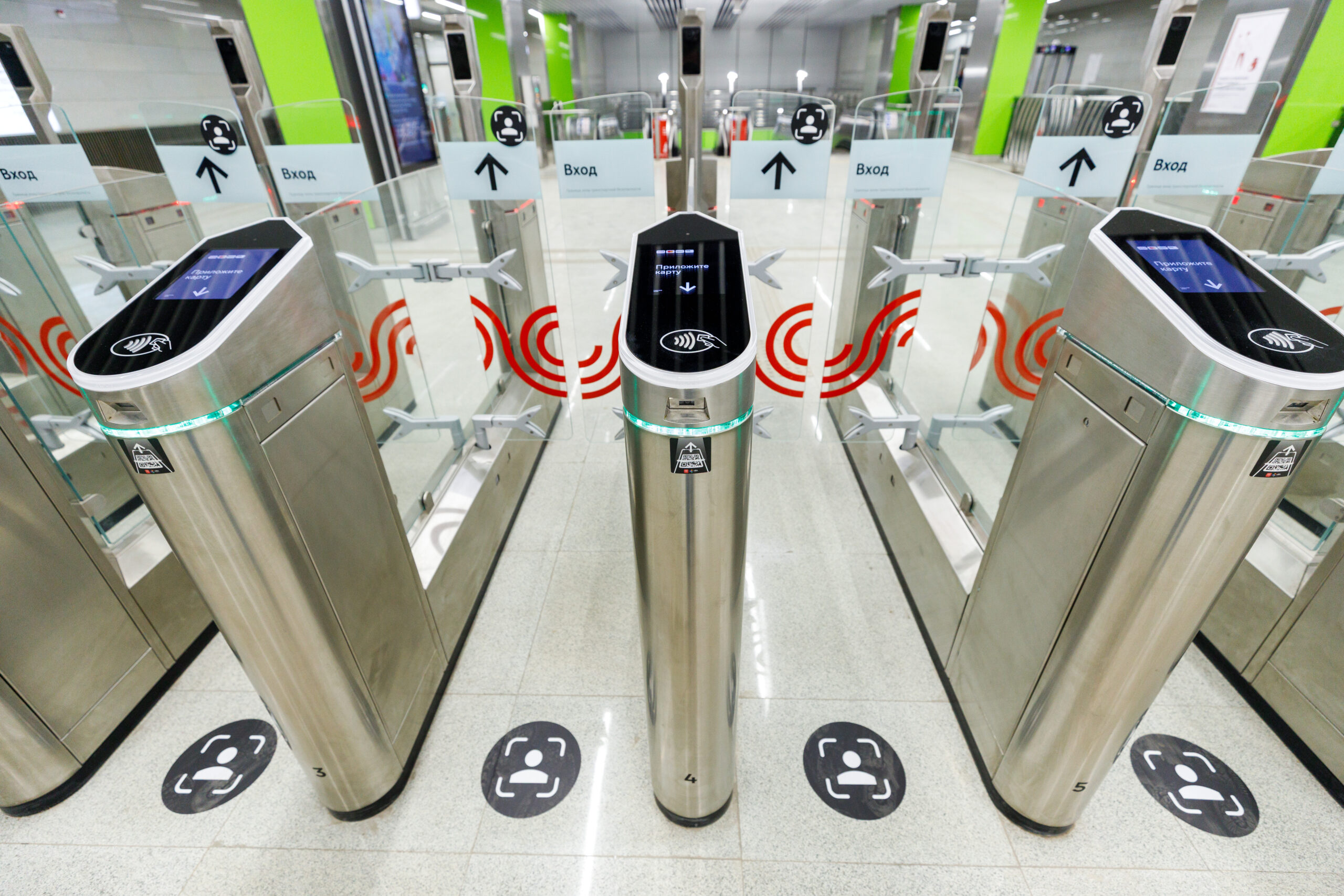
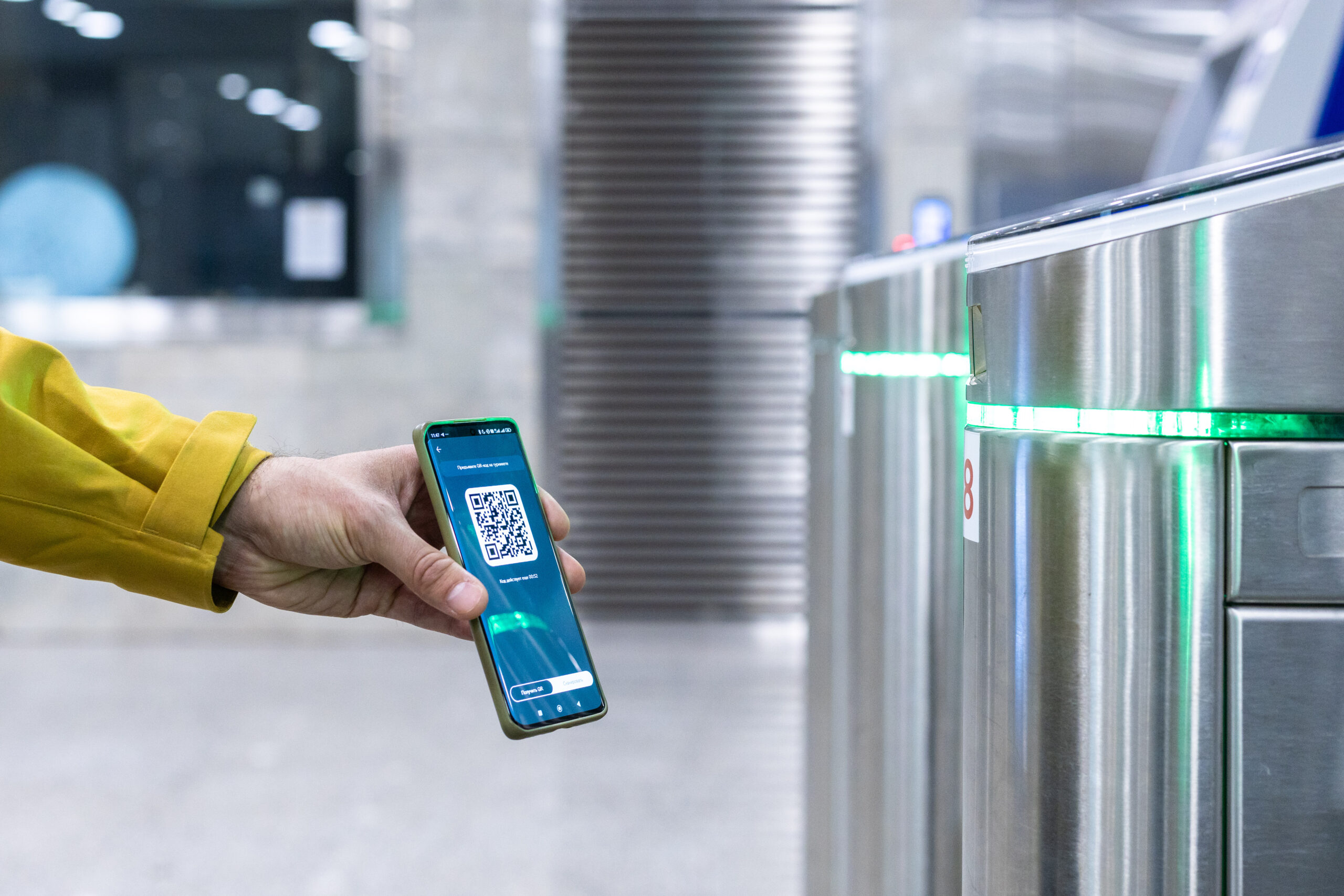
Moscow Metro: Moscow is the world leader in the number of ways to pay for travel

Translation. Region: Russian Federal

Source: Moscow Metro

Maxim Liksutov noted that today 13 payment options are available in the capital's transport. Among them are both traditional methods and the most modern ones.


Moscow metro. Moscow Metro.

Thanks to the introduction of modern payment solutions: 1) more than 95% of passengers no longer go to ticket offices; 2) 98% do not buy paper tickets; 3) 91.2% choose contactless payment.


Moscow metro. Moscow Metro.

Today, Moscow is the leader in the number of ways to pay for travel on public transport. The developed ticket system allows the city to save on printing paper tickets and receipts, and also eliminates queues at metro ticket offices. To create the best payment system in the world, the Moscow Government uses the most advanced domestic developments. According to the task of Moscow Mayor Sergei Sobyanin, the development of payment for travel on public transport continues to be even more convenient for all passengers, – said Maxim Liksutov.

Financial news: On the exclusion of securities from the list with which over-the-counter transactions are possible

Translation. Region: Russian Federal

Source: Moscow Exchange – Moscow Exchange –

An important disclaimer is at the bottom of this article.

In accordance with the clearing rules of the NCC, as well as the court decision on the bankruptcy of the issuer PJSC "ORG"

The decision was made:

Terminate secondary circulation of shares of JSC ORG in over-the-counter transactions from 08.08.2025 Contact information for the media 7 (495) 363-3232Pr@moex.kom

Please note: This information is raw content obtained directly from the source of the information. It is an accurate report of what the source claims and does not necessarily reflect the position of MIL-OSI or its clients.

.

Financial news: On the redemption of bonds of series BO-01 of the State Unitary Enterprise “Housing and Communal Services of the Republic of Sakha (Yakutia)” on August 5, 2025

Translation. Region: Russian Federal

Source: Moscow Exchange – Moscow Exchange –

An important disclaimer is at the bottom of this article.

For bidders

We inform you that in accordance with Part I. General Part of the Rules for Conducting Trading on the Stock Market, Deposit Market and Credit Market of Moscow Exchange PJSC, approved by the decision of the Supervisory Board of Moscow Exchange PJSC on February 7, 2025 (Minutes No. 16) and Part II. Stock Market Section of the Rules for Conducting Trading on the Stock Market, Deposit Market and Credit Market of Moscow Exchange PJSC, approved by the decision of the Supervisory Board of Moscow Exchange PJSC on February 7, 2025 (Minutes No. 16), the following terms, form and procedure for conducting trading for the repurchase of bonds specified in Appendix No. 1 to this Notice (hereinafter referred to as the Bonds) are established:

Trading for the repurchase of Bonds will be carried out in the Trading Mode “Repurchase: Addressed Orders” in the manner provided in Subsection 1.9 Conducting Trading for the Acquisition of Shares and Repurchase of Bonds of Part II of the Trading Rules.

The Buyer of the Bonds during the redemption is the Stock Market Trading Participant specified in Appendix No. 1 to this Notice.

The standard lot size in the “Buy-back: Addressed orders” trading mode is set equal to 1 (one) security.

Appendix No. 1

List of securities for which the terms, form and procedure for conducting bond buyback trading are determined

Item No. Date of redemption ISIN code of the security issue Name of the security issue Name of the trading participant – buyer of securities Identifier of the trading participant – buyer of securities Additional conditions for the acquisition of securities
1 05.08.2025 RU000A100PB0 Exchange bond BO-01 GUP "ZhKH RS (Ya)" LLC “IK VELES Capital” MC0154200000

Time of trading for the purchase of Bonds:

Application collection period: 11:00 – 13:00; application processing period: 14:00 – 18:00.

Purchase price 100%. Settlement code Z0. Settlements: Russian ruble.

Contact information for media 7 (495) 363-3232Pr@moex.kom

Please note: This information is raw content obtained directly from the source of the information. It is an accurate report of what the source claims and does not necessarily reflect the position of MIL-OSI or its clients.

.

Financial news: On an extraordinary revision of the calculation base of the VDO-PIR index

Translation. Region: Russian Federal

Source: Moscow Exchange – Moscow Exchange –

An important disclaimer is at the bottom of this article.

Due to the default in the payment of coupon income on exchange-traded interest-bearing non-convertible uncertificated bonds of the BO-06 series (registration number of the issue – 4B02-06-00318-R dated 05.12.2024, trading code – RU000A10ADH7), exchange-traded interest-bearing non-convertible uncertificated bonds of the BO-05 series (registration number of the issue – 4B02-05-00318-R dated 15.09.2023, trading code – RU000A106Y21), exchange-traded interest-bearing non-convertible uncertificated bonds of the BO-07 series (registration number of the issue – 4B02-07-00318-R dated 05.03.2025, trading code – RU000A10B1M5), exchange-traded interest-bearing bonds non-convertible book-entry bonds with centralized accounting of rights, series BO-03 (registration number of the issue – 4B02-03-00318-R dated 03/16/2021, trade code – RU000A102V51) of the Limited Liability Company Fuel Company "Naftatrans Plus" these bond issues will be excluded from the calculation base of the VDO-PIR index from 08/05/2025.

The calculation base of the VDO-PIR index, which comes into force on August 5, 2025.

Contact information for media 7 (495) 363-3232Pr@moex.kom

Please note: This information is raw content obtained directly from the source of the information. It is an accurate report of what the source claims and does not necessarily reflect the position of MIL-OSI or its clients.

.