
In 2025, foreign trade turnover through the Zhuengadabuqi checkpoint in northern China increased by 42 percent.

Translation. Region: Russian Federation –

Source: People's Republic of China in Russian – People's Republic of China in Russian –

An important disclaimer is at the bottom of this article.

Source: People's Republic of China – State Council News

BEIJING, Jan. 6 (Xinhua) — The foreign trade turnover through the Zhuengadabuqi Port (Inner Mongolia Autonomous Region, north China), located on the border between China and Mongolia, reached a record high of 5.77 million tons in 2025, up 42 percent year-on-year, the Neimenggu Ribao daily reported Tuesday.

The Zhuengadabuqi border crossing, located in Gadabuqi village, East Wuzhumuqin khoshun, Xilingole aimag, Inner Mongolia Autonomous Republic, is an international border crossing that operates year-round and is a key hub of the China-Mongolia-Russia Economic Corridor. With the approval of the State Council of the People's Republic of China, it was designated a first-category seasonal border crossing in 1992, and in 2008, it officially transitioned to year-round operation.

Through the Zhejianga Dabuqi Port, China imports mainly coal and other mineral resources, and exports mainly products such as building materials, mechanical equipment and used cars.

In 2025, local customs supported enterprises in optimizing their freight transport model and improving transportation efficiency by switching from bulk trucks to container trucks and from one trailer to two trailers, resulting in the traffic flow through the aforementioned border crossing exceeding 100,000 units for the first time last year.

It is reported that in the future, local customs, relying on the unique geographical advantages of the Zhuengadabuqi Port, will focus on building intelligent customs and enhancing its role in promoting high-level opening-up and high-quality development.

Please note: This information is raw content obtained directly from the source. It represents an accurate account of the source's assertions and does not necessarily reflect the position of MIL-OSI or its clients.
Mexico's president has rejected the possibility of a US invasion of the country to combat drug cartels.

Translation. Region: Russian Federation –

Source: People's Republic of China in Russian – People's Republic of China in Russian –

An important disclaimer is at the bottom of this article.

Source: People's Republic of China – State Council News

MEXICO CITY, Jan. 5 (Xinhua) — Mexican President Claudia Sheinbaum on Monday rejected the possibility of a U.S. invasion of the country to combat drug cartels, stressing the importance of preserving national sovereignty and strengthening the country's unity.

At her daily press conference, K. Sheinbaum rejected the need for negotiations with US President Donald Trump, who has repeatedly proposed sending troops to Mexico to combat drug trafficking.

Any security cooperation must be based on mutual respect, ensuring national sovereignty and cooperation without subordination, she stressed.

"I don't believe in an invasion. I don't even think they're taking it very seriously," the president said, noting that Trump had repeatedly insisted on sending American troops into the country, but her administration had resolutely refused.

According to her, the drug trafficking problem cannot be solved with the help of foreign military forces. The Mexican government is implementing a comprehensive counter-narcotics strategy based on strengthening national security agencies and addressing social problems.

The president emphasized that gun smuggling from the United States to Mexico is one of the main causes of violent crime in the country. However, the current administration has made progress in combating violence. According to official data, the homicide rate decreased by 37 percent between October 2024 and November 2025.

In addition, during this period, authorities seized more than 300 tons of drugs and shut down nearly 1,700 clandestine laboratories, noted K. Sheinbaum.

Mexico maintains active cooperation with the United States in areas such as training, information exchange, and other measures to combat drug trafficking, but this cooperation is carried out on the basis of mutual respect and without any subordination, the Mexican leader concluded. –0–

Please note: This information is raw content obtained directly from the source. It represents an accurate account of the source's assertions and does not necessarily reflect the position of MIL-OSI or its clients.

Venezuela should not be dragged into instability, Turkish President tells Trump

Translation. Region: Russian Federation –

Source: People's Republic of China in Russian – People's Republic of China in Russian –

An important disclaimer is at the bottom of this article.

Source: People's Republic of China – State Council News

Ankara, January 6 (Xinhua) — Turkish President Recep Tayyip Erdogan told his U.S. counterpart, Donald Trump, in a phone call that Venezuela should not be drawn into instability. He made this statement at a press conference on Monday following a cabinet meeting.

"We do not support any actions that violate political legitimacy and international law anywhere in the world," said R.T. Erdoğan. He emphasized that "violating the sovereign rights of countries and international law is a risky step that could lead to serious global complications."

"In our phone conversation with US President Trump, we also conveyed our country's concerns to him. We emphasized that Venezuela should not be drawn into instability," the head of state said.

“Regarding Venezuela, we strive to do what is best and right for both Turkey and the friendly Venezuelan people,” he said, adding that Venezuelan President Nicolas Maduro and the country’s people have always been friends of Turkey.

R.T. Erdogan warned that a global order dominated by the “right of might” rather than the “rule of law” would inevitably lead to instability, crises and conflicts.

Early Saturday morning, US forces launched airstrikes in Venezuela. They forcibly captured Maduro and his wife, who were then taken into custody in New York, sparking widespread condemnation.

Please note: This information is raw content obtained directly from the source. It represents an accurate account of the source's assertions and does not necessarily reflect the position of MIL-OSI or its clients.

China's Hainan Province has shipped fresh coconuts to Belarus for the first time.

Translation. Region: Russian Federation –

Source: People's Republic of China in Russian – People's Republic of China in Russian –

An important disclaimer is at the bottom of this article.

Source: People's Republic of China – State Council News

HAIKOU, Jan. 6 (Xinhua) — Recently, 19.5 tons of fresh coconuts produced in Haikou, capital of South China's Hainan Province, were transported by road from Haikou to Belarus via the Alashankou port in Northwest China's Xinjiang Uygur Autonomous Region.

This is the first export of fresh coconuts from Hainan Island to Belarus, demonstrating the expansion of agricultural trade between Hainan Province and countries participating in the Belt and Road Initiative.

This operation is being carried out by the international trading company Lianyue, based in Hainan Province, which also began supplying passion fruit to Belarus last year. This company has announced its readiness to export more tropical fruits and continue to develop the international market.

To ensure the smooth entry of fresh coconuts into the target market, the local customs service provided targeted support to the exporter by streamlining the inspection process and reducing customs clearance time. In the future, local customs will continue its efforts to simplify customs inspection procedures and facilitate the entry of more high-quality Hainan tropical agricultural products into the international market.

Please note: This information is raw content obtained directly from the source. It represents an accurate account of the source's assertions and does not necessarily reflect the position of MIL-OSI or its clients.

Financial news: 05.01.2026, 14-16 the values of the lower limit of the repo price corridor, the transfer rate and the range of interest rate risk assessment for the SFIN (SEFAI JSC) security were changed.

Translation. Region: Russian Federation –

Source: Moscow Exchange – Moscow Exchange –

An important disclaimer is at the bottom of this article.

January 5, 2026, 2:16 PM

In accordance with the Methodology for determining the risk parameters of the stock market and deposit market of Moscow Exchange PJSC by the National Credit Center (JSC) on 05.01.2026, 14-16 (Moscow time), the values of the lower limit of the repo price corridor with the settlement code Y0/Y1Dt (up to -32.99%), the transfer rate and the range of interest rate risk assessment (up to -0.956 rubles, equivalent to a rate of 53.73%) of the SFIN security (SFAI JSC) were changed.

Please note: This information is raw content obtained directly from the source. It represents an accurate account of the source's assertions and does not necessarily reflect the position of MIL-OSI or its clients.

Financial news: 05.01.2026, 14-23 (Moscow time) the values of the upper limit of the price corridor and the range of market risk assessment for security RU000A107G55 (IADOM 1P39) were changed.

Translation. Region: Russian Federation –

Source: Moscow Exchange – Moscow Exchange –

An important disclaimer is at the bottom of this article.

January 5, 2026, 2:23 PM

In accordance with the Methodology for determining the risk parameters of the stock market and the deposit market of PJSC Moscow Exchange by the NCC (JSC) on 05.01.2026, 14-23 (Moscow time), the values of the upper limit of the price corridor (up to 109.12) and the range of market risk assessment (up to 887.67 rubles, equivalent to a rate of 15.0%) of the security RU000A107G55 (IADOM 1P39) were changed.

Please note: This information is raw content obtained directly from the source. It represents an accurate account of the source's assertions and does not necessarily reflect the position of MIL-OSI or its clients.

Financial News: Discrete auction of VLHZ securities held

Translation. Region: Russian Federation –

Source: Moscow Exchange – Moscow Exchange –

An important disclaimer is at the bottom of this article.

VLHZ

VHZ-AO

As of 16:15:00, the current price was 243.2 rubles. (Deviation – 20.04%).

There was an increase of 20.00% or more within 5 minutes in a row in the current share price from the closing price of the previous trading day (202.6 rubles).

In the Main Trading Mode T, a discrete auction (DA) will be held from 16:19:00.

In other non-addressed trading modes during the DA period, trading is conducted in accordance with the established regulations.

The end of the DA and resumption of trading at 16:49:00.

Please note: This information is raw content obtained directly from the source. It represents an accurate account of the source's assertions and does not necessarily reflect the position of MIL-OSI or its clients.

Financial news: 05.01.2026, 16-38 (Moscow time) the values of the upper limit of the price corridor and the range of market risk assessment for security RU000A106TN4 (VimpelK2R1) were changed.

Translation. Region: Russian Federation –

Source: Moscow Exchange – Moscow Exchange –

An important disclaimer is at the bottom of this article.

January 5, 2026, 4:38 PM

In accordance with the Methodology for determining the risk parameters of the stock market and deposit market of PJSC Moscow Exchange by the National Credit Center (JSC) on 05.01.2026, 16-38 (Moscow time), the values of the upper limit of the price corridor (up to 105.89) and the range of market risk assessment (up to 1119.93 rubles, equivalent to a rate of 10.0%) of the security RU000A106TN4 (VimpelK2R1) were changed.

Please note: This information is raw content obtained directly from the source. It represents an accurate account of the source's assertions and does not necessarily reflect the position of MIL-OSI or its clients.

Financial news: 05.01.2026, 17-29 (Moscow time) the values of the upper limit of the price corridor and the range of market risk assessment for the security RU000A100YQ0 (Rosnft2P9) were changed.

Translation. Region: Russian Federation –

Source: Moscow Exchange – Moscow Exchange –

An important disclaimer is at the bottom of this article.

January 5, 2026, 5:29 PM

In accordance with the Methodology for determining the risk parameters of the stock market and the deposit market of PJSC Moscow Exchange by the NCC (JSC) on 05.01.2026, 17-29 (Moscow time), the values of the upper limit of the price corridor (up to 94.07) and the range of market risk assessment (up to 1001.88 rubles, equivalent to a rate of 11.25%) of the security RU000A100YQ0 (Rosnft2P9) were changed.

Please note: This information is raw content obtained directly from the source. It represents an accurate account of the source's assertions and does not necessarily reflect the position of MIL-OSI or its clients.

Moscow Transport: 2025 Results and Future Plans

Translation. Region: Russian Federation –

Moscow transport.

The past year, 2025, has been a year of large-scale transport and industrial transformation for Moscow. Under the leadership of Moscow Mayor Sergei Sobyanin, the city has fulfilled all its commitments to residents to develop the city's transport system and industrial potential. Comfort, safety, and the trust of Muscovites remain at the core of all decisions and projects.


Moscow transport. Moscow Metro.

The key result of the year was not the number of completed projects, but the growing trust of city residents in public transportation. Today, approximately 70% of all trips in Moscow are made on public transportation—one of the best rates in the world. More and more residents are choosing the metro, electric buses, trams, car sharing, and taxis, prioritizing convenience, reliability, and care.

In 2025, major infrastructure projects were completed in the capital. Modern, domestically produced "Moscow-2026" trains began operating on the Zamoskvoretskaya metro line, and the rolling stock on the Moscow Central Diameters (MCD) was fully upgraded. A third route of unique electric ships began operating, and the fleet grew by more than 50%. Four new stations opened on the Troitskaya metro line.

The opening of Russia's first fully driverless tram was a landmark event. This innovative technology, once considered a future-proof feature, is already being used in everyday passenger travel without compromising comfort or safety.

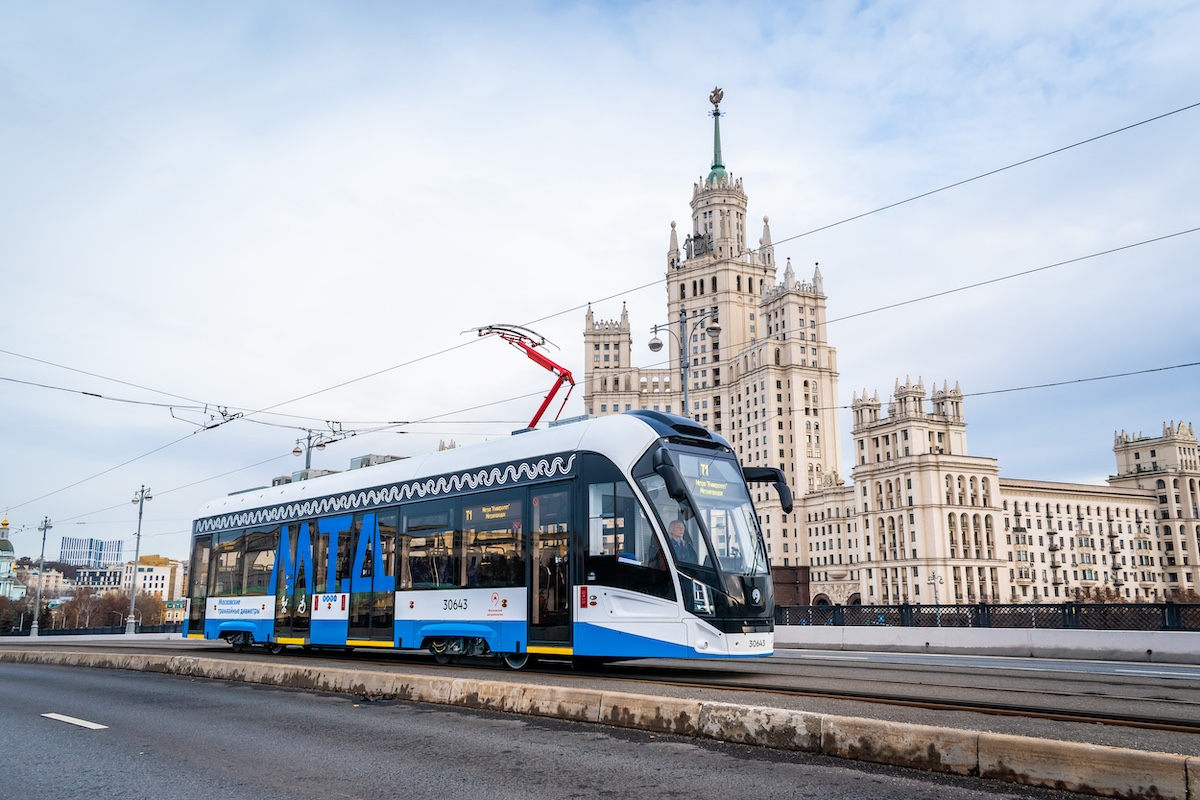
2025 also marked a turning point for tram development. Moscow's first tram diameter, the T1, opened, operating as an overground metro with intervals of up to six minutes. The country's first autonomous trams, "Lvenok-Moscow," entered service.

Particular attention was paid to integrating the capital and the Moscow region. Twenty-five suburban ground routes have already been upgraded to the high standards of Moscow Transport, ensuring passengers a consistent quality of service regardless of their location.

Moscow remains one of the leaders in Russia for road safety. Despite its high population density and traffic flow, the city's social risk is several times lower than the Russian average. This work is based on the global Vision Zero concept, aimed at achieving zero road traffic fatalities.

The capital's industry is making a significant contribution to the development of the transport system. The first electric vessels have been laid down at the new Moscow Shipyard—a unique facility in Russia with a capacity to produce up to 40 vessels per year. By 2025, the city will receive over 500 modern electric buses, allowing Moscow to maintain its leadership in Europe in terms of the number of environmentally friendly urban transport vehicles.

The Technopolis Moscow special economic zone produces high-tech products for the medical, transportation, industrial, and space industries. Today, Moscow's industry provides stable employment for every tenth resident of the capital. More than 4,600 enterprises operate in the city, and private investment in fixed assets exceeded 5.2 trillion rubles in the first three quarters of 2025.

In 2026, Moscow will continue implementing its Development Strategy through 2030. Plans include expanding the city's rail network, opening the first section of the Rublevo-Arkhangelskaya metro line, launching the second tram diameter (T2), and converting 15 trams to driverless mode. The renovation of the tram fleet and trains on the Zamoskvoretskaya metro line will be fully completed, and rolling stock replacement on the Yaroslavskoye line will continue. Plans also include launching a fourth regular river route and adding eight more electric vessels to the fleet.

All of these projects are not just infrastructure solutions, but real improvements in quality of life: convenience, safety, time savings, and increased trust among residents.

Moscow transport continues to operate for the city and its residents.