Shandong Normal University to Send Students to Russia as Part of Cultural and Language Studies Program

Translation. Region: Russian Federal

Source: People's Republic of China in Russian – People's Republic of China in Russian –

An important disclaimer is at the bottom of this article.

Source: People's Republic of China – State Council News

BEIJING, Aug. 5 (Xinhua) — Shandong Normal University (SNU), located in eastern China's Shandong Province, will send 30 students to participate in a summer study program in Russia in August 2025, the university's official website reported.

According to the information, in order to further expand the students’ global outlook and cultivate their awareness of internationalization, in August 2025, SPU plans to organize a project for students called “Summer Study and Research Program in Russia-2025”. The program recruits 30 full-time undergraduate and graduate students who have studied Russian for at least one year. The participants will go to Kuban State University /Krasnodar/, where they will study Russian language and culture for two weeks.

The main part of the educational practice will take place in the city of Krasnodar in the Krasnodar region. Students will meet with Russian students, visit theaters and museums, take part in master classes, which will deepen their understanding of Russian culture. Cultural and familiarization trips to the resort town of Gelendzhik on the Black Sea and the Guam Gorge in the Caucasus region are also planned for a deeper acquaintance with the Black Sea region.

The project is reportedly another international exchange program of Shandong Normal University. By combining language learning with practical cultural experience in the country of the target language, the program helps deepen youth exchanges between China and Russia.

The program is also an important component of the humanitarian cooperation between Shandong Province and Russia in 2025. -0-

Please note: This information is raw content obtained directly from the source of the information. It is an accurate report of what the source claims and does not necessarily reflect the position of MIL-OSI or its clients.

.

NSU biology students will take part in the final of the international SynBio Challenge competition in China for the first time

Translation. Region: Russian Federal

Source: Novosibirsk State University –

An important disclaimer is at the bottom of this article.

The final of the international SynBio Challenge competition will be held in Shenzhen (Guangdong Province, China) on August 6. The competition is organized by the Shenzhen University of High Technology. A total of 1,800 students registered to participate in the competition, of which about 1,000 participants from six countries of the world – China, Russia, Japan, Singapore, Thailand and Malaysia – made it to the final. Our country is represented at these competitions by only two teams – from the Biological Faculty of Moscow State University and Faculty of Natural Sciences (FNS) of NSURussian teams are taking part in the competition for the first time.

The GeneMeow team included six students of the NSU Natural Sciences Department who completed their 3rd year in Biology: Valeria Romanova, Ekaterina Bolotova, Nail Bikeev, Nikita Ivanov, Ulyana Borovikova and Dmitry Kurbatsky. GeneMeow was formed from two strong teams that had previously participated in the Biotournament, won prizes in its regional stage and received a second-degree diploma at the final in 2024. Participation in the Biotournament allowed them to gain experience in solving interdisciplinary problems in biology, publicly defending ideas to experts and project work. The students joined forces to jointly solve problems at the intersection of biology and engineering.

All the guys from the NSU team regularly participate in student Olympiads and are engaged in scientific activities at the institutes of the Siberian Branch of the Russian Academy of Sciences, combining their studies with research and educational activities.

The selection round of the competition was held in absentia in April-May; participants were offered a choice of several problems, one of which the students had to solve.

— In the SynBio Challenge, we solved the problem of developing a DNA sequence no longer than 140 bp, providing high expression of GFP (green fluorescent protein) in E. coli. It seemed familiar and interesting to us, since we had already studied molecular biology at the university, have laboratory experience and are well acquainted with the methods of genetic engineering. This gave us confidence in our abilities and the desire to apply our knowledge in practice, — said the captain of the GeneMeow team, Valeria Romanova.

— We conducted a bioinformatics analysis of regulatory elements, studied relevant literature and modern approaches to increasing gene expression. Based on this, we developed an optimized design that includes strong promoter (a region of a gene that triggers the synthesis of mRNA and then protein) and post-transcriptional (regulatory) elements and is aimed at efficient expression of GFP. Such developments are relevant for medicine, biotechnology, agriculture and fundamental research, — said GeneMeow team member Ulyana Borovikova.

The final will be held in person and will be a festival, where each team will present their solutions to the problems at the selection stage. In addition, the organizers of the competition synthesized the DNA sequences proposed by the participants, inserted them into plasmids with a fluorescent protein gene, which is used to check the DNA sequence, and during the festival they will visualize the synthesized sequences, compare which team has them glowing more strongly. The brightness of the glow will be one of the criteria for assessing the work of each team.

— NSU has historically developed leading scientific schools in synthetic biology and bioinformatics. This year, the Institute of Medicine and Medical Technologies is opening a Master's degree program in Industrial Pharmacy, where students will work on solving specific problems of industrial partners. At one time, the iGEM-Siberia team became the first team from outside Moscow to take part in the world's largest competition of genetically engineered machines, iGEM-2021. This year, our Chinese colleagues invited us to take part in SynBio Challenge, an international competition of comparable scale. I hope that the team will return with a victory; the guys have been working on the project for a long time and will present a poster presentation at the festival. The development of biomedical technologies is a global trend. I am very glad that we always find support for students' initiatives at our university! — commented Sergey Sedykh, PhD, Senior Lecturer at the NSU Natural Sciences Department, and judge of the SynBio Challenge competition.

The participation of the NSU team in the international competition is financed within the framework of the academic mobility project of the Institute of Medicine and Medical Technologies of NSU Priority 2030 programs.

Please note: This information is raw content obtained directly from the source of the information. It is an accurate report of what the source claims and does not necessarily reflect the position of MIL-OSI or its clients.

.
Bioinformatics: the key to the future of oncology. Results of the conference "tumor markers" in Novosibirsk

Translation. Region: Russian Federal

Source: Novosibirsk State University –

An important disclaimer is at the bottom of this article.

The VII All-Russian Conference "Tumor Markers: Molecular, Genetic and Clinical Aspects" was held in Novosibirsk from July 28 to 30, 2025. The event brought together more than a hundred leading Russian specialists: opinion leaders, professors of the Russian Academy of Sciences, heads of molecular laboratories, heads of clinical departments and diagnostic centers. The central topic of discussion was the transformative role of bioinformatics in the search for new biomarkers, the development of personalized methods for diagnosing and treating cancer. Institute of Medicine and Medical Technologies of NSU (IMMT NSU) The event was presented by the head of the biotechnology and medicine department, Maria Lomova, and the head of the bioinformatics laboratory, Alexander Vikhorev.

The conference confirmed the status of bioinformatics as one of the most dynamic and sought-after scientific disciplines in modern oncology. Participants unanimously noted that without complex big data analysis, machine learning and artificial intelligence (AI), further breakthroughs in understanding the mechanisms of oncogenesis and creating effective diagnostic tools are impossible.

The event became a unique platform for the formation of scientific and practical cooperation between bioinformaticians, molecular biologists and clinicians. Only the joint work of these specialists allows us to translate fundamental discoveries in the field of tumor markers into real clinical protocols.

The conference actively discussed advanced bioinformatic approaches for searching and validating new biomarkers in genomic data, platform solutions for determining the mutational status of patients. A special focus was made on the use of AI in oncology research. Participants shared their experience in using AI to analyze medical images, gene expression patterns, predict drug resistance, and develop individual treatment regimens.

— The conference clearly demonstrated that bioinformatics has ceased to be an auxiliary tool — it has become the driving force of oncological research. It is bioinformaticians, who possess methods for analyzing the most complex genomic data, who today decipher the "language" of cancer, helping to find new targets for therapy and create tests for early diagnostics. For young scientists and students, this is an area of enormous opportunities and a real contribution to saving lives, — noted Alexander Vikhorev.

The participants of the event noted that the VII All-Russian Conference "Tumor Markers" in Novosibirsk successfully fulfilled its task, providing specialists of different profiles with an important platform for professional dialogue. The exchange of relevant experience and views on the application of modern approaches will undoubtedly contribute to the development of more effective solutions in the field of oncology. The example of IMMT NSU shows that participation in such events remains significant for the scientific community and practical healthcare.

Please note: This information is raw content obtained directly from the source of the information. It is an accurate report of what the source claims and does not necessarily reflect the position of MIL-OSI or its clients.

.

NSU student identifies regular phonetic correspondences between Chinese and Korean consonants

Translation. Region: Russian Federal

Source: Novosibirsk State University –

An important disclaimer is at the bottom of this article.

A comparative study to identify regular phonetic correspondences between consonants in Chinese and Korean was conducted by a student of the Department of Oriental Studies Humanitarian Institute of Novosibirsk State University Artem Tashlykov. The result of the work was a summary table of regular phonetic correspondences of consonant phonemes of the Chinese and Korean languages. When compiling it, all possible syllables of the Chinese language were taken into account, as well as all syllables of the Korean language corresponding to each syllable of the Chinese language. For an objective comparison of the articulatory-acoustic characteristics of sounds, the young researcher used the methods of electroacoustic analysis – spectrography and oscillography. Artem Tashlykov conducted his research under the scientific supervision of Anton Shamrin, PhD in Philology, Senior Lecturer at the Department of Oriental Studies. This work is very important, because there are very few comparative studies on the Chinese and Korean languages in the Russian-speaking scientific space. The results of the study can be used to improve linguodidactic and methodological materials used in training specialists who speak both languages. Such employees are currently in high demand on the labor market.

— Some words in different Eastern languages sound similar to a certain extent, which causes certain difficulties for those who study them in parallel. This similarity is especially clearly expressed in vocabulary based on hieroglyphic writing. The writing of Korea and Japan has been influenced by Chinese hieroglyphic writing since ancient times, which became one of the reasons for the penetration of a certain set of hieroglyphic vocabulary into the vocabulary of these countries. When borrowing vocabulary, pronunciation was accordingly borrowed. But over time, it inevitably underwent changes. This happened, perhaps, due to the difference in the articulatory-acoustic base of these three languages. As a result, pronunciation was distorted to some extent, adapting to the set of sounds familiar to native speakers of these languages. Probably, phonetic changes that occur in all languages of the world due to their natural and logical development also made their contribution. The result of changes in the pronunciation of hieroglyphic vocabulary in Chinese and Korean was the fact that one phoneme of the Chinese language corresponds to several phonemes of the Korean language, just as one phoneme of the Korean language can correspond to several phonemes of the Chinese language. In this way, regular phonetic correspondences were formed. My goal was to identify such regular phonetic correspondences and their subsequent systematization, – said Artem Tashlykov.

The young researcher had previously compiled a list of 150 two-syllable words that had common hieroglyphic roots in both Chinese and Korean. These words were selected in such a way that it would be possible to analyze each of the phonemes presented in both languages in all variants of their implementation in speech. Then audio recordings were made of two native speakers of Chinese and two native speakers of Korean.

The informants were first asked to familiarize themselves with the given list of words and then read them out loud. In order to eliminate recording errors and expand the statistical data, each word was pronounced 4 times, with a pause between them. This helped to avoid combinatorial changes in pronunciation between words when reading. Thus, a total of 2400 audio fragments were analyzed.

In order to measure the absolute durations of sounds and to describe in detail the formant characteristics, the recorded material was analyzed using electroacoustic methods – oscillography and spectrography.

— Using an oscillogram, we can determine the boundaries of vowels and consonants, as well as the method of articulating consonants. However, using only an oscillogram, it is almost impossible to determine which sound is being pronounced. Therefore, for a more detailed analysis and determination of the row and rise of vowels, the place and method of articulating consonants, we obtained spectrograms, which are graphs of the dependence of the spectrum of sound frequencies on time. As a result of applying such a comprehensive approach, we were able to establish the degree of correspondence between similar consonant phonemes of the two languages and discover differences in the articulation and acoustic characteristics of the sounds of the Chinese and Korean languages. We compared the syllabic structures of both languages, compiled a description of the acoustic properties of the main allophones of all consonant phonemes, and made a statistical calculation of the correspondences. A total of 40 regular phonetic correspondences were established, including 32 correspondences between phonemes that have a similar method of articulation, 4 regular correspondences in the affricate-plosive pair, 3 in the fricative-plosive pair, and 1 in the affricate-fricative pair, explained Artem Tashlykov.

The young researcher compiled a table containing all the unique correspondences of syllables between Chinese and Korean, on the basis of which calculations were made, and created tables of the frequency of occurrence of phonetic correspondences. A summary table of the identified regular correspondences was also formed with a classification of phonemes by the method of articulation, which clearly demonstrated the presence or absence of regular correspondences between certain phonemes of the Chinese and Korean languages.

— My work systematizes extensive empirical material and creates a basis for further theoretical and applied research in the field of comparative phonetics of East Asian languages. And the practical significance of my research is that it contains information useful for the simultaneous study of Chinese and Korean. The results of my work can be used in the development of teaching aids and methods aimed at students who speak one of the languages and study the second, — said Artem Tashlykov.

Material prepared by: Elena Panfilo, NSU press service

Please note: This information is raw content obtained directly from the source of the information. It is an accurate report of what the source claims and does not necessarily reflect the position of MIL-OSI or its clients.

.

UN aid workers alarmed by worsening conflict and rising civilian casualties in Sudan

Translation. Region: Russian Federal

Source: People's Republic of China in Russian – People's Republic of China in Russian –

An important disclaimer is at the bottom of this article.

Source: People's Republic of China – State Council News

UNITED NATIONS, Aug. 4 (Xinhua) — United Nations aid workers said Monday they were alarmed by the worsening conflict, rising civilian casualties and worsening humanitarian situation in Sudan.

The United Nations Office for the Coordination of Humanitarian Affairs (OCHA) has provided an update on the humanitarian tragedy unfolding across the country.

“Our humanitarian colleagues have noted that heavy fighting continues in North Darfur state, with numerous reports of civilian casualties in recent days,” OCHA said, adding that clashes broke out in the state capital of El Fasher on Friday and Saturday, following earlier clashes between armed groups, including around the Abu Shouk camp for displaced people.

Currently, 25 thousand people live in the camp.

OCHA said that a year after mass starvation was confirmed in Zamzam, another camp for displaced people on the outskirts of El Fasher, the town remains under siege and its residents are at risk of starvation. There have been no food deliveries by road for more than a year.

The directorate said that in North Kordofan state, the town of Um Sumeima has reportedly changed hands several times in recent weeks, highlighting the instability on the front lines. Civilians remain trapped and their access to aid remains severely restricted.

OCHA said cholera continues to spread rapidly across Darfur.

In Tawila, North Darfur, nearly 1,200 cases have been reported since late June, including about 300 among children and at least 20 deaths.

In South Darfur, health authorities have reported more than 1,100 suspected cholera cases and 64 deaths since late May, with the latest reports putting the case fatality rate at more than 6 percent. OCHA said shortages of medicines, clean water and sanitation were seriously hampering humanitarian assistance.

In Khartoum state, OCHA reported confirmation of the presence of landmines in several locations. Anti-personnel and anti-vehicle mines were found in Al-Mogran, Omdurman and Bahri.

“These devices not only maim and kill civilians, but also block access to medical services, markets and humanitarian aid,” the department said.

OCHA said flooding in Blue Nile state had displaced more than 100 people in the state capital of Ed-Damazin and destroyed at least 200 tents in Al-Karama camp on Friday, the latest challenge facing people displaced by the conflict.

“Amid these multiple crises, OCHA reiterates its call for sustained humanitarian access across Sudan and increased international support to vulnerable populations in the country,” the humanitarian agency said in a statement. –0–

Please note: This information is raw content obtained directly from the source of the information. It is an accurate report of what the source claims and does not necessarily reflect the position of MIL-OSI or its clients.

.

Hebei: Vegetable farming boosts rural revitalization

Translation. Region: Russian Federal

Source: People's Republic of China in Russian – People's Republic of China in Russian –

An important disclaimer is at the bottom of this article.

Source: People's Republic of China – State Council News

Relying on local advantages, Fengning Manchu Autonomous County, Hebei Province, has been actively developing vegetable farming. At present, the area under vegetable cultivation is 183,000 mu (15 mu = 1 hectare). Organic vegetables are in great demand, which helps ensure food security in the Beijing-Tianjin-Hebei region and increase the income of local farmers. Photo by a journalist from Xinhua News Agency.

Please note: This information is raw content obtained directly from the source of the information. It is an accurate report of what the source claims and does not necessarily reflect the position of MIL-OSI or its clients.

.

Over 200 swimmers from China and Russia crossed the Heilongjiang border river

Translation. Region: Russian Federal

Source: People's Republic of China in Russian – People's Republic of China in Russian –

An important disclaimer is at the bottom of this article.

Source: People's Republic of China – State Council News

BEIJING, Aug. 5 (Xinhua) — The 19th Heilongjiang Amur River Crossing Race kicked off in Heihe (northeast China's Heilongjiang Province) on the Chinese side and Blagoveshchensk on the Russian side on Aug. 2, according to the website of the Heilongjiang Provincial Sports Administration. More than 200 swimming enthusiasts from the two countries took part in the "water date."

The Chinese city of Heihe and the Russian city of Blagoveshchensk, separated by the Heilongjiang River, are known as the “twin cities of China and Russia” and are an important platform for cultural, tourist and sports exchanges between the two countries. During the event, swimmers started simultaneously from both banks of the river and headed to the opposite bank.

At the sound of the starting gun, the participants entered the water and began to overcome the river waves. Spectators on both banks of the Heilongjiang River warmly welcomed them.

"I started learning to swim when I was 6 years old. This is my first time crossing the Heilongjiang River. In the process, I gained courage, friendship and awe of nature," said Yao Shengnian, a student at Shandong University of Architecture and Civil Engineering.

Russian swimmer Aksana noted: “I really like this event. I am participating in it for the 10th time. Our Chinese friends always welcome us here very warmly.”

The swim on the Heilongjiang River border between China and Russia has been held since 2001. During this time, a total of over 5,000 people from both countries have taken part in it. -0-

Please note: This information is raw content obtained directly from the source of the information. It is an accurate report of what the source claims and does not necessarily reflect the position of MIL-OSI or its clients.

.

Unimpeded Trade Cooperation Platform Promotes Strengthening Economic and Trade Ties Between Jiangsu and Central Asia

Translation. Region: Russian Federal

Source: People's Republic of China in Russian – People's Republic of China in Russian –

An important disclaimer is at the bottom of this article.

Source: People's Republic of China – State Council News

BEIJING, Aug. 5 (Xinhua) — Various specialty products from Central Asia have attracted many visitors at the trade fair and exhibition area of the China-Central Asia Flowing Trade Cooperation Platform in Nanjing, capital of east China's Jiangsu Province.

The 23,000-square-meter platform is playing a growing role in strengthening trade and economic ties between Jiangsu Province, a major provincial economy in China, and Central Asian countries, according to local media.

Let us recall that this platform is not new: it is about upgrading the level of the Jiangsu Central Asian Countries Center, which was established by the holding corporation Jiangsu SOHO Holdings Group Co., Ltd jointly with the government of Xuanwu District of Nanjing City and officially began operating in September 2024.

It integrates functions such as product display and sales, trade services, technical exchanges and cultural exhibition, and provides comprehensive services for Central Asian enterprises in the field of investment and trade cooperation in China.

Thanks to the 2025 Jiangsu/Astana Import and Export Expo held in June this year, Jiangsu technology company TOVEA established cooperation with partners from Central Asian countries for the first time.

According to TOVEA's director Wu Xudong, he has visited the Jiangsu Central Asian Countries Center many times since its establishment. Through the policy interpretation and market analysis services provided by the center, he became familiar with the huge potential of the Central Asian countries' optical communication markets and decided to start developing the markets in this region.

“Central Asian countries have rich resource advantages, and Jiangsu has obvious advantages in the textile and clothing industry, photovoltaic module production, goods for pregnant women, infants and young children and other industries needed by Central Asian countries,” SOHO Holdings Group noted, calling the prospects for cooperation between Jiangsu Province and Central Asia very broad in the fields of trade and investment, environmentally friendly agriculture and international logistics.

In addition, according to the corporation, it also independently created and launched the “Silk Road” e-commerce platform, which has attracted more than 100 enterprises from Jiangsu Province, becoming an important terminal for local enterprises to enter the markets of Central Asian countries.

According to statistics from Nanjing Customs, in the first half of 2025, Jiangsu Province's export volume to five Central Asian countries was 11.099 billion yuan, up 25.8 percent year on year.

"As a province occupying an important strategic position at a nodal point along the Belt and Road, Jiangsu has the responsibility to build a higher-level cooperation bridge and attract more regions in China to carry out trade exchanges with Central Asia and Belt and Road countries," the provincial commerce department said. -0-

Please note: This information is raw content obtained directly from the source of the information. It is an accurate report of what the source claims and does not necessarily reflect the position of MIL-OSI or its clients.

.

China approves new lunar sample applications

Translation. Region: Russian Federal

Source: People's Republic of China in Russian – People's Republic of China in Russian –

An important disclaimer is at the bottom of this article.

Source: People's Republic of China – State Council News

BEIJING, Aug. 5 (Xinhua) — The China Lunar Exploration and Space Engineering Center under the National Administration of Space Industry has released a list of the ninth batch of approved applications for borrowing lunar samples for exploration, allowing applicants to obtain samples collected and returned by China's Chang'e-5 and Chang'e-6 probes.

As it became known, a total of 30,881.8 milligrams of lunar samples will be provided to 32 responsible persons from 25 research institutes.

The list includes such universities as Macao University, Chengdu Institute of Technology, Donghua University, Harbin Institute of Technology, Hong Kong University, Hong Kong Polytechnic University, etc.

The list also includes institutions affiliated with the Chinese Academy of Sciences, the Chinese Academy of Geological Sciences, and the China Institute of Atomic Energy.

As reported, the Chang'e-6 mission collected 1,935.3 grams of lunar samples for the first time in human history from the far side of the Moon, and the Chang'e-5 lunar mission collected about 1,731 grams of lunar samples.

In July 2021, China delivered the first batch of lunar samples to scientific research institutions. So far, China has provided eight batches of lunar samples to such organizations for research purposes.

Last month, China released a series of research results from Chinese scientists studying samples collected by the Chang'e-6 lunar mission, in categories including volcanic activity, the moon's ancient magnetic field, and the water content and geochemical characteristics of the lunar mantle. -0-

Please note: This information is raw content obtained directly from the source of the information. It is an accurate report of what the source claims and does not necessarily reflect the position of MIL-OSI or its clients.

.

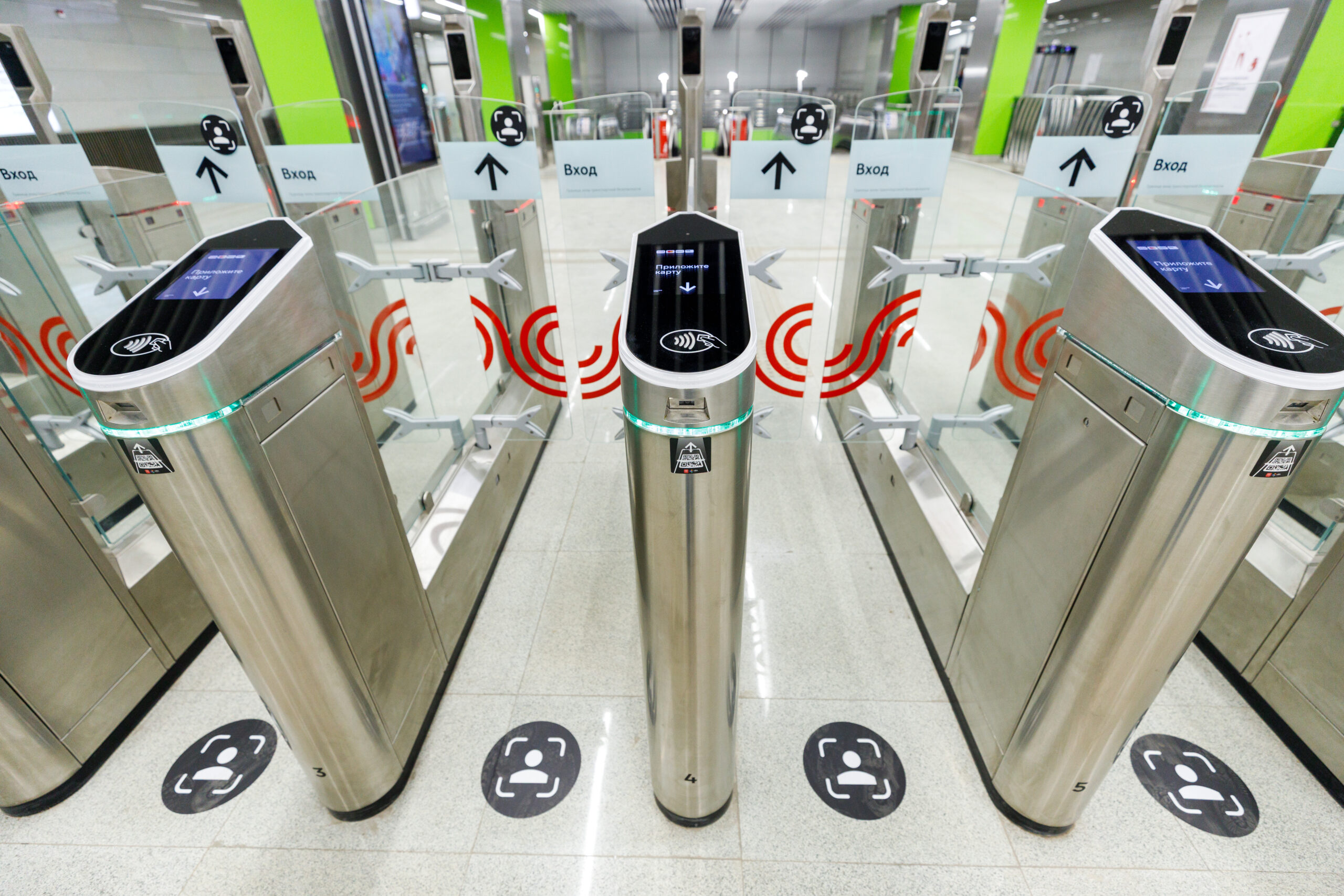
Moscow Metro: Moscow is the world leader in the number of ways to pay for travel

Translation. Region: Russian Federal

Source: Moscow Metro

Maxim Liksutov noted that today 13 payment options are available in the capital's transport. Among them are both traditional methods and the most modern ones.


Moscow metro. Moscow Metro.

Thanks to the introduction of modern payment solutions: 1) more than 95% of passengers no longer go to ticket offices; 2) 98% do not buy paper tickets; 3) 91.2% choose contactless payment.


Moscow metro. Moscow Metro.

Today, Moscow is the leader in the number of ways to pay for travel on public transport. The developed ticket system allows the city to save on printing paper tickets and receipts, and also eliminates queues at metro ticket offices. To create the best payment system in the world, the Moscow Government uses the most advanced domestic developments. According to the task of Moscow Mayor Sergei Sobyanin, the development of payment for travel on public transport continues to be even more convenient for all passengers, – said Maxim Liksutov.