
A production complex will appear in Zelenograd as part of a large-scale investment project

Translation. Region: Russian Federal

Source: Moscow Government – Government of Moscow –

An important disclaimer is at the bottom of this article.

In the Zelenograd Administrative District (ZelAO), as part of a large-scale investment project (MaIP), a production complex is being built for the companies Pervy DSK and Life Engineering. This is the third of four facilities being built in the Savelki area. This was reported by the Deputy Mayor of Moscow for Transport and Industry Maxim Liksutov.

"In accordance with the instructions of Sergei Sobyanin, the capital continues to implement projects to develop industrial infrastructure. For example, a complex of four production facilities for various purposes is being built in Zelenograd, where it is planned to produce windows, aerated concrete blocks and ready-made modules. Its creation became possible thanks to two key measures to support the city at once. Due to the status of a large-scale investment project, the investor was able to lease a plot of land on preferential terms. And thanks to the program to stimulate the creation of employment opportunities, after the completion of the construction of all enterprises, the complex will provide more than 600 new jobs for residents of the capital. This will strengthen the production potential of the city and increase the level of employment of the population," said Maxim Liksutov.

The complex will house two enterprises producing modern construction products.

The plant of the company "First DSK" will produce window and door systems, as well as facades using glass and aluminum. The enterprise will provide a full cycle of work – from standard elements to individual solutions. The annual output will be up to 279 thousand square meters of PVC structures, 82 thousand square meters of products with warm glazing and 184 thousand square meters – with cold glazing.

The Life Engineering company's enterprise will produce 40 thousand square meters of ready-made modules per year using prefab technology. It involves the preliminary assembly of standard-sized modular structures with full or partial glazing.

"The construction of an industrial facility, which will become part of the city's modern infrastructure, is underway in Zelenograd Administrative Okrug. The project's implementation will create over 100 jobs for residents of the district and open up additional employment opportunities near home. The new facility, with a total area of over 17 thousand square meters, will be located in the Savelki district," said the Minister of the Moscow Government, head of the Moscow Department of Investment and Industrial Policy

Anatoly Garbuzov.

The city provides land plots for the construction of production facilities within the framework of the implementation of the MAIP at a preferential rate of one ruble per year. This contributes to the development of Moscow's infrastructure and the reduction of pendulum migration of the population of different districts.

"The provision of land plots at a preferential rate for the creation and expansion of production is a support measure that has been in effect in the capital since March 2022. The FSK Group of Companies was one of the first to take advantage of this opportunity. A plot of about 3.5 hectares was allocated for the construction of the complex. In total, more than 17 hectares of land in the Savelki area have been transferred to the company for the construction of four industrial facilities," she noted.

Ekaterina Solovieva, Minister of the Moscow Government, Head of the Moscow Department of City Property.

The construction of the complex is under control Committee for State Construction Supervision of the City of Moscow (Moscow State Construction Supervision Authority).

As the head of the department said Anton Slobodchikov, permitting documentation, which allows the developer to begin work on the territory of the complex, was issued at the end of December 2023. The facility will have workshops, warehouses, administrative blocks and checkpoints, offices, a medical center, a canteen, sanitary and household premises and dressing rooms. More than two thousand square meters are allocated for landscaping. Mosgosstroynadzor inspectors monitor each stage of construction – from site preparation to the delivery of the facility. The implementation is carried out in strict accordance with the design documentation and compliance with all technical requirements.

Work is currently underway to install a reinforced concrete base and roof, as well as to install metal structures and sandwich panels.

FSK Group Project Director Maxim Rybakov noted that the new industrial facility in Zelenograd will unite two high-tech production facilities at one site. This will increase the efficiency of using the provided land plot and provide residents of the district with a large selection of vacancies for employment at future enterprises. The partnership of the city and business in projects of this scale allows for a comprehensive approach to the development of territories and human resources. Maxim Rybakov also noted that construction is planned to be completed this year.

The program to stimulate the creation of employment opportunities has covered almost all districts of the city since 2020. Investors will build over 230 facilities with a total area of over six million square meters. Among them are new industrial enterprises, office and shopping centers, as well as educational, cultural and sports institutions. The implementation of the projects will create more than 310 thousand new jobs in almost all sectors of the city's economy.

Get the latest news quickly official telegram channel the city of Moscow.


Please note: This information is raw content obtained directly from the source of the information. It is an accurate report of what the source claims and does not necessarily reflect the position of MIL-OSI or its clients.

.
A new water supply system will appear in Shcherbinka

Translation. Region: Russian Federal

Source: Moscow Government – Government of Moscow –

An important disclaimer is at the bottom of this article.

A new water pipeline will be built in the Shcherbinka district of the Novomoskovsk administrative district. The corresponding territorial planning project has already been approved. This was reported by Juliana Knyazhevskaya, Chairman of the Committee for Architecture and Urban Development of the City of Moscow (Moskomarkhitektura).

Large-scale work is being carried out in TiNAO to update water supply and sanitation systems. The new facility will provide residents of Shcherbinka with water from a centralized system supplied by the Western Water Treatment Plant.

"In the Shcherbinka district, it is planned to build a new water pipeline for water supply to existing and prospective consumers of the district. At present, a land use planning project has been approved for an area of about 96 hectares. It is planned to build a water pipeline and regulating water pumping units "Ryazanovsky-1", "Ryazanovsky-2" and "Erino", as well as two access roads. The total length of the water pipeline will be 3.42 kilometers. The work is being carried out within the framework of the capital's Address Investment Program," said Yuliana Knyazhevskaya.

She also added that high-quality design of engineering infrastructure and water supply systems in new areas is a key element of sustainable development. The creation of a well-thought-out and reliable network will not only improve the quality of life of city residents, but will also ensure long-term stability and comfort for future generations, contributing to the harmonious development of the territory.

Moscow Mayor Talks About More Than Two Centuries of Water Supply System History

Get the latest news quicklyofficial telegram channel the city of Moscow.

Please note: This information is raw content obtained directly from the source of the information. It is an accurate report of what the source claims and does not necessarily reflect the position of MIL-OSI or its clients.

.

The buildings of the state wine warehouse were included in the list of cultural heritage sites

Translation. Region: Russian Federal

Source: Moscow Government – Government of Moscow –

An important disclaimer is at the bottom of this article.

The complex of buildings of the Moscow State Wine Warehouse No. 1 of the 19th–20th centuries (now the Moscow Crystal Factory) was among the 142 identified cultural heritage sites. In total, the Unified State Register of Cultural Heritage Sites includes 3,975 historical buildings and structures. All monuments are under state protection. Their owners and tenants are obliged to ensure the preservation of cultural heritage sites and maintain them in accordance with the approved subject of protection.

Moscow State Wine Warehouse

The complex of buildings of the Moscow Crystal Plant is located on Samokatnaya Street (house 4, buildings 1, 2, 9, 11, 13, 14, 32 and an unnamed building). This is a monument of industrial architecture from the turn of the 19th–20th centuries, which previously had another name – Moscow State Wine Warehouse No. 1. It was erected on the bank of the Yauza River in Lefortovo and became the largest enterprise in the industry.

The oldest buildings that have survived to this day date back to 1851–1876. The main part of the production buildings was created by the architect Nikolai Faleev and the civil engineer Viktor Velichkin.

In 1894, on the initiative of the Minister of Finance of the Russian Empire, Sergei Witte, a state monopoly on the production and sale of alcoholic beverages was introduced in the country. In 1901, it also affected Moscow.

After the introduction of prohibition in 1914 during the First World War, Moscow State Wine Warehouse No. 1 continued to manufacture products for medical and technical needs and for export abroad. Several buildings of the plant were given over to housing the wounded.

Since 1925, the production of strong alcoholic beverages has been resumed here. During the Great Patriotic War, the Moscow State Wine Warehouse No. 1 bottled Molotov cocktails and produced dry alcohol. On July 22, 1941, a bomb hit its main building. The building burned almost completely inside and was restored only by 1950.

In January 1987, Moscow State Wine Warehouse No. 1 was renamed the Crystal Plant. In 2013, the Crystal Plant's production facilities were transferred to the Kashirsky District of the Moscow Region. However, the head office remains located in Moscow on Samokatnaya Street.

Get the latest news quicklyofficial telegram channel the city of Moscow.

Please note: This information is raw content obtained directly from the source of the information. It is an accurate report of what the source claims and does not necessarily reflect the position of MIL-OSI or its clients.

.

The Museum of Entrepreneurs, Patrons and Philanthropists of Moscow presents the exhibition “Rediscover Russian PR”

Translation. Region: Russian Federal

Source: Moscow Government – Government of Moscow –

An important disclaimer is at the bottom of this article.

IN Museum of Entrepreneurs, Patrons and Philanthropists On July 23, the exhibition "Rediscover Russian PR" will open. The exposition will introduce visitors to the history of public relations in Russia and show how the reputations of domestic entrepreneurs and industrialists were formed, destroyed and restored.

"By studying the origins of entrepreneurial activity, Moscow entrepreneurs will be able to learn not only about the legacy of business culture, but also find inspiration and practical guidelines for modern business communications. Such projects form the value of continuity and strengthen the connection between generations," she noted.

Kristina Kostroma, Head of the Department of Entrepreneurship and Innovative Development of the City of Moscow.

The exhibition is based on the study and analysis of primary sources — business press, memoirs, materials from industrialists’ congresses, and other historical documents. Among them are more than a thousand newspaper issues from 1861–1917, including Moskovskiye Vedomosti, Russkoye Slovo, Golos Moskvy, Birzhevye Vedomosti, and Kommersant.

The exhibition includes stands describing historical cases from the second half of the 19th and early 20th centuries in the areas of education, patronage and social support. They feature examples of press publications, early press releases and anti-crisis PR campaigns from past eras. The exhibition will reveal the PR tools of Russian entrepreneurs — from creating a personal brand to influencing public opinion and government decisions.

Examples include the educational project “Agronomic Train,” which clearly demonstrated modern agricultural technologies to farmers, the anti-crisis media strategy in the Savva Mamontov case, which influenced public perception of the trial, and the activities of the first advertising agencies, which were engaged not only in advertising, but also in promoting news items.

"The practice and history of Russian PR is currently taught only in specialized educational institutions, and, unfortunately, we are still learning from Western examples. Meanwhile, a huge number of Russian entrepreneurs have contributed to the development of the economy, education, and culture. Our task as a museum is to continue and support research in this area, as well as in other insufficiently studied areas, such as the experience of building entrepreneurial dynasties," emphasized Nadezhda Smirnova, director of the Museum of Entrepreneurs, Patrons, and Philanthropists, member of the Moscow Council of Entrepreneurs.

The exhibition will last until September 1. To visit, you must purchase a ticket to the Museum of Entrepreneurs, Patrons and Philanthropists, which includes a comprehensive tour. It includes a viewing of the permanent exhibition, as well as materials from the exhibition "Rediscover Russian PR".

The organizers of the exhibition were the digital agency Interium, the Museum of Entrepreneurs, Patrons and Philanthropists, members of the Council of Entrepreneurs of the City of Moscow, participants of the working group on PR and advertising, operating at the site of the capital headquarters for business protection.

The Business Protection Headquarters, subordinate to the Department of Entrepreneurship and Innovative Development of the City of Moscow, ensures the processing of individual requests from Moscow entrepreneurs, facilitates the resolution of systemic issues and builds effective communication between businesses and government bodies. More detailed information about the work of the headquarters is available at website and by phone number: 7 495 620-20-45.

Get the latest news quicklyofficial telegram channel the city of Moscow.

Please note: This information is raw content obtained directly from the source of the information. It is an accurate report of what the source claims and does not necessarily reflect the position of MIL-OSI or its clients.

.

Sergei Sobyanin told how the city takes care of nature during the construction of the metro

Translation. Region: Russian Federal

Source: Moscow Government – Government of Moscow –

An important disclaimer is at the bottom of this article.

At construction of the metro special attention is paid to ecology. This is reported inon your telegram channel Sergei Sobyanin reported.

"Our task is to use natural resources rationally. Both during the work and during the operation of the metro," the Mayor of Moscow noted.

Source: Sergei Sobyanin's Telegram channel @mos_sobyanin

To do this, specialists conduct environmental monitoring of air, ground and surface water, and soil analysis. All samples are examined in independent laboratories. Most often, such testing is used when tunneling, which affects the territories of national parks or protected areas. Thus, it was carried out during the construction of the Big Ring Line (BCL), when tunnel boring machines worked under the territories of nature conservation areas and repeatedly crossed the water area of the Moscow River.

After work, builders remove and dispose of all waste, including soil. For example, at the ZIL station Trinity line To create the pits and reversible culverts, it was necessary to remove a total of almost 400 thousand cubic meters of earth.

After the work is completed, green spaces are restored. Thus, more than 600 bushes and trees will be planted near the Stolbovo electric depot, and about 1.4 thousand in TiNAO. Among the already implemented projects, one can highlight the improvement of the adjacent territory of the Kuntsevskaya station of the Big Circle Line. Almost 300 trees and 2.5 thousand bushes were planted here – a new park for citizens to relax appeared.

Construction of monolithic structures of the Lipovaya Roshcha metro station has begunSergei Sobyanin: The first metro train arrived at the Stolbovo electric depot under construction

"We minimize harm to the animal world. For example, trees and bushes are cut down before the nesting period. Grass is not burned and chemical reagents are not used," added Sergei Sobyanin.

All these measures help to avoid negative impacts on the environment and the health of construction workers, passengers and metro personnel.

Please note: This information is raw content obtained directly from the source of the information. It is an accurate report of what the source claims and does not necessarily reflect the position of MIL-OSI or its clients.

.

Gas supply systems in 467 Moscow homes to be updated under capital repairs program

Translation. Region: Russian Federal

Source: Moscow Government – Government of Moscow –

An important disclaimer is at the bottom of this article.

Specialists from the capital's municipal services complex will update in-house gas supply systems in 467 apartment buildings. The work will be carried out within the framework of capital repair programsThis was reported by the Deputy Mayor of Moscow for Housing and Public Utilities and Improvement Petr Biryukov.

"The capital's capital repair program is one of the most significant housing modernization projects not only in Russia, but also in the world. We are carrying out work to update not only the exterior of the building: the facade, roof and entrance group, but also the engineering systems. During the program's implementation, we have completed capital repairs of in-house gas supply systems in 2,343 apartment buildings. This year, work is planned for another 467, and it has already been completed at 301 facilities," noted Pyotr Biryukov.

Timely repair of equipment is important for its safe operation and organization of uninterrupted gas supply. In their work, specialists use modern technical solutions. For example, they use ball valves with three degrees of protection against accidental opening. They limit the flow of gas in case of equipment failure and temperature exposure. In addition, flexible gas piping made of stainless steel with PVC coating and a dielectric insert are installed in houses. This is done to protect against external influences and to eliminate an emergency situation when stray currents appear.

Gas risers inside an apartment building are common property, so apartment owners must promptly provide specialists with access to the work sites.

According to current regulations, the service life of an in-house gas pipeline is 30 years. After this time, the equipment wears out and requires replacement.

The regional program for capital repairs of housing stock being implemented in the capital corresponds to the goals and objectives of the national project "Infrastructure for life".

What to look for when renting an apartment with gas equipment

Get the latest news quickly official telegram channelthe city of Moscow.

Please note: This information is raw content obtained directly from the source of the information. It is an accurate report of what the source claims and does not necessarily reflect the position of MIL-OSI or its clients.

.

Over the course of six months, following the results of auctions, the city sold and leased more than 7.5 hectares of land for the construction of real estate

Translation. Region: Russian Federal

Source: Moscow Government – Government of Moscow –

An important disclaimer is at the bottom of this article.

In the first half of 2025, investors leased and purchased land for the construction of various facilities in six administrative districts of the capital. This was reported by the Deputy Mayor of Moscow for Urban Development Policy and Construction Vladimir Efimov.

"Over the first six months of 2025, based on the results of auctions, more than 40 plots with a total area of over 7.5 hectares were leased and purchased from the city. Almost 84.2 thousand square meters of real estate are planned to be built on these sites, including industrial, public and business facilities and private residential buildings. The land is located in six administrative districts, the majority of which is in TiNAO: there are 36 plots there. Two objects were purchased in the southwest and west, one in the east and southeast of the capital," Vladimir Efimov noted.

For the construction of non-residential facilities, the city offers investors two formats: a land lease agreement for construction or an agreement on the implementation of a large-scale investment project (MaIP).

"Based on the results of the first half of the year, entrepreneurs signed three agreements with the city on the implementation of the MAIP. According to one of them, a modern retail and office building will appear on the territory of the administrative and business center "Kommunarka", the second provides for the construction of two industrial facilities with an area of 12.5 thousand square meters in the Nekrasovka and Vnukovo districts. Another 36 plots, mainly in the Troitsky administrative district, were sold to individuals for individual housing construction. Commercial buildings will be erected under three land lease agreements in the southwest of the capital and in the Tatar Administrative District," she noted.

Ekaterina Solovieva, Minister of the Moscow Government, Head of the Moscow Department of City Property.

You can find out information about land plots put up for auction, rules for holding auctions and study the documentation in the section "Moscow Trades" on the capital's investment portal. All contracts are concluded electronically in the buyer's personal account.

According to the head of the Moscow City Department for Competition Policy Kirill Purtov, the capital offers a convenient format for holding auctions and guarantees legal purity and transparency of the transaction, which contributes to the popularity of city auctions among entrepreneurs and city residents. In the first six months of this year, at auctions for the sale of land plots for the construction of both commercial and residential properties, an average of 11 participants bid for one lot.

The development of electronic services for entrepreneurs is being implemented within the framework of the national project "Data Economy".

Get the latest news quickly official telegram channel the city of Moscow.


Please note: This information is raw content obtained directly from the source of the information. It is an accurate report of what the source claims and does not necessarily reflect the position of MIL-OSI or its clients.

.

The collection of cost standards for assessing the costs of operating urban facilities has been updated

Translation. Region: Russian Federal

Source: Moscow Government – Government of Moscow –

An important disclaimer is at the bottom of this article.

The collection of standards for assessing the costs of operating urban facilities (SN-2012) has been updated, taking into account prices as of July 1, 2025. This was reported by Maria Bagreeva, Deputy Mayor of Moscow, head of the capital's Department of Economic Policy and Development.

"The SN-2012 collection contains prices for all types of work and services for the maintenance and repair of schools, clinics, kindergartens, parking lots, roads, parks, sports complexes, cultural heritage sites and other city facilities. Using the collection allows us to eliminate unjustified spending of budget funds on the repair and maintenance of city facilities, and provides contractors with equal and transparent conditions for participation in tenders. Muscovites also benefit from this, as they receive high-quality improvement of the capital that meets the highest requirements," noted Maria Bagreeva.

The standards approved in the SN-2012 collection are used by about 2.5 thousand Moscow customers and commercial companies in the operation and maintenance of various municipal facilities. New cost standards are added and recalculated to the current price level on a quarterly basis. In the first two quarters of this year, the Department of Economic Policy and Development of the City of Moscow developed and included 128 standards in the collection, some of which are related to the maintenance of the street and road network and the outdoor lighting system.

Get the latest news quicklyofficial telegram channel the city of Moscow.

Please note: This information is raw content obtained directly from the source of the information. It is an accurate report of what the source claims and does not necessarily reflect the position of MIL-OSI or its clients.

.

Moscow colleges have increased the number of budget places for cooking specialties

Translation. Region: Russian Federal

Source: Moscow Government – Government of Moscow –

An important disclaimer is at the bottom of this article.

This year, the capital's colleges have expanded their enrollment in culinary specialties. More than 2,500 budget places are available for applicants – this is 20 percent more than in the previous academic year. This was reported by the press service of the capital's Department of Education and Science.

"In Moscow colleges, future chefs and pastry chefs are immersed in the profession from the very first days: they undergo practical training on modern equipment, master current trends and hone their skills under the guidance of experienced mentors. Thanks to close cooperation with the city's leading enterprises, two-thirds of students begin working while still studying. The guys cook for premium establishments and work in food industry companies," the department's press service said.

In Moscow, food industry professionals are trained in eight educational institutions: College of Services No. 10, College of Hospitality Industry and Management No. 23, food college no. 33, Polytechnic College No. 50 named after twice Hero of Socialist Labor N.A. Zlobin, Moscow educational complex "West", First Moscow educational complex, Moscow educational complex named after Viktor Talalikhin AndMoscow College of Management, Hotel Business and Information Technology "Tsaritsyno"In total, more than seven thousand students are studying to become cooks and pastry chefs.

Success Stories

For example, Elizaveta Blokhina is a third-year student at College of the Service Sphere No. 10, majoring in pastry chef. In the fall of 2024 and spring of 2025, the student completed an internship at the White Rabbit restaurant. During her last internship, she realized that she wanted to become part of the team. Thanks to the close cooperation between the college and the restaurant, the girl met the chef, successfully passed the interview, and now works in the cold shop.

Ekaterina Khmelevskaya, a graduate of the Moscow educational complex "West" in the specialty "cooking and confectionery", graduated from college this summer. Already in her third year, she completed an internship at the prestigious Moscow restaurant Selfie, awarded a Michelin star, and soon began working there. After that, the student tried her hand at an unusual project – an immersive gastrotheatre, where she created desserts, combining them with video projections and light effects. However, she soon realized that she liked classical cooking more, and took part in the All-Russian open culinary championship among chefs Chef a la Russe, where she took second place. After participating in the competition, the girl was invited to an internship at a Moscow restaurant named after the philanthropist Savva Mamontov, and a week later she was offered the position of pastry chef.

Capital colleges increase number of employer partners

Darya Stelmakhova graduated from Food College No. 33 as a pastry chef in 2023. In her second year, the student began working at the Aist restaurant under the guidance of Italian chef Mirko Zago. Later, she moved to the Savva restaurant, where she worked in the hot shop. Thanks to her talent and responsible approach to work, the girl quickly won the respect of her colleagues and became a sous-chef two years later.

Admissions campaign

This year, the number of budget places in Moscow colleges for ninth-graders in the capital has increased to a record 43 thousand. Applicants can choose from more than 150 professions and specialties in all sectors of the city's economy.

Moscow ninth-graders who graduated from school this year will be able to submit applications until July 26. The application period for programs with entrance examinations ended on July 20. Moscow ninth-graders of previous years, Moscow eleventh-graders, as well as out-of-town applicants will be able to submit applications until August 15, and for programs with entrance examinations – until August 10.

Applicants are allowed to choose five specialties at one educational institution at the same time or distribute them among several. Applications can be submitted electronically viamos.ru portal.

Detailed information about in-demand professions and specialties taught in the capital's colleges is available on the website "Colleges of Moscow", in the same names telegram channel Andcommunity on the social network VKontakte.

Sharpening Your Skills. Teachers on How Internships Work in Moscow Colleges

Get the latest news quicklyofficial telegram channel the city of Moscow.

Please note: This information is raw content obtained directly from the source of the information. It is an accurate report of what the source claims and does not necessarily reflect the position of MIL-OSI or its clients.

.

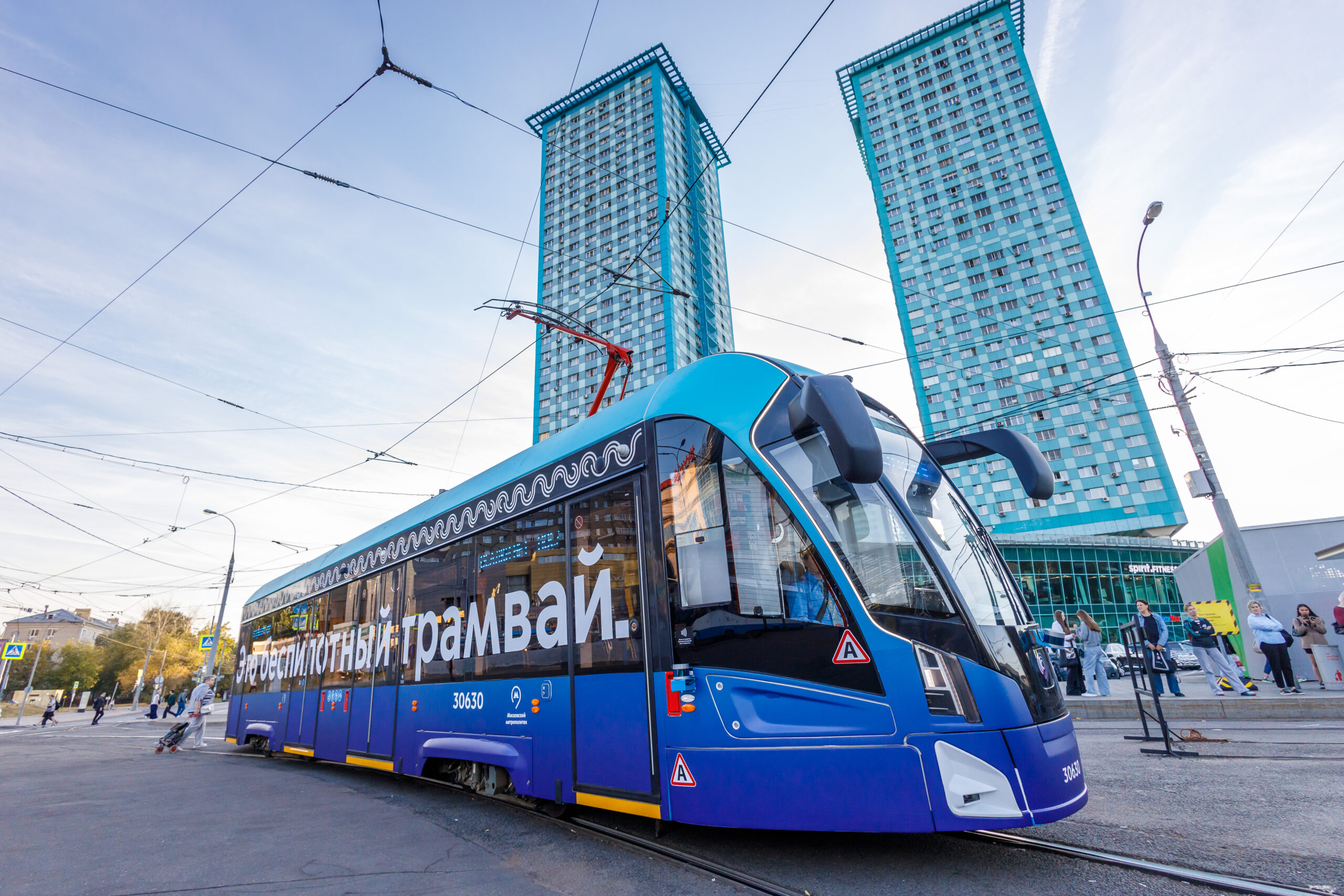
Moscow Metro – Russia made its first payment in digital rubles under a smart contract for insuring the capital’s driverless tram

Translation. Region: Russian Federal

Source: Moscow Metro – Russia has made its first payment in digital rubles under a smart contract for insuring the capital’s driverless tram


Moscow Metro – Russia has made its first payment in digital rubles as part of a smart contract for insuring the capital’s driverless tram.

As Maxim Liksutov explained, the transaction was successfully completed in pilot mode between the insurance group "SOGAZ" and the metro with the support of VTB. The payment is not related to the occurrence of an insured event.

The main advantages of digital rubles:

🔹 Reliability. It is a digital form of national currency along with cash and non-cash funds

🔹 Speed. Payments are processed automatically within 1 day within the smart contract

🔹 Security. Complete transparency of transfers, payment for goods and services

In early 2025, on the instructions of Moscow Mayor Sergei Sobyanin, the Moscow Government concluded a smart contract to insure the first unmanned tram in Russia. The test payment proved the safety, transparency and high speed of fulfilling obligations using digital rubles. Online calculation of simulated damage and payment of compensation occurred within 1 day. In the future, digital rubles will become one of the ways to pay for travel and other transport services in the capital, said Maxim Liksutov.