An Innovative Model for Training Engineers: A Project by Polytechnic University and Severstal

Translation. Region: Russian Federation –

Source: Peter the Great St. Petersburg Polytechnic University –

An important disclaimer is at the bottom of this article.

The Institute of Mechanical Engineering, Materials, and Transport of the Polytechnic University, together with PAO Severstal, developed an innovative multi-track model for training research engineers in metallurgy and materials science. The results of the study were published inscientific article in the journal "Black Metals".

The new educational model includes practice-oriented training using VR simulators, the creation of specialized "Engineering Classes," and the organization of industrial internships at the company's facilities. Particular attention is paid to career guidance for schoolchildren and students at various levels.

"The developed model enables us to train specialists capable of solving real-world production problems," notes Pavel Kovalev, Deputy Director for Education at IMMiT. "Close collaboration with our industrial partner ensures high-quality training and the demand for graduates."

As part of our collaboration with Severstal, we are implementing an end-to-end system for engaging students in project-based activities, which facilitates the development of digital competencies and practical skills in future specialists.

Please note: This information is raw content obtained directly from the source. It represents an accurate account of the source's assertions and does not necessarily reflect the position of MIL-OSI or its clients.

A GUU student performed at the Mid-Autumn Festival in China.

Translation. Region: Russian Federation –

Source: Official website of the State –

An important disclaimer is at the bottom of this article.

Diana Nesterova, a student at the State University of Management, performed a creative number on Chinese television during a program dedicated to the Mid-Autumn Festival.

The Mid-Autumn Festival, also known as the Moon Festival, is associated with the legend of the moon goddess Chang'e and the family gathering to give thanks for the harvest. It is also celebrated in Japan, Korea, and Vietnam. The 15th day of the eighth lunar month is traditionally celebrated by exchanging gifts, releasing paper lanterns on rivers, and eating mooncakes. The Mid-Autumn Festival is one of the most popular in China, second only to the Chinese New Year in terms of scale. The festival commemorating it is called "Golden Week," and this year it ran from October 1st to 8th, which were public holidays.

Diana Nesterova, a fourth-year undergraduate student at the State University of Management, currently studying in the International Manufacturing Business program jointly with Ningbo University, was invited to represent Russian students on Chinese television in a program dedicated to this major holiday. The Chinese students sang the song "Moscow Nights," and Polina added her choreography.

"I know the Mid-Autumn Festival is very important to the Chinese people. I'm very glad that Russia and China are good friends. I think it's crucial for Russia to learn and understand the meaning of this holiday, as it's such a huge part of Chinese culture. It was a wonderful idea to combine Russian and Chinese cultures in one performance at such a large festival," Diana Nesterov said in an interview with Chinese journalists.

Subscribe to the "Our GUU" Telegram channel. Publication date: October 9, 2025.

Please note: This information is raw content obtained directly from the source. It represents an accurate account of the source's assertions and does not necessarily reflect the position of MIL-OSI or its clients.

Polytechnic University's Successes at SPIGF-2025: New Partnerships and Achievements

Translation. Region: Russian Federation –

Source: Peter the Great St. Petersburg Polytechnic University –

An important disclaimer is at the bottom of this article.

We continue reporting on Polytechnic University's participation in the St. Petersburg International Gas Forum. The second day proved to be very eventful: SPbPU Rector Andrey Rudskoy held several business meetings and signed new cooperation agreements, while the strategic lecture series continued, attracting even more attendees.

Polytechnic University Rector Andrey Rudskoy signed several cooperation agreements on joint projects and developments, as well as training personnel to meet the needs of industrial partners at SPIGF-2025.

A strategic partnership agreement was signed with AIROS-SYSTEM LLC. The company develops and manufactures metal structures for fastening utility systems on oil and gas platforms in the Arctic.

The collaboration aims to ensure high-quality professional training for Polytechnic University graduates and to create a talent pool of young professionals with relevant competencies in high-tech manufacturing. The company is keen to train personnel in the "Unique Buildings and Structures" program at the Civil Engineering Institute.

It is planned to jointly conduct scientific, educational, research, development and other work in priority and promising areas of development of science, technology and engineering.

Polytechnic University, ENTE LLC, and DST-Ural LLC have signed a trilateral agreement to establish a Robotics and Mechatronics Research Center at the Institute of Mechanical Engineering, Materials, and Transport at SPbPU. The center will conduct research and development to address the partners' applied needs, develop new competitive technologies and products, commercialize them, and train highly qualified personnel in robotics and mechatronics.

An agreement was signed between the Polytechnic University and its industrial partner, Gazprom Mezhregiongaz Engineering, at the "Gas for Russia" stand. The document was signed by SPbPU Rector Andrey Rudskoy and Gazprom Mezhregiongaz Engineering CEO Pavel Ostroushko, in the presence of Gazprom Mezhregiongaz CEO Sergey Gustov.

The partners agreed to long-term, mutually beneficial cooperation in science and education. Plans include developing and promoting continuing professional education programs for company employees, conducting expert evaluations of educational programs, organizing internships for Polytechnic students at the company's production facilities, and holding themed competitions among talented students and faculty.

Our goal is twofold. The first is to produce world-class specialists, the engineering "special forces" of the gas industry. The second is to conduct research specifically in this area," noted Andrey Rudskoy.

In addition, SPbPU Rector Andrei Rudskoy took part in a business meeting with Sergey Kogogin, General Director of PAO KAMAZ, Rustam Minnikhanov, Rais of the Republic of Tatarstan, and Alexey Miller, Chairman of the Management Board of PAO Gazprom.

A working meeting was also held with Sergey Aksenin, General Director of the INKOMSYSTEM Scientific and Engineering Center, where we discussed the possibility of implementing joint projects within the framework of our collaboration. Earlier, a new educational laboratory was opened at the Polytechnic University with the support of the Research Center.

Representatives of the International Shukhov Foundation and the Russian Creative Union of Cultural Workers donated to the university a unique two-volume gift edition, "The Genius of Lightweight Construction," dedicated to the life and work of engineer, architect, and scientist Vladimir Shukhov.

A meeting was also held with Sergei Korotkov, General Designer of the United Aircraft Corporation, to discuss potential partnerships in training personnel for the aircraft industry.

The Polytechnic University's strategic lecture program also continued its work at the forum. Polytechnic students delivered eight presentations to forum participants in various formats: lectures, master classes, open dialogues and discussions, and an opportunity to share experiences with the audience.

Vasily Semenovsky, Associate Professor at the Higher School of Power Engineering, shared his experience developing and using virtual simulators for Gazprom. Yuri Aristovich, an expert at the Digital Engineering of Primary Equipment for Chemical-Engineering Systems Research and Education Center, gave a lecture on "Digital Engineering in the Oil and Gas Industry." Anton Sotov, Leading Researcher at the Materials Design and Additive Manufacturing Laboratory, presented a discussion on "Additive Manufacturing of Polymer Composite Materials."

Professor Alexey Fadeev of the Higher School of Industrial Management delivered an open lecture entitled "Characteristics of Hydrocarbon Exploration, Production, and Processing in the Arctic and the Far East."

Olga Novikova, Associate Professor at the Higher School of Nuclear and Thermal Energy and the Higher School of Engineering and Economics, discussed the specifics of engineering and economics education at SPbPU. Olga Kalinina, Director of the Higher School of Industrial Management, shared her experience creating and implementing a master's program in "Human Resource Management and Organizational Development" with industrial partner Gazprom Gazifikatsiya LLC, commissioned by the ANO "Russia – Land of Opportunities."

Elvira Tuktamysheva, Head of the SPbPU Employment Support Sector, and Yulia Chizhevskaya, Head of the SPbPU Student Internship Organization Sector, held a master class on "How an Employer Can Integrate into the Educational Environment and Find the Best Specialists." For the younger audience, Daniil Guryev, Marketing Specialist at Gazpromneft-SM, and Anna Timofeeva, Associate Professor at the Graduate School of Industrial Management, presented a master class on "Scientific Track: A Strategy for Launching a Career in the Fuel and Energy Sector Through Research and Case Studies."

The Polytechnic University's successful performance at the gas forum was also confirmed by the announcement of the results of the "Course for Success" educational program competition, organized by Gazprom Mezhregiongaz Engineering. Faculty and students from the Polytechnic University were among the winners and runners-up. The excellent results of the Polytechnic University students not only earned them prizes but also highlighted the high level of faculty training in developing educational programs aimed at implementing the concept of practice-oriented education and strengthening ties between the university community and the oil and gas industry.

It's also worth noting that the Polytechnic's stand featured exhibits from the SPbPU History Museum. One of the first buildings on the grounds of the St. Petersburg Polytechnic Institute was the gas plant. It was a one-story brick building, set apart from the other buildings of the institute.

The exhibits included gas burners designed by N. Teklu and R. Bunsen, as well as the Auer gas burner, which was used as an alternative to incandescent lamps in the late 19th century. Manufacturers came from a wide range of countries, including Russia, Germany, and France.

The Polytechnic Institute's gas plant produced lighting gas, which was distributed among the laboratories. Experiments using gas burners were largely made possible thanks to this resource.

Please note: This information is raw content obtained directly from the source. It represents an accurate account of the source's assertions and does not necessarily reflect the position of MIL-OSI or its clients.

Polytechnic University and CUJAE: an international project on digital modeling of cultural heritage sites in Russia and Cuba

Translation. Region: Russian Federation –

Source: Peter the Great St. Petersburg Polytechnic University –

An important disclaimer is at the bottom of this article.

The Polytechnic Institute of Civil Engineering held the grand opening of the international educational project "Digital Modeling of Cultural Heritage Sites in Russia and Cuba." Representatives of the Committee for State Control, Use, and Protection of Historical and Cultural Monuments of St. Petersburg, the Union of Restorers of St. Petersburg, the Technological University of Havana (CUJAE), and the National Council for Cultural Heritage of Cuba participated in the event. The project will run for one academic semester, until December 15, 2025.

The project is a follow-up to agreements reached between the universities during the St. Petersburg Days in Havana and Santiago de Cuba in 2024. The project is being implemented with the support of the Union of Restorers of St. Petersburg, the Committee for State Control, Use, and Protection of Historical and Cultural Monuments of St. Petersburg, and the National Council for Cultural Heritage of the Republic of Cuba.

The Russian side was represented at the event by Alexey Mikhailov, Chairman and First Deputy Chairman of the Committee for State Control, Use, and Protection of Historical and Cultural Monuments of St. Petersburg, and Ekaterina Kozyreva; Alexandra Komissarova, Deputy Director General of the Union of Restorers of St. Petersburg; Marina Petrochenko, Director of the Institute of Contemporary Art; Mikhail Romanov, Responsible for International Activities of the Institute of Contemporary Art; Ksenia Strelets, Director of the Center for Additional Professional Programs at the Institute of Contemporary Art; Yegor Melekhin and Anna Korotkova, curators of the Russian student team and ISI faculty; Ekaterina Belyaevskaya, Head of the Department of International Interuniversity Cooperation at SPbPU; Taisiya Kletskina, Specialist of the Department of International Interuniversity Cooperation at SPbPU; and Leoandris Martinez Serrano, PhD student at the Graduate School of Cyber-Physical Systems Management.

The friendship between Russia and Cuba is not only a long history of mutual support and respect, but also an example of fruitful cooperation in science, technology, and culture. Today's project is further proof of how innovative approaches and modern technologies help strengthen our ties and preserve our priceless cultural heritage for future generations. By combining our efforts in technology and innovation, we are building bridges between our peoples, strengthening mutual understanding and cooperation," noted Marina Petrochenko, Director of the Civil Engineering Institute.

The main goal of the project is to develop long-term educational, scientific, and technical cooperation between SPbPU and CUJAE. Particular attention is paid to developing students' professional competencies in project management and the application of building information modeling (BIM) technologies for the digitalization, preservation, and restoration of cultural heritage sites.

During the project, students from Russia and Cuba are expected to collaborate in parallel, studying the principles of digital tools used in architectural research and developing design solutions aimed at preserving cultural heritage sites. This is essential and fundamental knowledge for modern restoration architects, and by honing it, specialists will achieve a high level of professionalism and mastery. I wish the project participants success in mastering new tools and achieving excellence in the use of familiar technologies, as well as maintaining a focus on developing the management systems that will be essential for the continued existence of the monument, noted Alexandra Komissarova, Deputy General Director of the Union of Restorers of St. Petersburg.

During the project, students will complete a comprehensive educational program: training seminars and courses on the history of Russian and Cuban architecture, digital modeling of architectural structures, the study of construction regulations and standards, and the use of specialized software and equipment. Participants will master a full range of skills, from archival data analysis and laser scanning to information modeling and the use of augmented and virtual reality technologies.

Each student team will work with cultural heritage sites from their own country. Russian students from the Civil Engineering Institute will explore the Kholomki estate of Prince Andrei Grigorievich Gagarin and the Church of the Ascension of the Lord in the village of Belskoye Ustye. Cuban students will focus on studying the headquarters of the Physics Faculty and the headquarters of the Mathematics and Computer Science Faculty of the University of Havana.

The Republic of Cuba was represented by the Ministry of Culture Nilsson Acosta Reyes, Director of the International Relations Office of CUJAE Luis Alberto Rueda Guzmán, Vice President of the National Council for Cultural Heritage of Cuba and Dean of the Faculty of Architecture of CUJAE Ruslan Muñoz Hernández, Dean of the Faculty of Civil Engineering of CUJAE Ingrid Fernández Lorquenzo, General Director of RESTAURA Enterprise Tatiana Fernández de los Santos, Director of Technical and Production Works of RESTAURA Enterprise Lojania Cruz Hernández, Vice Dean for Research, Postgraduate Programs and International Relations of the Faculty of Architecture of CUJAE, Coordinator of the Cuban Team Karen Sanabria Ortega, External Director of GeoCuba Business Group Sergio E. Ricardo Desdin, Project Coordinator, Representative of GEODESA José Carlos Núñez, Head of the Applied Mathematics and Geomatics Department Emilio Escartín Sauleda, Vice Dean for the Master's Program at the Faculty of Civil Engineering, Dania Olga Abruy Hernandez, lecturer and consultants in ground surveying and 3D modeling Carlos Guerra Astorga and David Ernesto Chico Rodriguez.

Nilson Acosta Reyes, Vice President of the National Council for Cultural Heritage at the Cuban Ministry of Culture, noted: "The implementation of this technology for regulating and monitoring the condition of cultural sites, particularly historic buildings, will significantly improve the accuracy of collected data, streamline inspection and management decision-making processes, and develop effective measures to protect monuments from the effects of natural disasters, emergencies, and armed conflicts."

Also during the meeting, project curator Yegor Melekhin, assistant professor at the Higher School of Industrial, Civil, and Road Construction, presented a detailed presentation of the project, outlining the scope of the work, the implementation timeline, and the key objectives of the participants.

Luis Alberto Rueda Guzmán, Director of CUJAE's International Relations Office, emphasized: "Our collaboration, which began last November, already includes two promising areas: research in mechanics and renewable energy, as well as the preparation of scientific publications. The participation of Cuban students from CUJAE at the SPbPU Winter University is particularly valuable; it represents a new step in the collaboration between our universities."

Upon completion, each team will submit a set of materials, including a digital information model of the site, a project presentation, and an informational booklet describing the key elements and objects of protection. The project's implementation will significantly contribute to the development of international cooperation in the field of cultural heritage preservation using modern digital technologies.

Our partnership with the Technological University of Havana is more than just academic collaboration; it's a strategic alliance where Russian engineering traditions meet the innovative approaches of our Cuban colleagues. Together, we are creating new standards for international cooperation in the digital preservation of cultural heritage. This project clearly demonstrates how higher education is becoming a driver not only of technological progress but also of strengthening intercultural dialogue," noted Dmitry Arsenyev, SPbPU Vice-Rector for International Affairs.

Please note: This information is raw content obtained directly from the source. It represents an accurate account of the source's assertions and does not necessarily reflect the position of MIL-OSI or its clients.

An international conference on food security through digital solutions in the agro-industrial complex was held at the State University of Management.

Translation. Region: Russian Federation –

Source: Official website of the State –

An important disclaimer is at the bottom of this article.

On October 8, 2025, the State University of Management hosted the 1st International Scientific and Practical Conference "Ensuring the Country's Food Security through the Creation of Software and Hardware Complexes and Intelligent Platform Digital Solutions in the Agro-Industrial Complex."

The conference focuses on a major research project, "Ensuring the Country's Food Security through the Creation of Software and Hardware Complexes and Intelligent Platform Digital Solutions in the Sphere of Developing Full-Life-Cycle Agro-Industrial Technologies," implemented with the financial support of the Ministry of Science and Higher Education of the Russian Federation (Agreement No. 075-15-2024-542).

The conference focused on ensuring food security through the implementation of digital and robotic technologies in the agricultural sector. Held in a hybrid format, the event brought together over 200 participants, including project partners, industrial partners, relevant international partners, international scientific and educational organizations, Russian and international scientists, IT solution developers, and representatives of government agencies and agribusiness. A collection of abstracts from the conference presentations will be published online and in print.

The conference began with a plenary session, opened and moderated by GUU Vice-Rector Maria Karelina:

"We are honored to host this landmark event, which I am confident will become the starting point for many interesting and important initiatives. Such a representative lineup of conference participants is the best proof that the topic of food security and digital transformation of the agricultural sector is highly relevant."

Otari Didmanidze, Academician of the Russian Academy of Sciences, Professor, Doctor of Engineering Sciences, and head of a major research project at SUM in the field of agriculture, welcomed the audience. He expressed his delight that the conference was organized at SUM and briefly outlined the importance of the research project he leads at our university. He noted that seven of the 11 scientists working on its implementation are young professionals.

"The project's main idea is to establish a closed and completely independent agricultural production cycle. A platform-based approach to implementation and a strong, capable team of young scientists led by SUMU Rector Vladimir Stroyev will enable us to achieve all our goals on time," said Otari Didmanidze.

Professor Zakhid Godzhaev, Corresponding Member of the Russian Academy of Sciences and Doctor of Engineering Sciences, identified production criteria that "cry out loud and force us to implement artificial intelligence." These include high energy and material costs per unit of output, low productivity, and low yield per unit of area. The professor pointed out that to improve these indicators, it is necessary to upgrade the equipment fleet, convert it to automated electric drives, develop adaptive control systems, expand monitoring of planting areas, and introduce state standards for the application of AI in agriculture.

Andrey Ronzhin, Director of the St. Petersburg Federal Research Center of the Russian Academy of Sciences, Professor of the Russian Academy of Sciences, Doctor of Engineering Sciences, and Professor of the Russian Academy of Sciences, presented the developments of his research center, including agricultural drones for use on land, in the air, and in water. Specifically, his St. Petersburg colleagues have successfully adapted AI to combat the Colorado potato beetle. The expert also highlighted the challenge of certifying cutting-edge agricultural technologies.

Maxim Chekusov, Director of the Omsk Agricultural Research Center, PhD in engineering, Associate Professor, and Honorary Worker of the Agro-Industrial Complex of the Russian Federation, expressed his delight at collaborating with the State University of Management, as he is a graduate of the latter. He described the activities of the Omsk Agricultural Research Center, which has become the largest landowner among scientific organizations, manages 1,100 head of dairy cattle, and is involved in the breeding of 14 crops. Maxim Chekusov acknowledged that it is extremely difficult to attract young people to tractor work today, so unmanned technologies seem the only alternative for agricultural development.

Professor Alexander Makarov, Vice-Rector for Research and Strategic Development Programs at Udmurt State University and Doctor of Economics, described the joint work with SMU on a major project in the agricultural sector as challenging but productive. It yielded interesting and significant scientific results. For Udmurt State University, the prospect of creating a subsector for agricultural waste recycling is particularly important.

Irina Bukharina, a Doctor of Biological Sciences and Professor at Udmurt State University, noted the particular relevance of collaboration with the State University of Management in light of the country's ongoing implementation of the federal circular economy project. The professor discussed Udmurt State University's work in this area, specifically on the use of insects in the recycling of agricultural waste.

After the plenary session, the following sections of the conference took place: – State policy and economic mechanisms for ensuring food security; – Digital intelligent platform solutions and big data in the agro-industrial complex; – Software and hardware systems and robotic technologies in the agro-industrial complex; – Personnel for the modern agro-industrial complex.

Professor Magomed Magomedov of the State University of Management delivered the opening keynote address. Particular attention was paid to the current state and prospects for improving food security in Russia. The presentation generated lively interest and discussion among the participants.

In his presentation, Professor Yassin Al-Husban of Al-Isra University in Aman discussed an integrated aquaponics system for sustainable feed production in Jordan. He warmly welcomed the participants, thanked the State University of Agriculture for the opportunity to speak at the conference, and expressed hope for joint international projects.

Nikita Kukharenko, a leading accreditation expert at the Belarusian State Accreditation Center, spoke about current trends in standardization and certification in the agricultural sector in the context of market globalization and digital transformation. His colleague from Belarus emphasized the need to ensure the food sovereignty of EAEU countries by increasing the competitiveness of agricultural products in the global market.

Roman Klyuev, a leading researcher at the N.V. Melnikov Institute for Integrated Mineral Resource Development of the Russian Academy of Sciences, presented a report on the pressing issue of energy supply for autonomous industrial facilities, including in agricultural production. The expert's proposals will be useful for projects being implemented by our university.

Vladimir Makarov and Sergey Zhukov, colleagues from the Nizhny Novgorod State Technical University and the Nizhny Novgorod State University of Engineering and Economics, shared their achievements in the design of chassis for autonomous ground-based mobile agricultural complexes.

Sergey Korchagin, Nikita Andrianov, Elena Dogadina, Natalia Bespalova, and Rima Gorokhova from the Financial University presented their findings in the fields of machine learning, computer vision, and robotics in the modern agricultural sector.

Our colleagues from the Federal Scientific Agroengineering Center VIM, Andrey Kovalev, Alexey Kutyrev, Mikhail Chaplygin, and Kirill Dmitriev, presented preliminary results of a major joint research project with the State University of Management (GUU) on the development of modules for managing carbon-neutral agriculture, waste management, and modern digital technologies in agricultural production.

The State University of Management thanks all participants of the 1st International Scientific and Practical Conference "Ensuring Food Security for the Country Based on the Development of Software and Hardware Complexes and Intelligent Platform-Based Digital Solutions in the Agricultural Sector" who responded to our invitation and found the opportunity to share their knowledge and experience.

Productive work at the plenary session and sections, lively and constructive dialogue, new business contacts, and, of course, brilliant ideas and results will undoubtedly have a positive impact on the effectiveness of our university's scientific and educational activities.

Subscribe to the "Our GUU" Telegram channel. Publication date: October 9, 2025.

Please note: This information is raw content obtained directly from the source. It represents an accurate account of the source's assertions and does not necessarily reflect the position of MIL-OSI or its clients.

The 8th All-Russian Online Financial Literacy Test for You and Your Family

Translation. Region: Russian Federation –

Source: Official website of the State –

An important disclaimer is at the bottom of this article.

The Bank of Russia and the State University of Management invite SUMM students and their families to take the VIII All-Russian Online Financial Literacy Test.

That's right, the online assessment offers both individual and family-friendly options. The content is based on specific life situations and helps you learn to make sound financial decisions. The tasks are customized based on age and education level. Therefore, anyone can participate in the online assessment. Additionally, the assessment website offers a three-minute test drive to test your skills.

More than 206,000 people have already completed the online assessment. The most active regions are Buryatia, Oryol, and Tula Oblasts. The most literate are Moscow, Yugra, and the Vladimir Oblast.

The VIII All-Russian Online Financial Literacy Test can be completed until October 28. The individual test lasts up to 20 minutes, while the family test lasts up to 1 hour.

All participants will receive personalized certificates and will also improve their financial literacy skills, increasing their family's level of protection from fraud.

Detailed information and registration are available on the official website of the online assessment.

Subscribe to the "Our GUU" Telegram channel. Publication date: October 9, 2025.

Please note: This information is raw content obtained directly from the source. It represents an accurate account of the source's assertions and does not necessarily reflect the position of MIL-OSI or its clients.

From bridges to nanosatellites: Polytechnic University hosted an intensive educational course for Novatek schoolchildren.

Translation. Region: Russian Federation –

Source: Peter the Great St. Petersburg Polytechnic University –

An important disclaimer is at the bottom of this article.

Talented tenth-graders from Novatek's corporate classes participated in the annual educational intensive, which was held in St. Petersburg for the first time this year. Organized by PJSC Novatek, the event aims to provide career guidance and motivate teenagers to build successful careers in the gas industry.

The program included cultural education and a deep dive into engineering. The students visited the sights of St. Petersburg, Vyborg, and Karelia, attended a performance at the Mariinsky Theater, and learned about the history of the Mining University. A highlight of the educational activities was a series of master classes at the Polytechnic University. Under the guidance of university faculty, the students had the unique opportunity to engage with real-life engineering challenges.

The students learned the fundamentals of construction art in the "Civil Engineer: Design and Testing of Bridges" track under the guidance of Alexey Persidsky, a teacher of additional education at the Student Admissions Center. After studying the theory of structural types, the team created and tested their own bridge models, evaluating the effectiveness of their engineering solutions in practice.

Participants in the "Research Engineer: Modern Challenges for Physics, Electronics, and Telecommunications" track worked with Vadim Panevin, a senior lecturer at the Higher School of Engineering Physics. Under his guidance, they not only saw a real nanosatellite, but also studied the behavior of electronics at cryogenic temperatures, "tasted" liquid nitrogen, and ignited magnetron discharge plasma.

A practical workshop was prepared for future mechanical engineers, led by Alexander Tupikov, an assistant at the Higher School of Mechanical Engineering. The students designed their own gearbox model and saw how their ideas were brought to life on a 3D printer.

The "Design Engineer: From Theory to Mechanism Design" track allowed students to progress from learning complex concepts to working with real mechanisms in just a few hours. Together with Ivan Baranov, a student at the Institute of Computer Science and Cybersecurity, the intensive course participants learned about cutting-edge developments in laser technology and materials science and had the opportunity to complete a real engineering challenge—assembling, disassembling, and analyzing a gearbox.

Strategic thinking and understanding of the energy market were developed through a case study conducted by Nikita Izbyakov and Andrey Shirokih, engineers from the Higher School of Power Engineering and the Aircraft Engines and Power Plants Research and Educational Center of the Digital Engineering School. Using a hybrid format, they helped participants assume the roles of energy company executives and understand the complexities of managing industry systems.

A separate program was organized for the teachers accompanying the schoolchildren at the Polytechnic University. University representatives provided a detailed account of the university's career guidance efforts, particularly the organization of the Olympiad movement. This program was aimed at equipping teachers from the regions with practical tools and knowledge to more effectively prepare prospective students for technical universities and identify talented children. The guests also visited the Lean Manufacturing laboratory.

"Projects like these aren't just career guidance; they're an investment in the future of our regions and the entire industry," noted Georgy Shkolnik, Director of the Center for Work with Educational Organizations. "We show students how exciting and multifaceted the engineering career can be. Importantly, they not only gain unique knowledge and skills at the country's leading university but also see the opportunities for professional growth that Novatek offers them. We create the conditions for them to return home after graduation and apply their skills for the benefit of Russia's gas industry."

Such intensive educational programs are an important part of Novatek's systematic efforts to prepare future professionals for the regions where it operates. The combination of cutting-edge research at leading universities, such as Peter the Great St. Petersburg Polytechnic University, and the country's rich cultural heritage creates a powerful incentive for schoolchildren to pursue their professional goals. Practical classes in the Polytechnic's laboratories allow students to gain firsthand knowledge of modern engineering technologies. The company doesn't simply introduce them to engineering specialties; it lays the foundation for informed choice, so that these talented students will return to their home cities as highly qualified specialists, ready to develop Russia's gas industry.

Please note: This information is raw content obtained directly from the source. It represents an accurate account of the source's assertions and does not necessarily reflect the position of MIL-OSI or its clients.

Moscow Metro – Maxim Liksutov spoke about the achievements of Moscow industry

Translation. Region: Russian Federation –

Source: Moscow Metro

According to the Moscow Government's Department of Transport, the capital has become the largest consumer and producer of electric vehicles. The city's industry closely cooperates with the transport sector. It produces 57% of all Russian electric vehicles and is home to two companies in the passenger electric vehicle segment—Moskvich and Atom.


Maxim Liksutov spoke about the achievements of Moscow industry.

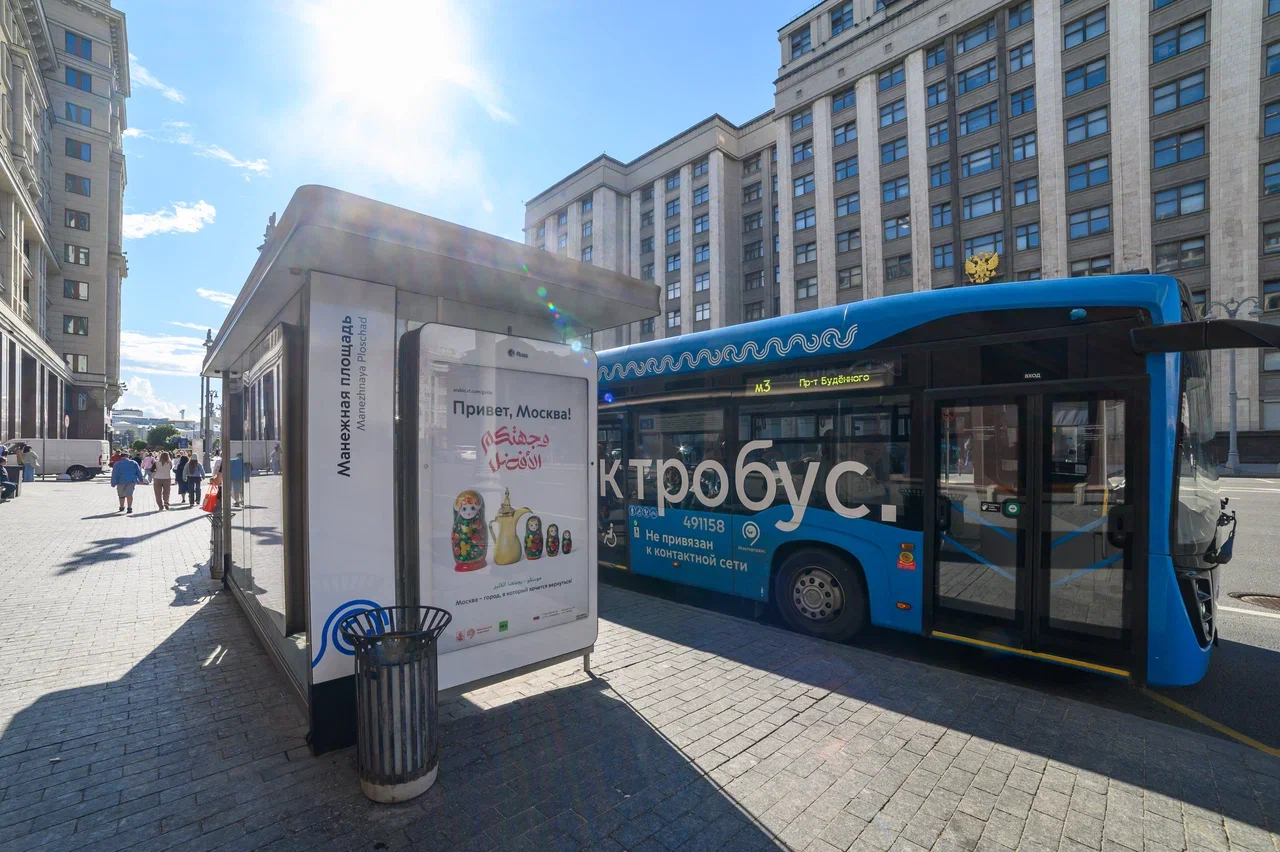
Moscow is a leader in transport engineering, not only in Russia but also globally. For example, the SVARZ plant in Sokolniki is developing production of the most advanced KAMAZ electric buses. Final assembly of the eco-friendly vehicles is carried out here.

All complex microelectronics for suburban rolling stock are produced in the capital.

Moscow companies produce high-tech equipment for traffic management systems, smart road signs, and traffic lights.

At the behest of Moscow Mayor Sergei Sobyanin, the Technopolis Moscow Special Economic Zone is focusing on developing social infrastructure. Employees have access to a variety of sports facilities and services.

The city is successfully developing a joint project with Rosatom to create a modern Gigafactory. The plant will produce traction batteries for electric vehicles, electric buses, and electric vessels.

Financial news: 08.10.2025, 14-23 (Moscow time) the values of the upper limit of the price corridor and the range of market risk assessment for the security RU000A0JWV89 (Akron B1P1) were changed.

Translation. Region: Russian Federation –

Source: Moscow Exchange – Moscow Exchange –

An important disclaimer is at the bottom of this article.

October 8, 2025, 2:23 PM

In accordance with the Methodology for determining the risk parameters of the stock market and deposit market of PJSC Moscow Exchange by the National Credit Center (JSC) on October 8, 2025, 14:23 (Moscow time), the values of the upper limit of the price corridor (up to 96.07) and the range of market risk assessment (up to 996.66 rubles, equivalent to a rate of 12.0%) for security RU000A0JWV89 (Akron B1P1) were changed.

Please note: This information is raw content obtained directly from the source. It represents an accurate account of the source's assertions and does not necessarily reflect the position of MIL-OSI or its clients.

Financial News: Over 1 million people voted for the symbols for the 500-ruble banknote.

Translation. Region: Russian Federation –

Source: Central Bank of Russia

An important disclaimer is at the bottom of this article.

More than 1.1 million people have already participated in the online vote for symbols for the 500-ruble banknote dedicated to the North Caucasus Federal District.

The leading Pyatigorsk landmarks chosen for the banknote's front side include the Academic (Elizabeth) Gallery, a sculpture of an eagle tearing a snake, Mount Beshtau, and the Lermontov Gallery. Among the symbols of the North Caucasus Federal District's regions chosen for the back side, Mount Elbrus, Grozny City, and the Derbent Fortress received the most votes.

"We're not choosing a single main symbol," explains Sergey Belov, Deputy Chairman of the Bank of Russia. "It's important for us to understand people's favorite places and monuments in the North Caucasus Federal District, what they associate with this land, so we can use these symbols in the banknote design. The vote winners could either be the centerpiece or a secondary decoration."

The Bank of Russia will announce the final results on October 14 at 12:00 Moscow time.

Please note: This information is raw content obtained directly from the source. It represents an accurate account of the source's assertions and does not necessarily reflect the position of MIL-OSI or its clients.