Financial news: 15.10.2025, 12-03 (Moscow time) the values of the upper limit of the price corridor and the range of market risk assessment for the security RU000A0JVXS5 (RESOLizB04) were changed.

Translation. Region: Russian Federation –

Source: Moscow Exchange – Moscow Exchange –

An important disclaimer is at the bottom of this article.

October 15, 2025, 12:03 PM

In accordance with the Methodology for determining the risk parameters of the stock market and the deposit market of PJSC Moscow Exchange by the NCC (JSC) on 15.10.2025, 12-03 (Moscow time), the values of the upper limit of the price corridor (up to 123.29) and the range of market risk assessment (up to 1518.1 rubles, equivalent to a rate of 37.5%) for the security RU000A0JVXS5 (RESOLizB04) were changed.

Please note: This information is raw content obtained directly from the source. It represents an accurate account of the source's assertions and does not necessarily reflect the position of MIL-OSI or its clients.

Polytechnic student Maxim Susorov has become the head of the St. Petersburg Student Council.

Translation. Region: Russian Federation –

Source: Peter the Great St. Petersburg Polytechnic University –

An important disclaimer is at the bottom of this article.

Elections for the Chairman of the Student Council under the Committee on Youth Policy and Interaction with Public Organizations for 2025–2027 were held in St. Petersburg.

Representatives from three St. Petersburg universities competed for leadership in the city's student community: Sofia Mironova from the Dostoevsky Russian Christian Humanitarian Academy, Tigran Oganesyan from the North-West Institute of Management at RANEPA, and Maxim Susorov from Peter the Great St. Petersburg Polytechnic University.

Each candidate presented their program, sharing ideas for developing student self-government, supporting initiatives, and expanding cooperation between the city's universities.

Following the voting results, Maxim Susorov, Chairman of the SPbPU Students' Trade Union, was elected Chairman of the St. Petersburg Student Council.

This event was particularly significant for the Polytechnic University: for the first time since 2015, a university representative once again chaired the city's Student Council. Maxim's victory is a testament to his leadership qualities, the result of his active work in student government and his commitment to uniting the St. Petersburg student community.

In his new role, Maxim plans to organize training for representatives of the city's university self-governance bodies in the principles of building a student co-governance system, scaling up the best practices developed among young people at the Polytechnic University over the past decade.

Please note: This information is raw content obtained directly from the source. It represents an accurate account of the source's assertions and does not necessarily reflect the position of MIL-OSI or its clients.
The community of caring individuals invites you to participate in the "Russia – Land of Opportunity" Award.

Translation. Region: Russian Federation –

Source: Official website of the State –

An important disclaimer is at the bottom of this article.

The Ministry of Science and Higher Education of the Russian Federation and the State University of Management invite all interested citizens over the age of 18 to apply for the "Russia – Land of Opportunity" Award.

The "Russia – Land of Opportunity" award was established by order of the President of the Russian Federation to support proactive citizens of the country. It is unique in that it focuses not only on achievements but also on the participant's development history, personal qualities and values, and the community's response to their work.

In the new season, the selection is held in 10 nominations that reflect the key areas of development of society and the country: "Service and Creation" – for those who develop the state, influence the improvement of the quality of life in the regions and help young talents to develop and develop in this direction; "Science and Technology" – for those who open new horizons of knowledge and innovation; "Ecology" – for those who protect nature and shape a sustainable future; "Sports and Street Culture" – for popularizers of a healthy lifestyle and creators of a sports environment; "Good Deeds" – for those who help others and make various spheres of society more accessible; "Entrepreneurship" – for creators of business initiatives that influence the development of the country; "Culture" – for those who preserve cultural heritage and inspire creativity; "Media" – for those who shape public opinion and convey important meanings; "Education" – for the authors of new approaches, technologies and projects that change people's lives; "Opportunities" "For YOURS" – for those who help SVO participants return to active social life and realize their potential.

You can submit an application and describe your activities aimed at developing society on the official website of the Prize until October 16.

In 2024, more than 33,000 people from 89 regions of Russia and 27 countries applied to participate in the Award, with 100 people from 37 regions becoming finalists.

Subscribe to the tg channel “Our State University” Announcement date: 10.10.2025

Please note: This information is raw content obtained directly from the source. It represents an accurate account of the source's assertions and does not necessarily reflect the position of MIL-OSI or its clients.

ArtCamp 2025: Three Days of Inspiration for First-Year Students

Translation. Region: Russian Federation –

Source: Peter the Great St. Petersburg Polytechnic University –

An important disclaimer is at the bottom of this article.

The Polytechnic University once again united first-year students from various cities into one large creative team. One of the most colorful events of student life took place at the Svyazist recreation center in the Leningrad Region: ArtCamp, organized by the Student Club of the SPbPU Directorate of Cultural Programs and Youth Creativity.

Each team from 17 dorms developed its own unique visual code—glow-up ties, hats, and glasses, decorated T-shirts, fairy wings, and headbands from The Sims—thanks to the dorm student councils, which co-organized ArtCamp.

At the opening ceremony, 300 students greeted the organizers and chanted, "Polytech! Polytech! Polytech!", creating an impressive spirit of unity.

"I'm confident that this start to student life will energize you, make your studies truly interesting, and, most importantly, create strong friendships that will serve as a foundation for your future. For 14 years, ArtCamp has been bringing together people with similar values, transforming student life into a space for true intellectual and personal growth," Boris Kondin, Head of the Directorate of Cultural Programs and Youth Creativity, told the students.

ArtCamp 2025 was dedicated to artificial intelligence. The AI assistant Neo, visual codes, and cyber-style became integral parts of all activities. The event kicked off with the "Night Game"—a station quest in which participants sent analog messages, formed a digital circuit, navigated mazes, trained algorithms, and performed at Intervision 3025.

The second day began with engaging creative workshops: a theater workshop from the Polytechnic University Student Theater, a dance workshop from the LPH Crew, and a custom clothing workshop. In the evening, the Polytechnic students gathered for a traditional open-air dance, performed to the Student Club's anthem.

The highlight of the trip was the traditional "Color Room" performance, featuring an art installation and a DJ set from the Shum studio. Participants enthusiastically painted the white walls of the room, their clothes, and themselves in vibrant colors, revealing their individuality.

ArtCamp concluded with a team game, "Project Prometheus," where students teamed up to capture as much of the base's territory as possible and create a single human mechanism symbolizing friendship and cooperation.

"I felt like a kid at camp again, whose only concern was having fun!" shared Alexandra Korovina, a first-year student at the Institute of Mechanics, Economics, and Technology. "The program was thought out down to the last detail, from the concept to the atmosphere itself—everything was perfect. I made a lot of new friends, and I've also lost my fear of taking initiative. Thanks to the organizers for an incredible event and an invaluable experience!"

Please note: This information is raw content obtained directly from the source. It represents an accurate account of the source's assertions and does not necessarily reflect the position of MIL-OSI or its clients.

Smart Delivery: Polytechnic University Hosts Robot Courier Development Hackathon

Translation. Region: Russian Federation –

Source: Peter the Great St. Petersburg Polytechnic University –

An important disclaimer is at the bottom of this article.

The Peter the Great St. Petersburg Polytechnic University successfully held the "REcathon: Clean Code" engineering and robotics hackathon, bringing together 10 student teams. The hackathon was the second stage of the REcathon series. which began in May with the "Draft Code" event, where participants and organizers tested the tasks and made the necessary improvements to the work with robotic systems.

The event was organized by the Higher School of Automation and Robotics of the Institute of Mechanical Engineering, Materials and Transport with the support of partner companies Altetech LLC and Ingriatech LLC, as well as with the active participation of PROF.IMMiT and the student engineering association PoliRoboTech.

At the hackathon's opening, Pavel Kovalev, Deputy Director for Educational Activities at the Institute of Mathematics and Information Technologies, and Olga Matsko, Director of the Higher School of Architecture and R&D, delivered welcoming remarks. They wished the participants success, a creative approach to problem solving, and productive teamwork, noting the importance of continuity between the two hackathons.

Participants solved advanced complex problems, united by the legend of a robot courier who must deliver a hot pizza while simultaneously monitoring road conditions and ensuring pedestrian safety. The competition was held in a hybrid format, combining theoretical development and practical implementation.

During the practical phase, teams programmed autonomous robots for movement in urban-like conditions: autonomous line navigation using an array of IR sensors, reading road markings, and adhering to traffic regulations. In the theoretical assignment, students were required to develop a concept for a swarm control system for unmanned boats, operating solely on visual information in radio silence.

The teams' results were assessed by a jury consisting of teachers from the Higher School of Automation and Robotics.

The team Error404: Bots Not Found, consisting of Egor Meshkov, Vladimir Yulik, Sofia Sokolova, Amir Sharif'yanov, and Elizaveta Skornyakova, won the hackathon. All winners are fourth-year students at the HSE. The results of the hackathon confirmed the excellent preparation of IMMiT students for solving complex engineering problems in robotics and automation.

"The competition was very intense and presented us with a challenge on two fronts," shared team captain Yegor Meshkov. "In the practical round, we programmed autonomous robot movement in an urban environment, and in the theoretical round, we developed a swarm control system for boats. Both stages were an excellent test of our knowledge, and we're pleased to have achieved a solid result."

"Registration has closed very quickly since we launched it several times, as the maximum number of teams has been recruited well before the announced closing date. "This means the event is very popular among our students; they're interested in this format, which means it makes sense to continue and develop this program. This is very encouraging," said Vladislav Krokhmal, responsible for youth policy and alumni relations at IMMiT.

Please note: This information is raw content obtained directly from the source. It represents an accurate account of the source's assertions and does not necessarily reflect the position of MIL-OSI or its clients.

Every second endowment fund in Russia operates in the education sector.

Translation. Region: Russian Federation –

Source: Peoples'Friendship University of Russia

An important disclaimer is at the bottom of this article.

Deputy Prime Minister Dmitry Chernyshenko chaired a meeting on the development of target funds and other forms of charitable support for educational and scientific organizations.

The event was attended by Deputy Minister of Science and Higher Education of the Russian Federation Andrei Omelchuk, Deputy Minister of Education of the Russian Federation Olga Koludarova, representatives of other ministries and departments, scientific organizations, and university rectors (MIPT, HSE, Plekhanov Russian University of Economics, etc.).

In preparation for Prime Minister Mikhail Mishustin's strategy session, the Russian Ministry of Education and Science has formed seven working groups that are developing proposals for creating tools to support universities with their graduates and improving mechanisms for the formation and use of endowment funds for educational institutions addressing pressing industry issues.

The meeting presented the results of their activities over the past three months. The groups developed proposals for support tools; conducted a survey of over 100 successful and well-known graduates from 20 universities with large endowment funds; developed proposals for a list and methodology for collecting key indicators to assess the current state of endowment funds; and conducted an analysis of current legislation.

"President Vladimir Vladimirovich Putin has instructed that proposals be submitted for developing tools to support educational institutions through their graduates, as well as for improving the mechanisms for forming and using endowment funds (EFFs) for educational institutions. According to statistics, every second EFF in Russia operates in the education sector—approximately 40% of all funds. Moreover, over 36% of these funds are in higher education. It is necessary to strategically expand the geography of these funds, creating them not only in higher education but also in schools, secondary vocational education institutions, and research organizations," said Dmitry Chernyshenko.

Over the past 18 years, more than 400 endowment funds have been created in our country, with total assets exceeding 155.5 billion rubles. In 2024, the volume of funds invested in these funds increased by 8.6%, indicating increased confidence in this long-term financing instrument for socially significant projects. The Deputy Prime Minister added that Prime Minister Mikhail Mishustin has instructed the development of proposals for additional measures to support the development of endowment funds at universities. In accordance with the Ministry of Education and Science's instruction, the Concept for the Development of Endowment Funds for Universities and Research Organizations for 2025-2035 and its methodological recommendations have been approved.

"Today, the Ministry of Education and Science, together with other agencies, is actively working to increase the attractiveness and sustainability of endowments. It is crucial for us that endowments in Russia are growing, and we are creating the conditions for their further development. This work is based on extensive research involving over a hundred experts. Based on market analysis and surveys, key challenges and proposed solutions have been identified and will be further developed. In developing these measures, we are focusing on increasing trust and removing administrative barriers, including expanding tax incentives and promoting endowments. These steps will strengthen the funds' financial stability and improve their performance," noted Andrey Omelchuk, Deputy Minister of Education and Science.

The "Education and Promotion" working group conducted a survey of successful graduates of Russian universities to identify barriers and incentives for their participation in the formation and development of university endowment funds. The survey revealed that 71% of graduates are aware of the concept of endowment funds, and almost half of those surveyed—45%—are willing to make regular small payments to support endowment funds.

Ivan Lobanov, Rector of the Plekhanov Russian University of Economics, noted the increasing number of specialized educational programs for training qualified personnel for foundations: by 2025, there are several thousand potential students affiliated with more than 400 foundations, as well as more than 1,000 potential course participants working at higher education institutions.

MIPT Rector Dmitry Livanov noted that an analysis of best global practices shows that the successful development of endowments is possible with a combination of three factors: flexible regulation, active university participation, and low entry barriers for small foundations.

"In Russia today, only the first step has been fully implemented. Therefore, our task is to create the necessary conditions: reduce administrative and financial barriers for small endowments, empower universities to support their endowments from the start, and develop platform solutions that dramatically reduce costs. We are convinced that a dedicated government support program is also necessary for accelerated market growth. This will allow us to create a modern endowment infrastructure and make endowments a viable source of long-term investment in education and science," noted Dmitry Livanov.

Stanislav Prokofiev, Rector of the Financial University under the Government of the Russian Federation, outlined key measures for tax and non-tax incentives for endowment funds.

"These measures, according to the working group, should include quick wins in the form of simplified administrative procedures for creating and administering endowment funds based on out-of-the-box solutions, and the creation of model documents designed to help small endowment funds register and begin operations," he said.

Speaking about the medium-term outlook, Stanislav Prokofiev emphasized the need to improve legislation, as well as to ensure the flexibility and transparency of the Federal Center for Strategic Development and the expansion of investment instruments.

Please note: This information is raw content obtained directly from the source. It represents an accurate account of the source's assertions and does not necessarily reflect the position of MIL-OSI or its clients.

Technology – Acoustic booths installed in the Moscow Metro

Translation. Region: Russian Federation –

Source: Moscow Metro

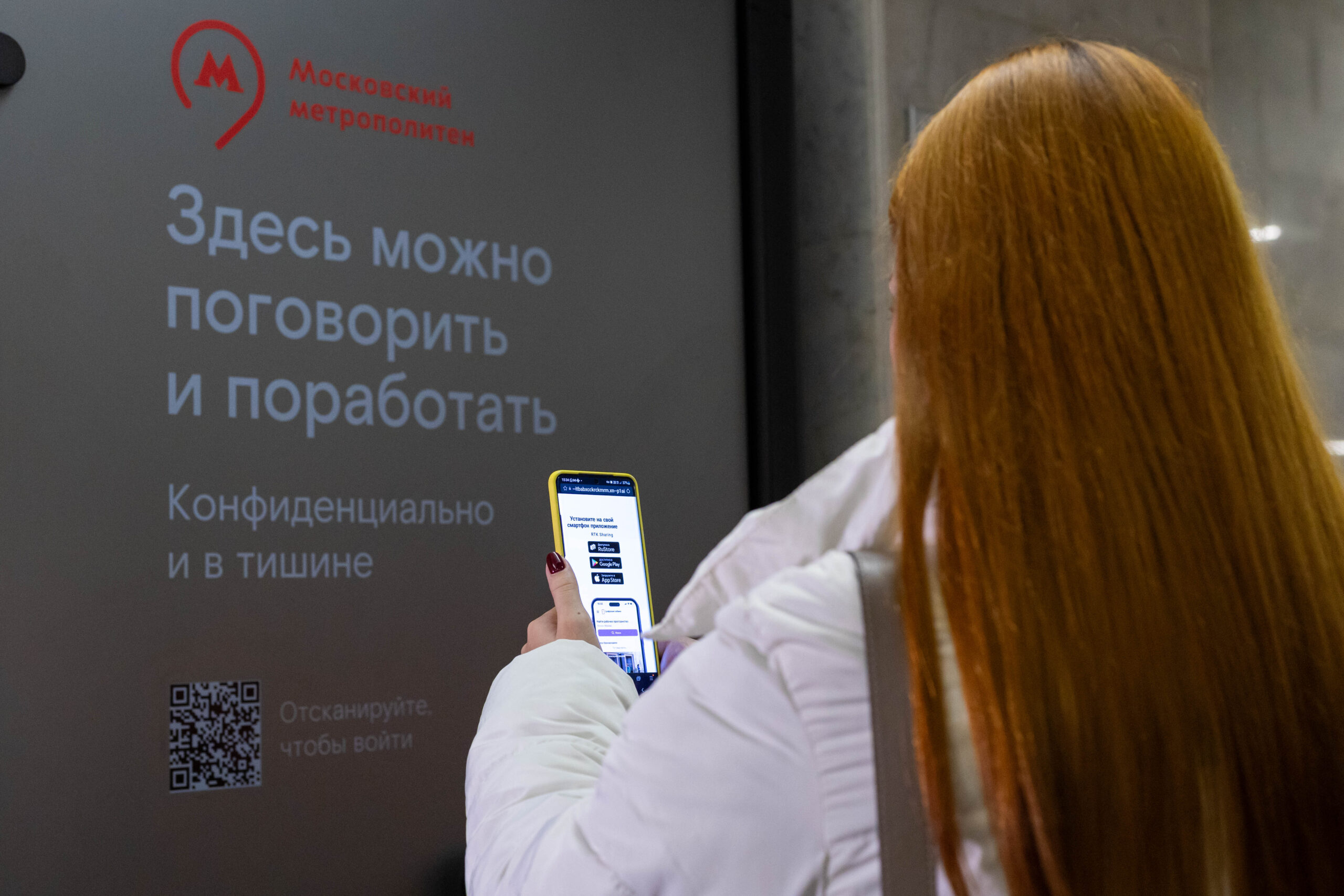
Maxim Liksutov reported that an acoustic booth has been installed at the Komsomolskaya transfer hub, which connects metro stations, the Moscow Central Diameters (MCD), and major train stations. A second one has been installed at the Nizhegorodskaya transport hub. The booths are available free of charge until the end of the year.


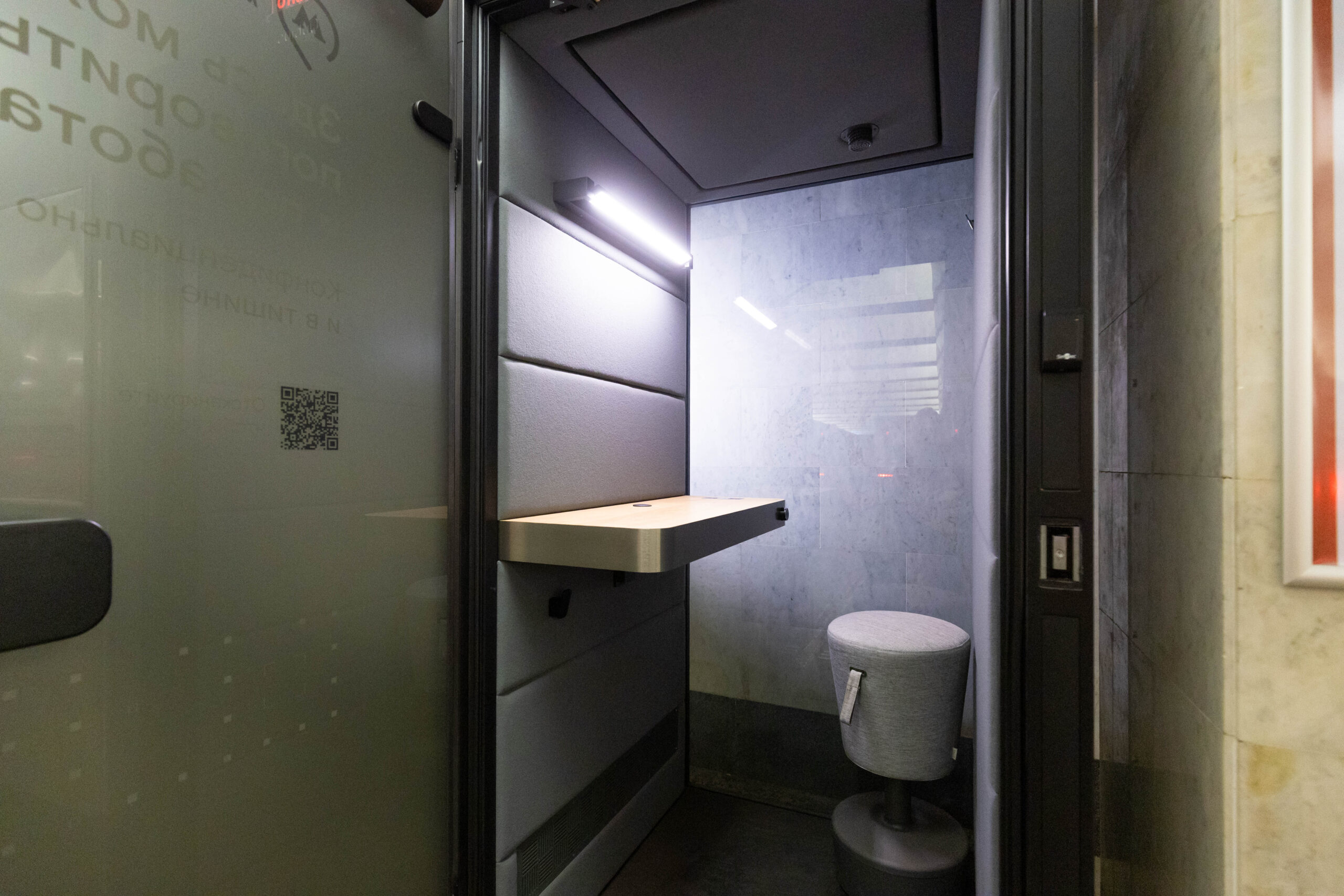
Acoustic booths have been installed in the Moscow Metro.

The acoustic cabins are designed for one person. They feature: 1) USB and Type-C ports for charging devices; 2) a workstation; 3) adaptive lighting; 4) ventilation that provides a constant flow of fresh air.


Acoustic booths have been installed in the Moscow Metro.

The sound-damping materials in the acoustic booths have already passed all tests. The door is made of translucent glass, preventing anyone from seeing into the user's device.

You can rent booths in two ways: by pre-booking your desired time slot in the new acoustic booth rental service's mobile app, or by using time slots starting from 15 minutes on-site. To do this, scan the QR code on the booth door or posters.

"In today's world, people work from anywhere, not just in offices, and it's important for us to follow this trend. That's why we're starting to test acoustic booths in the metro. If needed, people will be able to work or make phone calls in silence. We're choosing booth locations that will be popular but won't disturb passengers. If these quiet spaces prove popular, we'll introduce them at other stations. We're continuing to launch new, convenient services on public transport, as instructed by Moscow Mayor Sergei Sobyanin," said Maxim Liksutov.

Financial news: 14.10.2025, 12-09 (Moscow time) the values of the upper limit of the price corridor and the range of market risk assessment for the security RU000A105DN0 (FSC RS BO6) were changed.

Translation. Region: Russian Federation –

Source: Moscow Exchange – Moscow Exchange –

An important disclaimer is at the bottom of this article.

October 14, 2025, 12:09 PM

In accordance with the Methodology for determining the risk parameters of the stock market and deposit market of PJSC Moscow Exchange by the NCC (JSC) on 14.10.2025, 12-09 (Moscow time), the values of the upper limit of the price corridor (up to 99.15) and the range of market risk assessment (up to 1075.36 rubles, equivalent to a rate of 17.5%) of the security RU000A105DN0 (FSC RS BO6) were changed.

Please note: This information is raw content obtained directly from the source. It represents an accurate account of the source's assertions and does not necessarily reflect the position of MIL-OSI or its clients.

Russia and China have approved an action plan for the further development of transportation along the Northern Sea Route.

Translation. Region: Russian Federation –

Source: KMZ Cargo – KMZ CARGO –

An important disclaimer is at the bottom of this article.

The document was agreed upon following the second meeting of the Subcommission on Cooperation on the Northern Sea Route of the Russian-Chinese Commission for the Preparation of Regular Meetings of Heads of Government in Harbin.

The Russian part was headed by Alexey Likhachev, Director General of the Rosatom State Corporation, and the Chinese part was headed by Liu Wei, Minister of Transport of the People's Republic of China.

"The development and approval of the roadmap are aimed at creating a sustainable transport corridor. Cooperation involves the implementation of modern logistics and technological solutions to improve transportation efficiency and develop capital projects," Rosatom noted.

According to Alexey Likhachev, Russia and China will set a new record for container cargo volumes along the Northern Sea Route this year. The volume could exceed 400,000 tons.

"It should be noted that, in this sense, Russian-Chinese cooperation along the Northern Sea Route is growing at an even faster rate. For example, if we talk about the volume of container shipments, it initially doubled in 2023-2024, and now it has increased by approximately another 60%," he said.

We previously reported that on September 15, for the first time in history, a transit container voyage passed through the Northern Sea Route.

Transport and logistics. http://t.te/transportandlogistic/23117

Publication date: 10/14/2025

Please note; this information is raw content obtained directly from the information source. It is an accurate account of what the source claims, and does not necessarily reflect the position of MIL-OSI or its clients.

Financial news: 14.10.2025, 14-06 (Moscow time) the values of the upper limit of the price corridor and the range of market risk assessment for the security RU000A106TV7 (VimpelK3R4) were changed.

Translation. Region: Russian Federation –

Source: Moscow Exchange – Moscow Exchange –

An important disclaimer is at the bottom of this article.

October 14, 2025, 2:06 PM

In accordance with the Methodology for determining the risk parameters of the stock market and the deposit market of PJSC Moscow Exchange by the NCC (JSC) on 14.10.2025, 14-06 (Moscow time), the values of the upper limit of the price corridor (up to 88.68) and the range of market risk assessment (up to 969.07 rubles, equivalent to a rate of 18.75%) for security RU000A106TV7 (VimpelK3R4) were changed.

Please note: This information is raw content obtained directly from the source. It represents an accurate account of the source's assertions and does not necessarily reflect the position of MIL-OSI or its clients.