
Music of words: the Pushkin Days at the Polytechnic festival concluded in the White Hall

Translation. Region: Russian Federation –

Source: Peter the Great St. Petersburg Polytechnic University –

An important disclaimer is at the bottom of this article.

Twelve concerts were included in the program of the "Pushkin Days at the Polytechnic" festival, held annually at SPbPU to commemorate the opening of the Tsarskoye Selo Lyceum on October 19, 1811. The festival brings together renowned artists, musicians, and enthusiasts of Russian culture for a series of concerts and meetings dedicated to the live performance of Russian poetry and music.

Theatre and film actor Vladimir Koshevoy performed Alexander Pushkin's romantic and slightly mystical novella "The Snowstorm" on the White Hall stage, accompanied by music by Georgy Sviridov. The finest vocal and instrumental works by great Russian composers, inspired by Pushkin's poetry, were performed by soloists of the Mariinsky Theatre, including People's Artist of Russia Olga Kondina, and members of the Academic Symphony Orchestra of the St. Petersburg Philharmonic, an honored ensemble of Russia. The St. Petersburg Orchestra "Classica" presented majestic symphonic works by Tchaikovsky.

Works by Soviet composers occupied a special place in the festival program. Mikael Tariverdiev's music and songs from iconic films, as well as his organ works, were performed by organist Maria Blazhevich and baritone Alexander Pakhmutov. The Brass Band of the Admiral of the Fleet of the Soviet Union N. G. Kuznetsov Naval Academy, conducted by Dmitry Misyura, prepared a program for the 95th anniversary of Andrei Petrov's birth. Musical excerpts from the films "Amphibian Man," "Station for Two," and "Beware of the Car" were brought to life by the vibrant sounds of a brass band of military musicians.

The works of Vysotsky, Okudzhava, and Galich, who combined music and poetry in a lively, frank conversation with their audiences, were also celebrated. A special concert program offered fans of the genre the opportunity to hear the best St. Petersburg singers of art songs, watch film clips on the big screen, and sing their favorite songs together.

One of the most expressive actresses of her generation graced the Pushkin Days at the Polytechnic Festival with her performance. Liza ArzamasovaShe prepared the program "About Love—From Pushkin to the Present Day" specifically for the White Hall of the Polytechnic University. Listeners described Liza's monologue about love, woven from poems by Pushkin, Tyutchev, Brodsky, Rozhdestvensky, Akhmatova, and Tsvetaeva, as poetic magic.

If Pushkin showed how wonderful a person can be, Chekhov showed how difficult it is to be one in everyday life. The literary and musical performance "Our Chekhov" revealed a man with impeccable moral sense. This important festival event concluded with a standing ovation from the audience, expressing gratitude to Alexandra Kulikova, actress of the G. A. Tovstonogov Bolshoi Drama Theater, and conductor Valeria Putra for this discovery. So many questions arose for ourselves, so many poignant lines and music, so much truth and sincerity.

A magnificent, uplifting composition about the meaning of life, using the genius Chekhov as an example. It gives us something to think about and someone to emulate. I wish the creators continued success in developing similar patriotic themes to educate the younger generation. My gratitude and deepest respect to everyone who put this together. And most importantly, to Chekhov! shared White Hall audience member Tatyana Starkova.

For 19 years, the Pushkin Days at the Polytechnical Festival has brought together generations of listeners who appreciate the diversity and richness of Russian culture.

"Today, when culture faces the threat of oblivion, this festival is becoming not only a celebration of art but also an act of protecting national heritage," said Boris Kondin, festival organizer and head of the SPbPU Directorate of Cultural Programs and Youth Creativity. "It is more important than ever to preserve and pass on to future generations the rich traditions of Russian culture, to strengthen our identity and pride in our country!"

Please note: This information is raw content obtained directly from the source. It represents an accurate account of the source's assertions and does not necessarily reflect the position of MIL-OSI or its clients.
Polytechnic University experts shared their experience training architects at the Architecton festival.

Translation. Region: Russian Federation –

Source: Peter the Great St. Petersburg Polytechnic University –

An important disclaimer is at the bottom of this article.

The second Architecton festival, which brings together architects, urbanists, designers, artists, developers, students, and anyone interested in architecture, took place at the Manege Central Exhibition Hall. A delegation from the Civil Engineering Institute represented Peter the Great St. Petersburg Polytechnic University, showcasing its educational and professional achievements in architecture and urban planning.

The delegation included Margarita Perkova, Director of the Higher School of Design and Architecture at the Institute of Contemporary Art (ISI), Maria Drebezgova, Alexander Zhuk, Elena Ladik, and Maria Rybalkina, associate professors at the ISI Higher School of Industrial, Civil, and Road Construction (ISI), Alexandra Zatsepin, senior lecturer at the ISI Higher School of Industrial, Civil, and Road Construction (ISI) and a guide with the company "Petersburg Through the Eyes of an Engineer," Anna Zanina, senior lecturer at the ISI Higher School of Industrial, Civil, and Road Construction (ISI), Victoria Pedenko, assistant at the ISI Higher School of Industrial, Civil, and Road Construction (ISI), and students from the "Architectural Environmental Design" program at St. Petersburg Polytechnical University (SPbPU). "Petersburg Through the Eyes of an Engineer" served as a partner of the events.

The festival featured a roundtable discussion titled "Architect and/or Engineer: How to Study and Design Today," moderated by Alexandra Zatsepina. Participants discussed the relationship between architectural and engineering competencies, the potential of online learning in architecture, the impact of digital technologies on design, the interactions between architects and engineers, and key professional skills. Maria Drebezgova presented the Institute of Design and Architecture's successful experience in forming interdisciplinary student teams of designers and engineers to participate in the "Polytechnic University – Territory of Attraction" competition. In her presentation, the associate professor at the Higher School of Design and Architecture also touched on the issue of organizing student teamwork during coursework.

Alexander Zhuk and fourth-year undergraduate student Alina Gridina attended a meeting of the Housing Construction Committee of the Union of Architects of Russia, where they presented a residential building project in Telman, Leningrad Oblast, which was highly praised for its artistic and realistic approach, harmonious design, and sound construction. At the meeting, Alexander Zhuk outlined the strategic development directions of the ISI School of Architecture, focused on the future development of Russian regions, including the Leningrad Oblast, as well as relevant aspects of the educational process.

Margarita Perkova spoke at the roundtable discussion "Architectural Competitions: Why? For Whom? What is the Result?", discussing the integration of architectural competitions into the educational process of training architects and urban planners at SPbPU. She also participated in the discussion session "Working with Young Architects – A Step into the Future," where the participants discussed engaging students and aspiring professionals in professional competitions, internships, and creative events as a key element in building architectural teams and developing the industry's talent pool.

Our specialists' active participation in the "Architekton" festival confirms the relevance of the Institute of Civil Engineering's educational potential in the professional community. It is particularly significant that the business program showcased both practical experience in forming interdisciplinary student teams and strategic guidelines for the development of the architecture school. This comprehensive approach to presenting our achievements helps strengthen the university's position in the fields of architectural education and urban planning, noted Marina Petrochenko, Director of the Institute of Civil Engineering at SPbPU.

Such discussions not only bring professionals together but also allow viewers, including students, to learn about the education and work of architects and engineers and hear firsthand stories. All of this advances design, making it more informed, diverse, and high-quality, concluded Alexandra Zatsepina.

Photo: architecton.spb.ru

Please note: This information is raw content obtained directly from the source. It represents an accurate account of the source's assertions and does not necessarily reflect the position of MIL-OSI or its clients.

NordStar Airlines passengers took part in the All-Russian educational event "The Great Ethnographic Dictation"

Translation. Region: Russian Federation –

Source: Nordstar Airlines –

An important disclaimer is at the bottom of this article.

In anticipation of the International Festival "Peoples of Russia and the CIS," the All-Russian "Great Ethnographic Dictation" was held on the flight from Norilsk to Moscow, dedicated to popularizing knowledge about the cultures of the peoples of Russia.

After gaining altitude, all passengers were invited to join the All-Russian initiative to test their knowledge of the values of cultural diversity and spend time productively. All passengers on the flight enthusiastically participated, answering questions about the peoples who make Russia unique and discovering new interesting facts.

NordStar Airlines places great importance not only on ensuring comfortable and safe flights but also on fostering educational development. Conducting an ethnographic dictation on board is an excellent way to highlight mutual respect among people of different nationalities.

As a reminder, NordStar Airlines previously successfully held the International Educational and Patriotic Campaign "Victory Dictation," dedicated to the 80th anniversary of Victory in the Great Patriotic War. The airline continues to actively support cultural and educational projects, bringing people together and making every journey special.

Please note; this information is raw content obtained directly from the information source. It is an accurate account of what the source claims, and does not necessarily reflect the position of MIL-OSI or its clients.

Winds of change: On November 9, 1989, the Berlin Wall fell.

Translation. Region: Russian Federation –

Source: Official website of the State –

An important disclaimer is at the bottom of this article.

Built overnight, from August 12 to 13, 1961, the barrier separating the German Democratic Republic (GDR) from the city-state of West Berlin cut not just through streets and transportation lines, but directly into homes and, most horrifyingly, into families, friends, and loved ones. It was meant to stand forever, but was destroyed overnight.

Why is there a wall in the middle of Berlin?

After the capitulation of Nazi Germany, the heart of Europe—Berlin is indeed located almost in the center of Western Europe—was divided into four occupation zones: the east belonged to the USSR, the west to the Allies, namely the United States, Great Britain, and France. Free movement across the line of contact remained for a long time, and hundreds of thousands of Berliners crossed daily—to work, to study, and simply to visit family. The situation changed as tensions between the powers grew: the West Berlin blockade in 1948 and the airlift were the first episodes of confrontation, culminating in the creation of two German states—the Federal Republic of Germany (FRG) and the German Democratic Republic (GDR).

By the early 1960s, tensions had escalated: Moscow sought recognition of the GDR and the status of East Berlin as its capital, while the West insisted on maintaining international control. In August 1961, the authorities in the eastern territories began building a wall under the pretext of "stopping West Berlin's subversive activities," but in reality, they wanted to prevent the outflow of young people who were desperately seeking the wealthy West. In response, the United States increased its military presence: a tank duel took place at Checkpoint Charlie, which nearly sparked a new military confrontation. Ultimately, the Berlin Wall, erected 16 years after the end of World War II, became a symbol of the Cold War and nearly led to a third.

We are the people or We are one people

The beginning of the end for the GDR occurred before the fall of the Berlin Wall, when an article appeared in our perestroika-era press insinuating that the then head of the first German socialist state, Erich Honecker, was a fascist agent. The General Secretary of the Socialist Unity Party of Germany (SED) was mortally offended and—it sounds like a joke!—banned Soviet media and anything related to the idea of accelerating the post-stagnation era.

Outraged by Honecker's policies, the intelligentsia took to the streets with the slogan "Wir sind das Volk!"—we are the people, meaning "listen to us, government, we want changes like in the USSR." And here, the West German intelligence service (Bundesnachrichtendienst, BND) did a clever job. They cleverly exploited a grammatical peculiarity of the German language and simply replaced the definite article with an indefinite one. And then they began shouting "Wir sind ein Volk!" to the crowd of demonstrators—it seems to mean the same thing, but the subtlety is that "ein" is also a homonym for the German word for "one, united."

Thus, the East Germans' desire for social and political reform quietly morphed into a demand for the reunification of the two Germanies—East and West. Ultimately, on October 18, 1989, Erich Honecker resigned, and Egon Kranz became the country's leader, immediately beginning to prepare reforms modeled on Gorbachev's. There was no talk yet of joining the FRG.

Unexpected acceleration

The destruction of the "wall of shame" was described to us by an eyewitness of those events, Olga Vasilyeva, a leading specialist in the Department of External and Internal Communications of the State University of Management and a member of the Union of Journalists of St. Petersburg.

Günter Schabowski, a member of the Politburo of the SED Central Committee, spoke about the new freedoms at a press conference on November 9, 1989. He announced live on air that the "Iron Curtain" was no more, that applications for travel abroad would now be accepted without restrictions, and that exit permits would be issued as quickly as possible. When asked by journalists when exactly these new rules would take effect, Schabowski rashly replied, "Immediately!"

Olga Vyacheslavovna was then a student at the Moscow Institute of Foreign Languages (now Moscow State Linguistic University) and often visited her parents in Berlin, preparing for an internship at Humboldt University. "We heard shouting and noise in the street—everyone watching the press conference ran and drove to the wall dividing the city into the western half and the capital of the GDR. Together with my father, who had already served in the Soviet military intelligence contingent for 20 years, we arrived at Checkpoint Charlie on Friedrichstrasse and watched as Berliners climbed over the wall and tore it down—people brought hammers, sledgehammers, and picks. On both sides, they opened sparkling wine and celebrated, as if it were New Year's."

The guards, as it later turned out, had received orders from the authorities to open fire, but they refused to obey. Although attempts to defect to West Berlin had been brutally suppressed since 1973—shooting to kill was used, with estimates ranging from 125 to 1,245 people killed. Yet, East Germans persisted in their efforts—over 28 years, more than 5,075 GDR citizens, including 574 border guards, successfully escaped.

Winners and losers

In June 1990, the wall—or rather, two walls nearly four meters high with a right-of-way between them, stretching 155 kilometers outside the capital and 43 kilometers within Berlin—was finally demolished using construction equipment. Several panels, stretching 1.3 kilometers along the Spree River, were preserved as a memorial and became the East Side Gallery, painted in graffiti style by 118 artists from 21 countries. Fragments of the barrier stand as monuments in many squares around the world—it is the only structure in the world that is scattered across the entire planet, from Brussels to Haifa.

The complete destruction of the statehood of the German workers' and peasants' country occurred on October 3 of that same year, when the GDR became part of the FRG: de jure as new federal states, de facto as a second-class appendage. To this day, there remains a significant disparity in quality of life and income between the "Wessi" (German: West, Wessi) and the "Ossi" (German: Ost, Ossi)—residents of the original Federal Republic and the former GDR. But that's a whole other story.

Subscribe to the "Our GUU" Telegram channel. Publication date: November 9, 2025.

Please note: This information is raw content obtained directly from the source. It represents an accurate account of the source's assertions and does not necessarily reflect the position of MIL-OSI or its clients.

Kristallnacht: Today the world remembers with sorrow the Nazis' first mass crime

Translation. Region: Russian Federation –

Source: Official website of the State –

An important disclaimer is at the bottom of this article.

November 9 is the International Day Against Fascism, Racism, and Anti-Semitism. The date was established by the UNITED European network, which unites over 560 organizations from 46 countries, in remembrance of Kristallnacht, or the Night of Broken Glass, a mass pogrom against Jews that occurred from November 9 to 10, 1938, in Germany and Austria.

That night marked the Third Reich's first mass act of physical violence against the Jewish population. More than 90 people were killed during the pogrom, approximately 30,000 men, women, elderly, and children were sent to concentration camps, hundreds of synagogues were burned, storefronts were smashed, and thousands of Jewish shops were looted. It was because of the sheer number of shards of glass glittering in the darkness on the streets of German and Austrian cities that this horrific event became known as Kristallnacht, or the Night of Broken Glass.

Historians note that the international community's lack of a proper response to this tragedy unleashed the Nazis and contributed to the Holocaust, which claimed the lives of six million Jews. German state fascism flourished, turning such atrocities into a cult, and leading to a global catastrophe—World War II. 1945—the year of the Soviet Union's victory over Nazi Germany—marked the world's deliverance from the "brown" plague. But nearly 80 years later, radical movements are once again resurfacing, and our former allies in the fight against the fascists are attempting to rewrite history by encouraging new adherents of the doctrine of the superiority of the "Aryan nation." Therefore, the date November 9th serves a very important function—it serves as a reminder of the need to confront the ideology of hatred.

In our country, promoting Hitler's ideas is impossible according to the moral and ethical principles of every normal person, and is prohibited by law. At the federal level, combating anti-Semitism, xenophobia, and extremism, as well as preserving historical memory, are important areas of work for the Presidential Council for Civil Society and Human Rights. As for the State University of Management, an atmosphere of mutual respect between representatives of different countries, cultures, and peoples has been established within our walls since its inception. The principles of combating fascism, nationalism, and xenophobia are of particular importance to the State University of Management—our multinational university community has always been and remains a space where there is no place for the ideology of hatred and where the diversity of the modern world is valued.

Subscribe to the "Our GUU" Telegram channel. Publication date: November 9, 2025.

Please note: This information is raw content obtained directly from the source. It represents an accurate account of the source's assertions and does not necessarily reflect the position of MIL-OSI or its clients.

Because gladiolus: today GUU celebrates KVN Day

Translation. Region: Russian Federation –

Source: Official website of the State –

An important disclaimer is at the bottom of this article.

November 8th marks the International Day of the Club of the Funny and Inventive (KVN) in Russia – a holiday dedicated to one of the most popular and iconic comedy TV shows that has united many generations of students.

From the Czech idea to Soviet humor

The roots of KVN go back to 1957, when the 6th World Festival of Youth and Students was held in Moscow. It became clear then that Soviet television lacked programs for young people. The "Festival Editorial Board," formed under the leadership of Sergei Muratov, proposed its own version: "Evening of Merry Questions" (VVV), a Soviet version of the Czech program "Gadai, Gadai, Gadalschik."

A distinctive feature of the format was the inclusion of the audience in the game—no one simply sat in front of the screen. The tasks were absurdly difficult and hilarious at the same time: live on air, participants had to bring to the studio the seventh volume of Jack London, a potted ficus, and a kerosene stove, and in the summer, they had to show up wearing a fur coat, a hat, and felt boots. It was precisely this curious incident that led to the closure of VVV: a crowd of students flooded the studio, overwhelmed the police, tore up the curtains, and caused utter chaos. The broadcast was interrupted, and the recording, alas, was lost.

The Birth of the Club of the Merry and Resourceful

Four years later, on November 8, 1961, a team of former VVV writers launched a new project—the Club of the Merry and Inventive. The name alluded to the popular television brand KVN-49, and the abbreviation emphasized the spirit of the game. The first host was Albert Axelrod, and in 1964 he was replaced by railway student Alexander Maslyakov, who remained the host until 2022. Incidentally, Maslyakov's popularity was so strong that asteroid 5245 Maslyakov, discovered by the Crimean Astrophysical Observatory, was even named after him.

The first games were held without any strict rules: competitions emerged spontaneously, tasks were created on the spot, and students joked about both everyday life and ideology. By 1964, classic competitions had emerged—warm-up, STEM, BREEZE, captains' competition, and homework. KVN also has its own music festival, "The Voice of KiViN," and the cheerful bird of the same name became the symbol of the entire competition.

Closure and revival

KVN's popularity grew, but television strictly controlled its humor. For example, shortly before the show's temporary demise in 1971, participants were banned from wearing beards on stage—censors saw this as a mockery of the founder of communist ideas, Karl Marx. Despite this, KVN remained a favorite show for students and schoolchildren until its demise became a symbol of stagnation in the USSR.

In 1986, KVN was revived thanks to the initiative of former players, and Alexander Maslyakov returned as host. The show received a new structure: league levels, a rating system, and new competition formats. The game's anthem changed: first, "On the appointed day, at the appointed hour," and after the break, "We are starting KVN."

Over time, KVN became a veritable breeding ground for Russian show business talent. The club produced Mikhail Zadornov, Yuli Gusman, Mikhail Galustyan, Sergey Svetlakov, Timur Batrutdinov, Garik Kharlamov and Martirosyan, Valdis Pelsh, Leonid Yakubovich, the Uralskie Pelmeni and Once Upon a Time in Russia teams—the list goes on and on, as KVN served as a launching pad for countless talented artists, directors, and producers. The game gave them not only popularity but also invaluable experience in engaging with audiences, creating high-quality humor, and connecting with a wide variety of audiences.

The structure of modern KVN

The current structure of the International Union of KVN is a multi-tiered league system, comprising over 7,000 teams. The central platform is the Major League, while the Premier League serves as a preparatory stage for entry into it. Since 1993, the First League has been in operation, providing preferential access to the Major League.

Since 2013, the union has operated an International League, comprising approximately twenty teams. The teams for the television leagues are formed based on the results of the International Festival in Sochi: teams that advance to the second round receive final approval from the union president.

KVN League of the State University of Management

The KVN League has existed at our university since April 1999. It was founded by members of the "GUU National Team," who developed a system for training new players and representing the university at regional and national levels.

Every year the following events take place at the State University of Management:

KVN School – training sessions for beginners with lectures and practical exercises from the editors of the Moscow Student League; the All-Russian KVN School – master classes, writing materials, and teamwork; and the Moscow and Moscow Region League Structures Festival, where teams are assigned to leagues and have the opportunity to advance to the Central or Major Leagues.

Our teams regularly participate in Moscow and national tournaments, learning from the best KVN players in the country. Many graduates of the KVN League at the State University of Management have found success not only in their professional careers but also in their creative fields, proving that leadership and a sense of humor are a wonderful combination.

In 2012, the KVN League of the State University of Management won the Youth Council Prize under the Prefect of the South-Eastern Administrative District of Moscow in the category "Best Organization in the Sphere of Youth Leisure."

It's worth noting that our League is more than just a creative association, but a true school of life for future managers. Participation in the games teaches students teamwork, creative thinking, communicating their ideas to an audience, and confident public speaking—qualities essential to a modern leader.

Congratulations to everyone involved—the organizers, directors, players, fans, and especially the KVN League of the State University of Management—on International Club of the Funny and Inventive Day! May every warm-up in life, as in the game, bring thunderous applause, and every homework assignment receive an A+!

Subscribe to the "Our GUU" Telegram channel. Publication date: November 8, 2025.

Please note: This information is raw content obtained directly from the source. It represents an accurate account of the source's assertions and does not necessarily reflect the position of MIL-OSI or its clients.

A garden city will be here: the planet celebrates World Urbanism Day

Translation. Region: Russian Federation –

Source: Official website of the State –

An important disclaimer is at the bottom of this article.

November 8th marks World Urbanism Day, also known as Urbanism Day, established in 1949 on the initiative of architect Carlos Maria della Paolera, a professor at the University of Buenos Aires. The day aims to highlight the importance of sound urban planning and the creation of comfortable and sustainable environments in megacities.

According to the Federal State Statistics Service (Rosstat), residents of the "concrete jungle" make up at least 75% of the Russian population, highlighting the particular importance of urban management and planning for the entire country. This is why the State University of Management offers a relevant program, "Urban Studies and City Management," training professional municipal and territorial leaders. This program is aimed at preparing specialists capable of effectively addressing the challenges of modern urbanization, creating effective urban systems, managing infrastructure development, and ensuring a high quality of life in the metropolis.

We congratulate everyone involved on their professional holiday! We wish you inspiration, new scientific and practical achievements, active students, and significant projects for the benefit of our national agglomerations!

Subscribe to the "Our GUU" Telegram channel. Publication date: November 8, 2025.

Please note: This information is raw content obtained directly from the source. It represents an accurate account of the source's assertions and does not necessarily reflect the position of MIL-OSI or its clients.

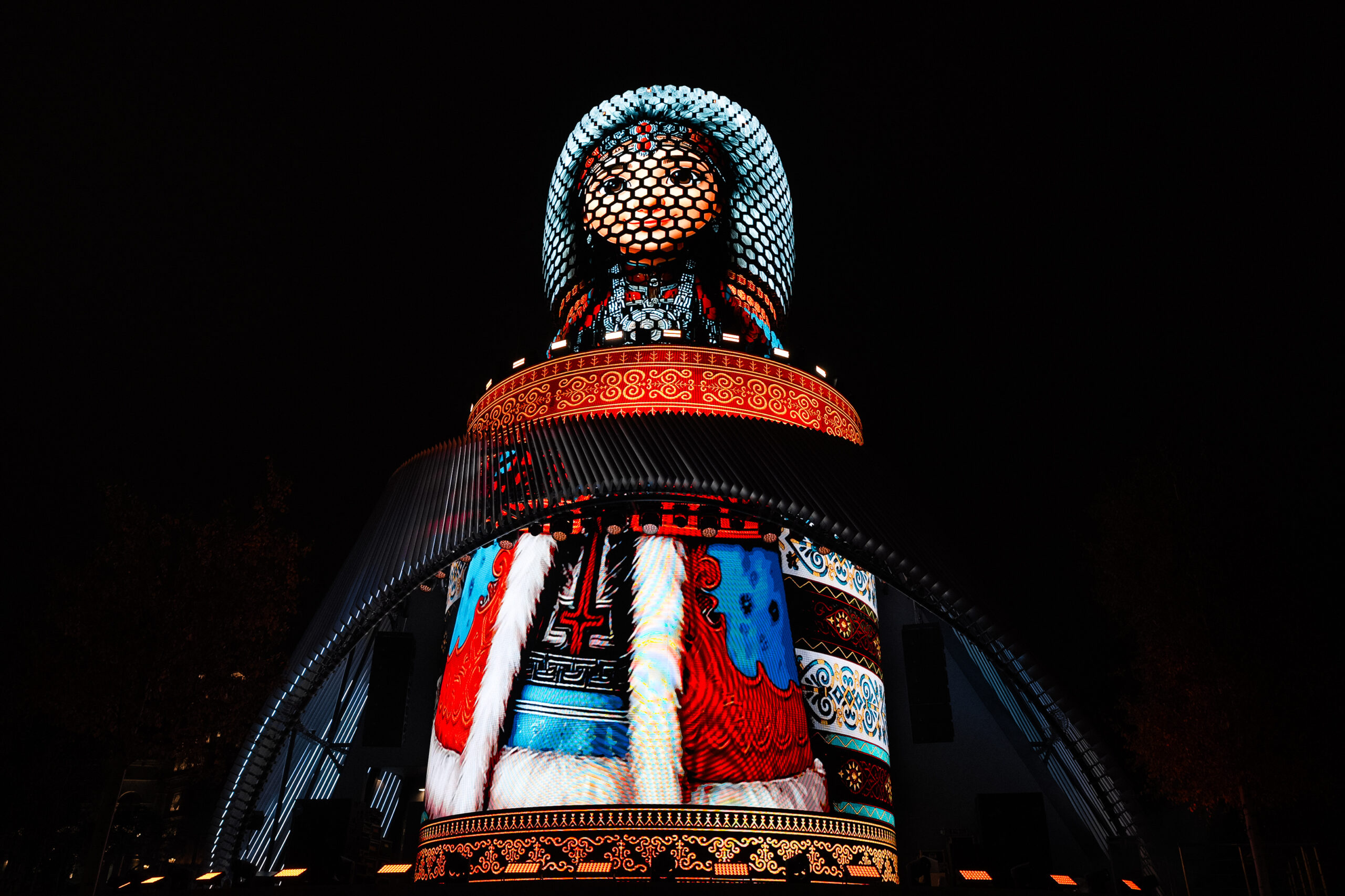
A new program dedicated to the unity of the peoples of Russia was presented at the Matryoshka Moscow Festival.

Translation. Region: Russian Federation –

Source: Moscow Metro

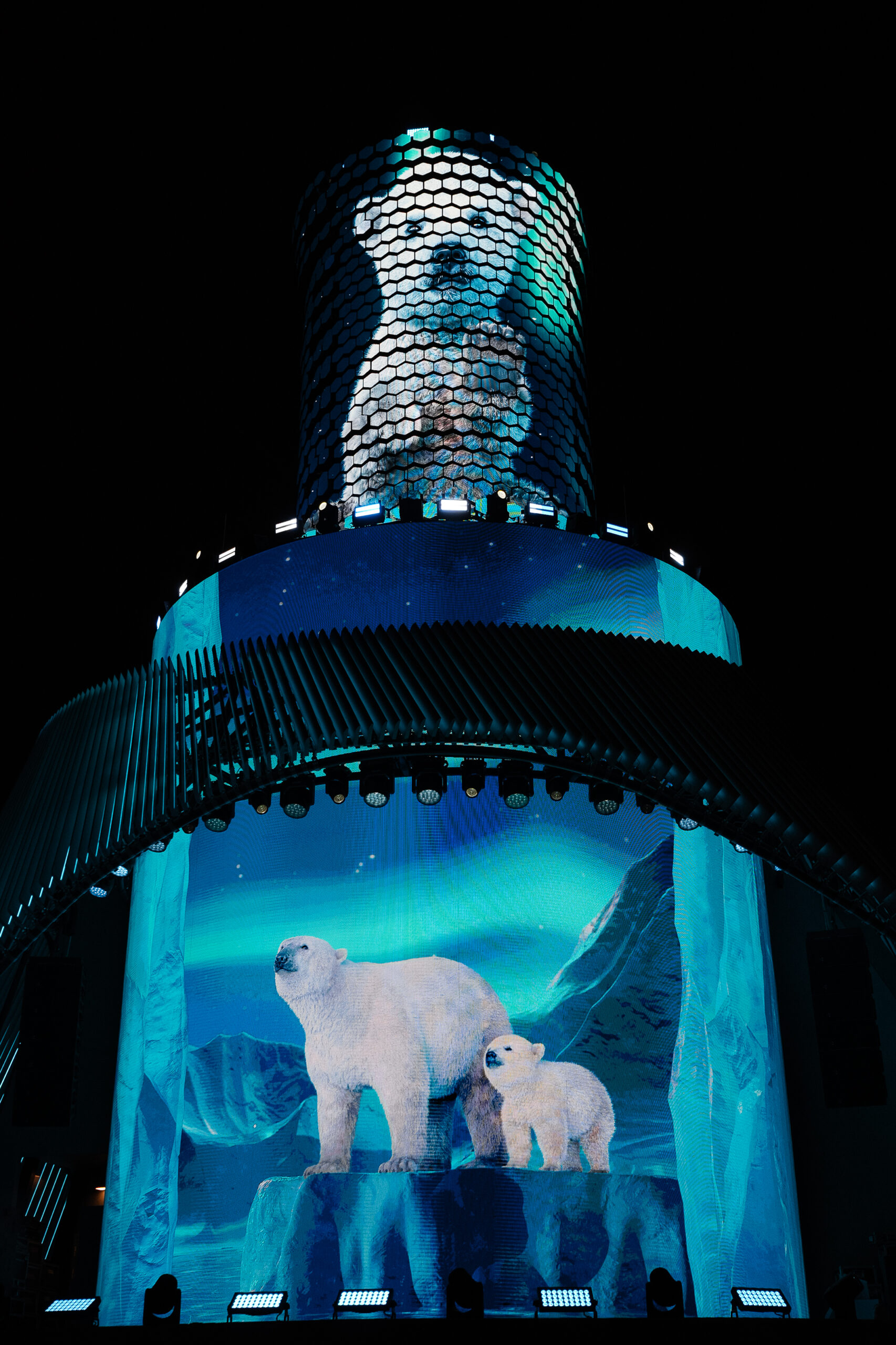
November 4, Moscow. On National Unity Day, the "Matryoshka of Moscow" media installation presented an updated program dedicated to the diversity and uniqueness of Russia's peoples.

That evening, residents and visitors to the capital enjoyed a unique multimedia show, unparalleled anywhere in the world. According to Maxim Liksutov, Deputy Mayor of Moscow for Transport, over 30 new animated scenes with 3D graphics were prepared for visitors to Zaryadye Park, reflecting the natural and cultural riches of our country.

Recognizable symbols of Russia came to life on huge screens:

🔹 Gzhel-style owl🔹 Arctic polar bears🔹 the bountiful harvest of the southern regions🔹 the majestic mountain peaks of the Caucasus🔹 Yakut bone figurine – a talisman of the North

For the first time, the "Matryoshka of Moscow" was presented in images symbolizing the unity and identity of the peoples of Russia.

"The innovative 'Matryoshka of Moscow' attraction is unique in the world. It's not just a tourist attraction, but a new platform for digital art. Its key feature is a unique kinetic installation that changes shape every 1-2 seconds. At the behest of Moscow Mayor Sergei Sobyanin, the technology was implemented by Moscow engineers and designers. Moscow specialists spent several months creating a multimedia performance that is unparalleled anywhere in the world. Each element was hand-drawn to showcase Russia's natural and cultural riches—from the Far North to the Caucasus," said Maxim Liksutov.

The new program emphasizes the idea of a united Russia, where culture, technology, and art come together to create a modern image of a country that values traditions and is inspired by the future.

November 7, 2025: Black Friday from Royal Caribbean: Book cruises with 60% off for the second traveler and 30% off for the 3rd and 4th guests. Children under 12 travel free!

Translation. Region: Russian Federation –

Source: Infoflot Cruise Center – Infoflot Cruise Center –

An important disclaimer is at the bottom of this article.

Dear friends,

Traveling on Royal Caribbean International's state-of-the-art ships is just around the corner with our Black Friday deal. Your dream cruise awaits!

Book with a discount from November 7 to December 8, 2025!

Offer valid on select cruises departing November 8, 2025.

Terms of the Black Friday promotion:

60% off the second passenger and 30% off the 3rd and 4th guests in the same cabin! Discounts from the cruise fare are already included in the cruise price on our website. Children under 12 travel free, with only fees starting at $99. This offer is valid for cruises of 4 days or more. Up to $1,000 off when booking from November 7 to 10, 2025 – instant discounts of $125 to $1,000 apply when booking a cruise, depending on the cabin category and cruise length. 55% off additional onboard services for already booked cruises. Booking and payment are only possible through your personal account on the cruise line's website. These promotions can be combined with each other, as well as with the "Instant Discount" and "Onboard Credit" promotions. The cruise company reserves the right to change special offers, update rates and fees at any time without prior notice.

Enjoy every moment at sea with Royal Caribbean International:

Your hotel at sea: the largest ships in the world, spacious and comfortable cabins, impressive restaurants, first-class service, and 5-star infrastructure. No other cruise line can match our innovations in onboard entertainment. Unique new features, introduced across various ship classes, have become groundbreaking for the entire cruise industry. A variety of itineraries will satisfy even the most discerning travelers. During stopovers, you can choose the perfect activity for you – excursions with professional guides (for an additional fee) or independent exploration of the city. Popular itineraries feature a Russian-speaking representative onboard, as well as excursions, menus, and daily "daily programs" in Russian. A dream trip for the whole family! Complimentary children's clubs are available onboard, divided by age – from 6 months to 18 years – and special entertainment programs and menus have been developed.

Please note; this information is raw content obtained directly from the information source. It is an accurate account of what the source claims, and does not necessarily reflect the position of MIL-OSI or its clients.

Financial news: 07.11.2025, 18-11 (Moscow time) the values of the upper limit of the price corridor and the range of market risk assessment for the security RU000A101XS6 (MOEK BO1P4) were changed.

Translation. Region: Russian Federation –

Source: Moscow Exchange – Moscow Exchange –

An important disclaimer is at the bottom of this article.

November 7, 2025

18:11

In accordance with the Methodology for determining the risk parameters of the stock market and deposit market of PJSC Moscow Exchange by the NCC (JSC) on 07.11.2025, 18-11 (Moscow time), the values of the upper limit of the price corridor (up to 108.13) and the range of market risk assessment (up to 1165.36 rubles, equivalent to a rate of 9.0%) for the security RU000A101XS6 (MOEK BO1P4) were changed.

Please note: This information is raw content obtained directly from the source. It represents an accurate account of the source's assertions and does not necessarily reflect the position of MIL-OSI or its clients.