Construction of the Biryulyovskaya metro line has begun in Moscow.

Translation. Region: Russian Federal

In 2025, construction of the Biryulevskaya metro line began in Moscow. The future line will be 22.2 kilometers long, with 10 stations and transfers to the Zamoskvoretskaya, Troitskaya, and Big Circle Lines (BKL), the Moscow Central Circle (MCC), and the Paveletskaya line of the Moscow Railway.

The metro will reach the Biryulyovo Vostochnoye and Zapadnoye districts, and will also improve transportation services to Danilovsky, Nagatinsky Zaton, Nagatino-Sadovniki, Pechatniki, Moskvorechye-Saburovo, and Tsaritsyno. This will benefit approximately one million Muscovites. Many of them will have metro stations near their homes, while others will have faster and more convenient metro options.

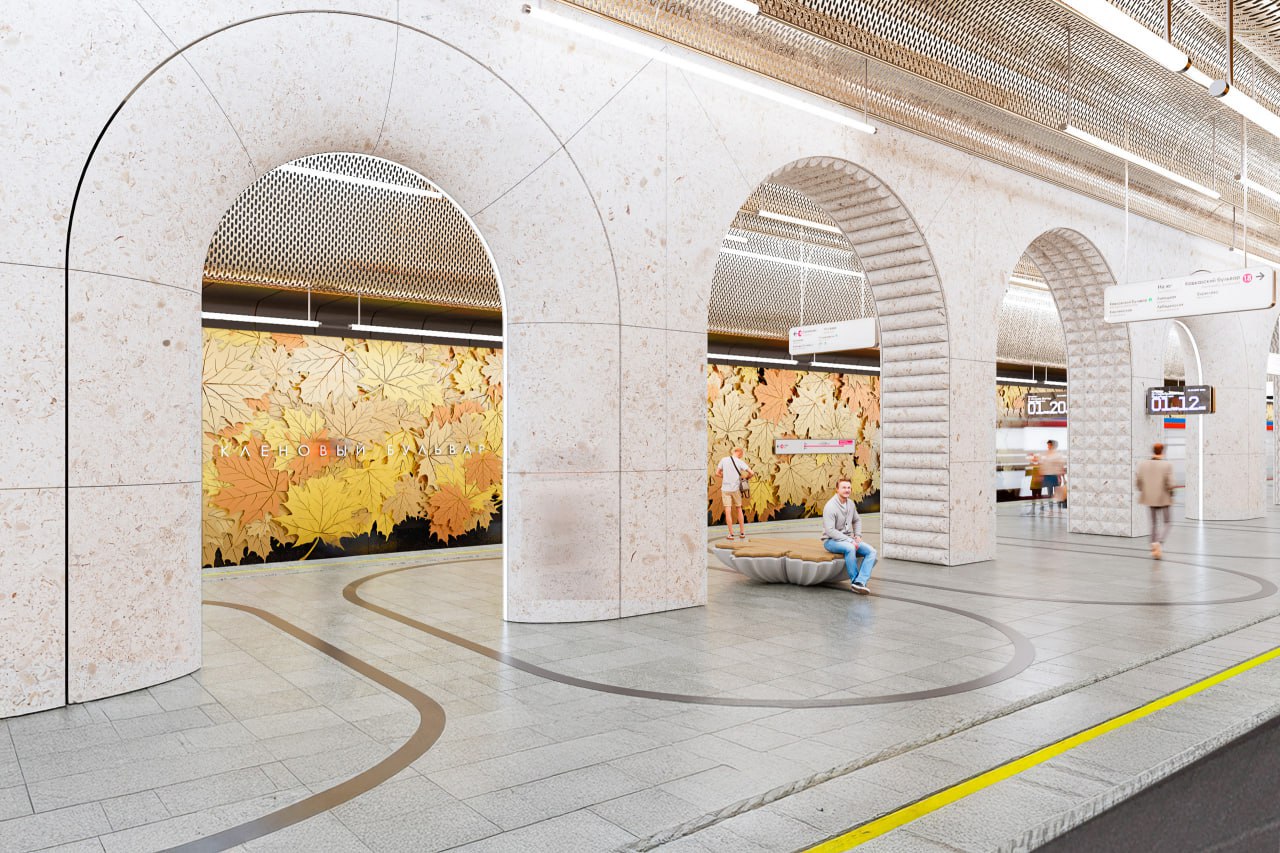
The ZIL, Ostrov Mechty, and Klenovy Bulvar stations are currently under active construction. Seven more stations are in the planning stages. Construction of the Biryulevskoye depot is also underway.

In an interview with RT, Maxim Liksutov discussed the development of driverless transport in the capital.

Translation. Region: Russian Federal

The main points from the conversation:

Russia's first driverless tram has already traveled over 10,000 km along the capital's streets without a single traffic violation. It operates with the utmost safety thanks to a unique set of equipment in the global transportation industry.

The driverless system was developed entirely by Moscow Metro employees. The Moscow Government owns the technology.

Following the completion of testing of the driverless tram, Moscow is ready to share this unique development with other regions of Russia.

The launch of the driverless tram has provided a solid foundation for expanding the project. We plan to integrate the technology into other modes of transport, which requires significant preparation.

By the end of next year, a driverless metro train capable of operating at 90-second intervals will be ready. Then, we'll begin conducting test rides with passengers.

Specialists have already begun developing software for driverless electric buses in Moscow. However, driverless rail transport remains the priority.

By 2035, 90% of Moscow's trams will be driverless. The groundwork has been laid, thanks to the creation of an intelligent, high-tech transportation system in Moscow.

Four new stations opened on the Troitskaya line at once: Vavilovskaya, Akademicheskaya, Krymskaya and ZIL.

Translation. Region: Russian Federal

This marks the completion of the first stage of construction of the Troitskaya Line, which now includes 11 stations and is over 25 km long.

There are five transfer hubs on the line:

From ZIL and Krymskaya you can transfer to the Moscow Central Circle stations of the same name; from Akademicheskaya to the Kaluzhsko-Rizhskaya Line (line 6); from Novatorskaya to the Big Circle Line; from Novomoskovskaya to the Sokolnicheskaya Line (line 1).

In the future, the ZIL station will also provide a transfer to the Biryulevskaya line (line 18) under construction.

Thanks to the Troitskaya Line, more than 1 million Muscovites have new convenient routes around the city. For many, travel time to the city center has been reduced by 10–15 minutes or more.

The 11 stations are expected to serve around 100,000 passengers per day.

The line is operated exclusively by the most modern Moscow-2024 trains, designed for maximum comfort: improved aerodynamics, modern interior, wider seats and doors, open passages between carriages. These trains are serviced at the new Stolbovo depot.

The second stage of construction is currently in the design stage. The 16.8 km long section with six stations will extend the line from Novomoskovskaya to Troitskaya.

The Matryoshka of Moscow, a new innovative attraction of the capital, has opened in Zaryadye Park.

Translation. Region: Russian Federal

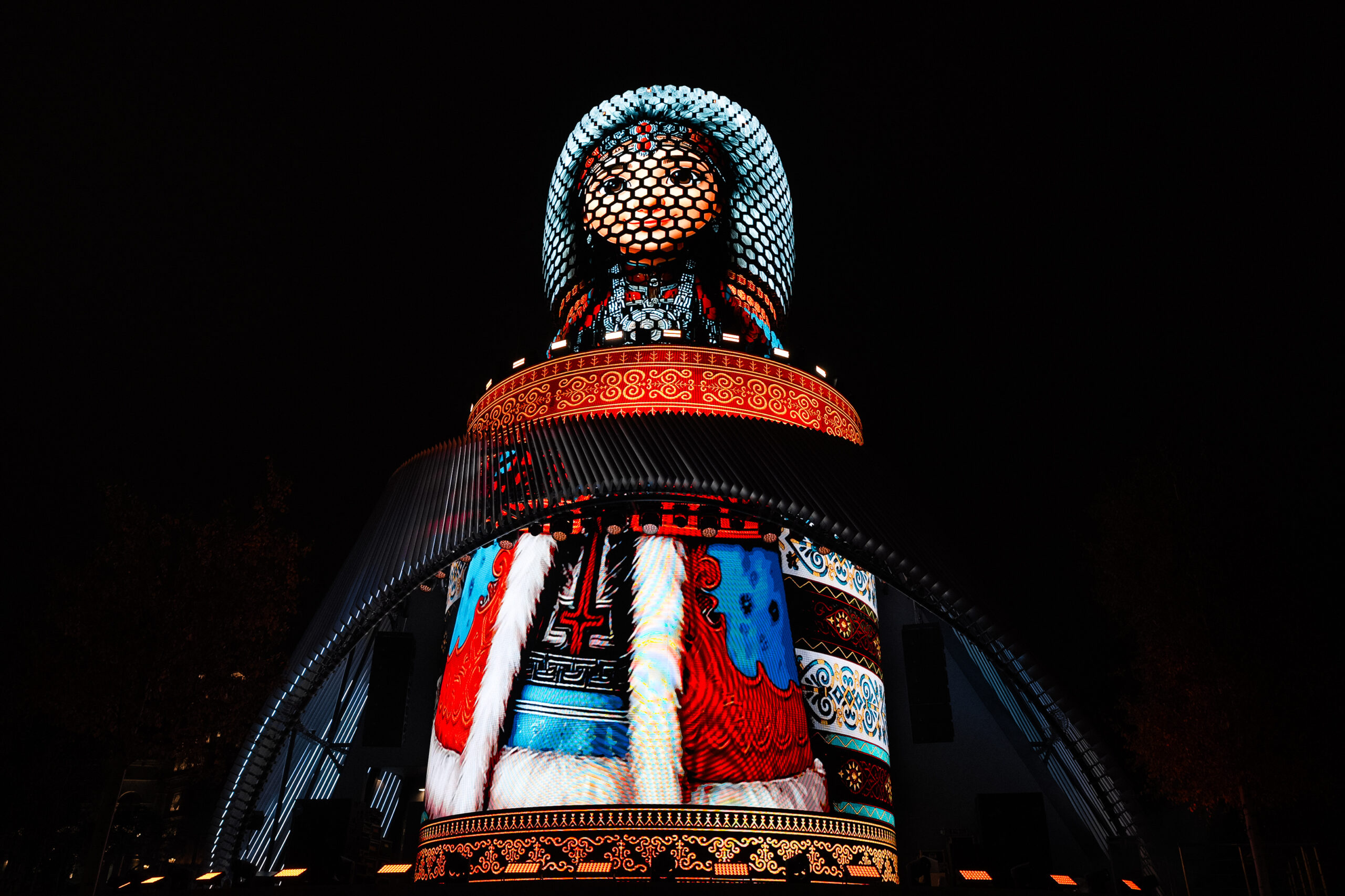
On City Day, a unique object, the "Moscow Matryoshka", was presented in Zaryadye Park. This modern media space, which has no analogues in the world, has become a new point of attraction for Muscovites and guests of the capital.

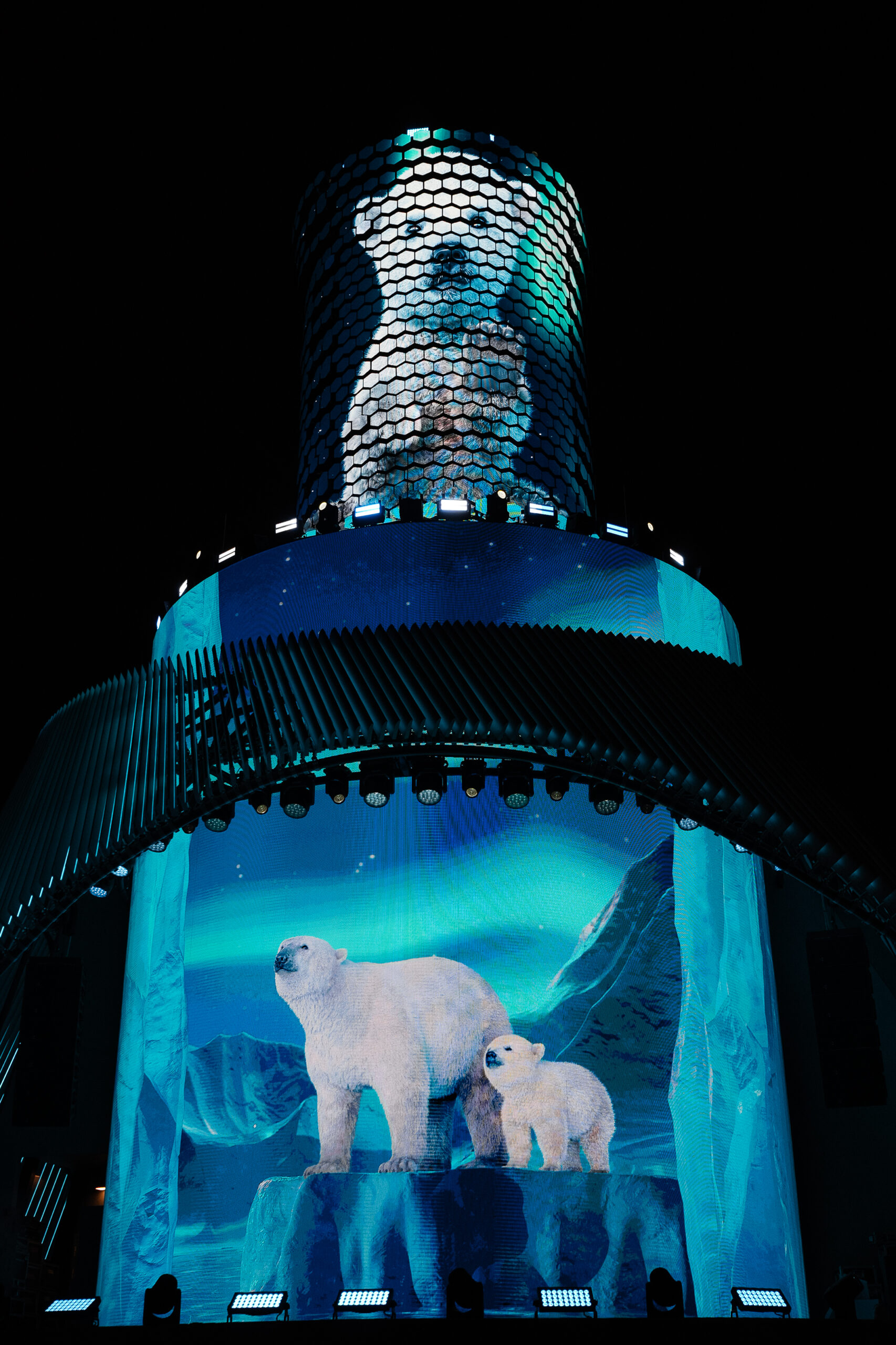
"Matryoshka of Moscow" was created on the basis of the tourist center "Moscow", preserving its original purpose and turning into a high-tech dynamic structure. It is capable of changing shape in real time and telling about the achievements of Moscow and Russia with the help of 3D graphics and kinetic installations.

The structure is based on 30 giant rings made of steel, aircraft aluminum, and titanium. They rise to a height of 11 meters in just 4.5 minutes. The external appearance of the object is formed by 1.5 thousand LED media screens in the form of honeycombs, which can transform every 1-2 seconds. The height of the figure during the program reaches 22 meters.

One of the most impressive images that the installation takes on is the traditional Russian matryoshka doll, a symbol of family and the continuity of generations.

The project was developed by Moscow engineers, and all key elements were produced at leading enterprises in the capital.

"Matryoshka of Moscow" will become an all-season platform for patriotic, cultural and educational programs. During the day from 9:00 to 19:00, multimedia materials about the city's achievements will be shown here, in the evening from 19:00 to 23:00 — programs about culture and attractions, and at night, informational stories will be broadcast.

A separate program has been prepared for young viewers with visual interpretations of classic fairy tales and works by Russian writers, including A.S. Pushkin. On holidays, visitors can enjoy thematic video cards.

The new landmark has already become a symbol of the capital’s innovative development and promises to become one of the most popular places for recreation and cultural leisure.

The Moscow Metro has updated the rolling stock of the Moscow Central Diameters.

Translation. Region: Russian Federal

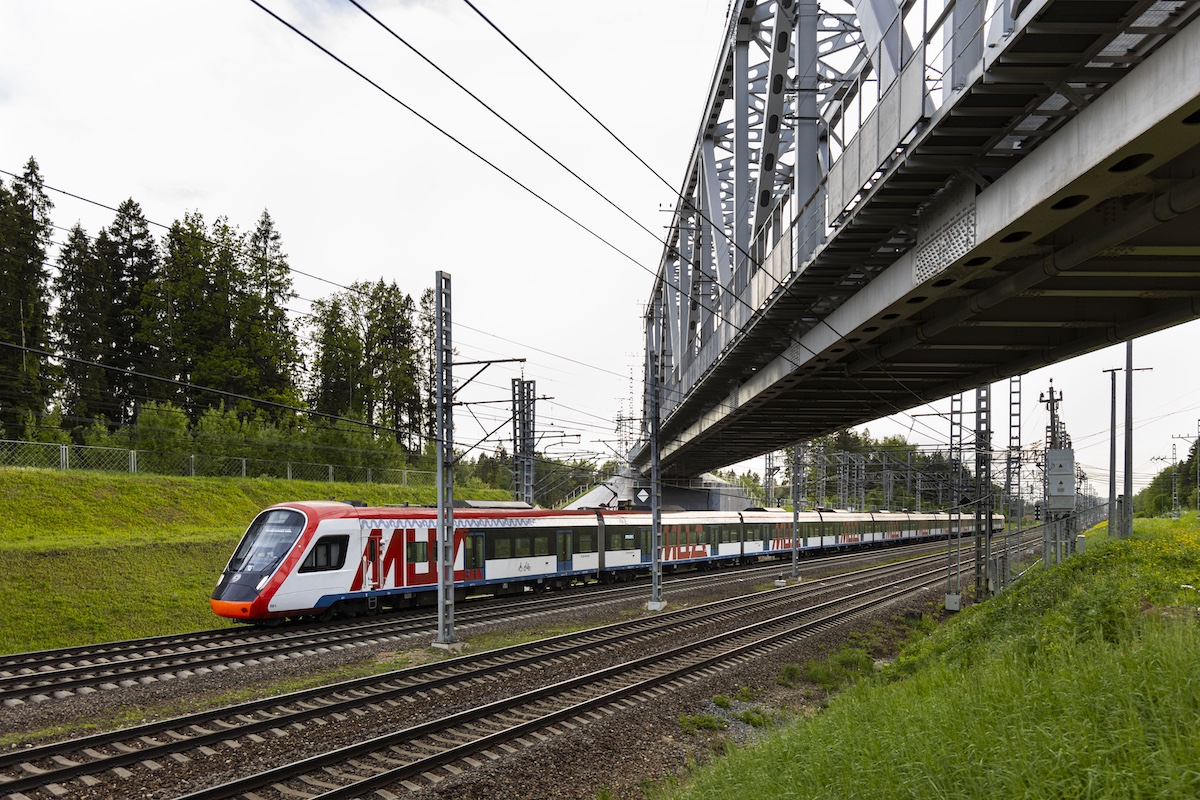
In accordance with the Moscow Transport Complex Development Program, the rolling stock upgrade on the Moscow Central Diameters (MCD) has been completed. 4.5 thousand modern carriages were purchased, including the Ivolga and EP2D models. The noise level in the trains has decreased by 35%, and the average age of the rolling stock has decreased by 5 times — from 23 to 4.5 years. Thus, the MCD has the youngest fleet of suburban trains in Europe. The results of the upgrade were not long in coming — residents of Moscow and the region more often choose the diameters for intracity trips. Currently, about 1.6 million trips are made on them per day.

The delivery of new trains for the Central Transport Hub played a key role in the development and modernization of domestic transport engineering.

The next step will be the renewal of the rolling stock on the Yaroslavl and Paveletsky railway lines. In June 2025, deliveries of new trains began on the Yaroslavl line, where passengers are transported by four Ivolga 4.0. A total of 92 trains will be renewed by 2030, which will increase the number of passenger seats and comfort on the most congested line.

Moreover, by 2035, it is planned to purchase about 100 trains for railway routes connecting Moscow with Vladimir, Ivanovo, Kaluga, Tula and other nearby regions. In this way, new standards of passenger transportation comfort will be established throughout the Central Transport Hub, which is almost 75% of all suburban transportation in Russia.

"MCD is one of the favorite and most popular modes of transport among passengers. Muscovites and residents of the region choose them for their comfort, speed and convenient transfers to other modes of transport. On the instructions of Moscow Mayor Sergei Sobyanin, we have completed the renewal of the rolling stock on the MCD. The outdated trains have been replaced by modern trains equipped with climate control, an air disinfection system, clear information, media screens, ergonomic seats and modern chargers for gadgets," added Maxim Liksutov.

On September 6, the anniversary Parade of Retro Transport took place in Moscow.

Translation. Region: Russian Federal

On September 6, the traditional Retro Transport Parade took place in the capital, attracting more than 160 thousand spectators.

A festive column of retro trams and cars of different generations traveled from the Novokuznetskaya metro station to Chistoprudny Boulevard, where a large-scale exhibition of historical equipment was held for Muscovites and city guests.

Visitors were able to view 15 retro trams and dozens of unique cars, many of which have become true symbols of their time.

An extensive cultural and entertainment program was prepared for the event's guests:

a field kitchen and free treats, including 20 thousand servings of ice cream; special photo zones; concerts by artists from the Music in the Metro project, the Moscow Metro Academic Choir and a special guest, Denis Maidanov.

"The parade of historical trams and cars took place for the 20th time. We once again saw a huge interest in retro transport among residents and guests of the capital. On the instructions of Moscow Mayor Sergei Sobyanin, we carefully preserve the history of the capital's tram and are actively working on the development of Muscovites' favorite transport," said Deputy Moscow Mayor for Transport Maxim Liksutov.

2 metro lines: all turnstiles of the Zamoskvoretskaya and Lyublinsko-Dmitrovskaya lines have been connected to biometric payment!

Translation. Region: Russian Federal

Maxim Liksutov reported that the most convenient payment service has been launched at 729 more turnstiles. Previously, biometric payment worked at 2-3 turnstiles at each station.

How does payment for travel using biometrics work?

🔹 You need to register once in the system in the Moscow Metro application, take a photo and link a bank card

🔹 The neural network transforms the photo into a unique biometric key – a set of encrypted symbols. The original image cannot be restored

🔹 Go to the turnstile with the black sticker and look into the camera. It will “find” your face in the frame and generate a biometric key

🔹 Then the neural network will compare it with the key from the database in 1 second. If there is a match, the doors will open

🔹 The cost of the trip will be debited from the linked bank card account. It is only 63 rubles.

"Moscow Mayor Sergei Sobyanin has ordered that all metro turnstiles be connected to biometric payment by the end of 2025. The service is already working on all payment equipment for passage on 13 lines. And the total number of turnstiles where payment by facial recognition is available in the metro has exceeded 3 thousand. In 2026, we will connect the turnstiles of all MCD stations to the system so that paying for travel remains just as convenient and safe," said Maxim Liksutov.

Today is a special day in the history of Moscow transport – the first completely driverless tram in Russia has been launched.

Translation. Region: Russian Federal

It will transport passengers in the northwest of the city on route No. 10 “Metro Shchukinskaya – Ulitsa Kulakova” and will operate on the established schedule.

This is a very significant technological milestone. Now unmanned technologies are starting to be implemented in the capital's transport.

The software for the driverless tram was created by the Moscow Metro employees without involving third-party companies. The smart technology developed by the city is unique. It works more accurately and reliably than foreign analogues. It has already been recognized with prestigious international awards.

The unmanned tram traveled more than 8 thousand km in test mode without violating traffic rules even once.

It is equipped with a sensor system, a high-precision route map and systems for localization, computer vision, motion planning, and wheel slip prevention.

As a result, the tram stops where necessary, opens and closes its doors, follows traffic lights, lets pedestrians pass, independently determines how to cross an intersection, switches switches, and adheres to the schedule.

The tram control officer is currently in the cabin or passenger compartment as required by federal law only for observation, and he does not interfere with the process.

Future plans:

By the end of the year, three more trams will be equipped with driverless technology. By 2030, there will be more than 300, which is about 2/3 of the capital's fleet. It is expected that by 2035, about 90% of Moscow trams will operate using driverless technology.

In December, the first stage of pilot operation of the first unmanned metro train in Russia on the BCL will begin. The control system will be tested on a modern train of the “Moscow” series at night without passengers.

A new exhibition in the Moscow metro was opened to mark the 155th anniversary of Alexander Kuprin.

Translation. Region: Russian Federal

On each model of the exhibition, passengers can find lists of Kuprin’s books – more than 30 works recommended for reading.

The exhibition can be seen until September 16 in the passage between the Savelovskaya station of the Serpukhovsko-Timiryazevskaya line and the Big Circle Line.

The exhibition was already shown on June 4 at the XI Book Festival "Red Square". In September, it will open its doors in Balaklava as part of the Kuprin Readings. Then the exhibition will go to Paris to the book salon "Russian Literature".

"Since the beginning of the year, 39 thematic exhibitions have already been held in the metro and on the Moscow Central Circle. Passengers can visit them and learn something new without going outside. At the request of Moscow Mayor Sergei Sobyanin, we make trips on public transport not only comfortable and safe, but also interesting," said Maxim Liksutov.

The IV International Transport Summit has concluded in Moscow.

Translation. Region: Russian Federal

19 agreements on cooperation in the field of transport between Moscow and foreign megacities, 17 new cities participating in the analytical platform UrbanTransportData – these are the main results of the IV International Transport Summit. The forum was attended by experts from 43 major cities of 36 countries.

An international portal for analyzing the transport infrastructure of megacities has been launched URBANTRANSPORTDATA, currently 32 cities of the world with a population of about 152.5 million people are its participants. These are million-plus cities and actively developing centers of Asia, Africa, Latin America, the CIS and Eastern Europe. Among them are Beijing, Sao Paulo, Hanoi, Bangkok, Minsk, Nairobi, Kampala and others. The platform contains about 600 indicators that have been processed and unified according to uniform standards. The project is unique in that it allows comparing transport systems of different countries taking into account their geographical and economic characteristics. This allows for a deeper understanding of global trends in the development of transport systems, studying the experience of cities in applying innovations and analyzing the current state of affairs using 50 indicators.

"The International Transport Summit was held in the capital for the fourth time with the support of Moscow Mayor Sergei Sobyanin. During the event, we concluded 19 agreements on cooperation in the field of transport with foreign megacities, and in addition, another 17 cities joined the analytical platform UrbanTransportData. We showed our foreign colleagues our achievements in the development of urban transport and industry, and they shared their practices and the latest solutions in these areas. We thank the guests for visiting Moscow," said Deputy Mayor of Moscow for Transport and Industry Maxim Liksutov.

More than 40 foreign speakers presented their developments during round tables. Delegates from Brazil, Cuba, Ghana and Turkey spoke about the development of infrastructure and integration of water transport. The results of a study on the optimization of urban space design elements were demonstrated by Wang Xiaolei, Deputy Director of the Engineering Design Department of the Beijing Municipal Transport Commission.

Mauritius Minister of Land Transport, Mahomed Osman Kassam Mahomed, expressed hope for deepening bilateral cooperation: “Mauritius is currently modernizing land transport. At the summit, I saw many presentations on the use of technology to improve this area. I think this is very much in line with what we are doing in our country and I hope for deepening cooperation.”

Much attention was paid to the coordinated development of industrial and transport systems of megacities. During the round table on this topic, representatives of Algeria, Beijing, Cebu, Santa Rosa and Accra shared their experiences.

Delegates from Chengdu, Harbin, Yerevan, Vientiane, Lome, Addis Ababa and Nis discussed issues of developing environmentally sustainable transport systems. In addition, the summit participants discussed digital passenger services and ticketing systems, and unmanned technologies.

The mayor of Senegal's second-largest city, Thiès, Babacar Diop, shared what impressed him about Moscow's transport: "I really like how ambitiously Moscow approaches solving problems. We looked at how urban transport is developing in your capital, and I was especially impressed by the tram network. I think it would be great to develop a tram network in our city. I believe that we need to build a strong partnership between Thiès and Moscow, which will help strengthen relations between our countries."

Technical visits were also organized to modern transport infrastructure facilities in Moscow: the unified dispatch center of the Moscow Metro, the Big Circle Line, the Moscow Central Diameters, the electric bus fleet, electric charging stations, river electric transport, the TsODD situation center, the Center for Research and Development of Unmanned Transport, as well as to the sites of the Technopolis Moscow SEZ – the center for the development of the city's high-tech industry.

As part of the summit’s cultural programme, participants visited the exhibition “High Underground”, VDNKh, the interactive exhibition “That Same Moscow” in the Manezh Central Exhibition Hall and the Northern River Terminal.

Press service of the Moscow Transport Complex

Phone: 7 (495) 957-94-90

E-mail: Pressdt@mos.ru

HTTPS: //t. TA/DTRAD

HTTPS: // Transport.mo.ru