Israel and Palestine: UN General Assembly endorses 'New York Declaration' on two-state solution

Translation. Region: Russian Federal

Source: United Nations – United Nations –

An important disclaimer is at the bottom of this article.

September 12, 2025 Peace and security

Applause rang out in the UN General Assembly hall on Friday as countries approved a declaration on the peaceful settlement of the Palestinian issue and the implementation of the solution to create two states – Israel and Palestine.

The New York Declaration was the outcome of an international conference held in July at the UN headquarters at the initiative of France and Saudi Arabia. The conference will resume its work later this month. In the General Assembly, which includes all 193 UN member states, 142 countries voted for a resolution supporting the document.

Israel and nine other countries voted against: Argentina, Hungary, Micronesia, Nauru, Palau, Papua New Guinea, Paraguay, Tonga and the United States. Twelve states abstained.

"Roadmap" for a future settlement

Speaking before the vote, French Ambassador Jerome Bonnafon recalled that the New York Declaration “offers a unified roadmap for realizing the two-state solution.” It calls for an immediate ceasefire in Gaza, the release of all hostages held there, and the establishment of a viable and sovereign Palestinian state.

The roadmap also calls for the disarmament of Hamas and the removal of the movement from governance in Gaza, normalization of relations between Israel and Arab countries, and collective security guarantees.

Speaking before the vote, Israeli Ambassador Danny Danon called the declaration “one-sided,” saying it “will go down in history not as a step toward peace, but as yet another empty gesture that undermines the authority of the Assembly.” He said “the main winner of any approval here today is Hamas,” which will present it as “the fruits of its actions on October 7 [2023].”

July Conference

The high-level conference in July took place against the backdrop of the war in Gaza and deteriorating prospects for a two-state solution. Speaking at the opening, UN Secretary-General Antonio Guterres noted that “the key issue for establishing peace in the Middle East is the implementation of the two-state solution, within which two independent, sovereign and democratic states – Israel and Palestine – live side by side in peace and security.”

Please note: This information is raw content obtained directly from the source of the information. It is an accurate report of what the source claims and does not necessarily reflect the position of MIL-OSI or its clients.

.

IAEA study: Unhealthy diet, not lack of physical activity, is the real cause of obesity

Translation. Region: Russian Federal

Source: United Nations – United Nations –

An important disclaimer is at the bottom of this article.

September 13, 2025 Healthcare

New nutrition research from the International Atomic Energy Agency (IAEA) suggests that the main cause of obesity in rich countries is increased calorie consumption, not decreased physical activity as previously thought.

The findings, published as an article in the journal Proceedings of the National Academy of Sciences, challenge the idea that decreased physical activity is driving the rise in obesity associated with economic development.

“Despite decades of efforts to understand the underlying causes of the obesity crisis in developed countries, the relationship between diet and physical activity has remained unclear,” said Herman Pontzer, professor of evolutionary anthropology and global health at Duke University and one of the authors of the paper. “The IAEA database has brought together a global effort not only to test new ideas but also to address the uncertainty surrounding this pressing public health issue.”

Global problem

In 2022, almost one in eight people on Earth was obese. Over the past three decades, the rate among adults has more than doubled and among adolescents, it has quadrupled.

A complex chronic condition characterized by excess body fat, it increases the risk of non-communicable diseases such as diabetes, cardiovascular disease and cancer. However, obesity is rare in traditional and agricultural communities, which has been associated with greater physical activity in these areas.

Obesity is caused by an imbalance between the calories you eat and the energy your body burns. Public health experts often point to two causes: overeating and insufficient physical activity. However, the exact role of each is debated, as lower levels of activity do not always mean lower energy expenditure throughout the day.

The lack of diverse and reliable data on calorie intake, energy expenditure, and body composition further complicated the study. Previous attempts to address this issue focused on non-industrialized populations, did not include measures of body fat, and relied on limited information from general consumption data and country-level surveys.

To fill this gap, 68 researchers turned to the IAEA’s Doubly Labelled Water Database, a global bank of energy expenditure measurements collected using stable isotope techniques. The database, which contains information on 45 countries, has previously been used by scientists to conduct groundbreaking research on energy metabolism in the body and to inform current revisions of human energy requirements.

Research into factors influencing obesity

The researchers analyzed the physical condition of 4,213 adults aged 18 to 60 years on six continents, representing 34 population groups with different economic conditions and lifestyles. The scientists noted an increased energy expenditure (both activity-related and overall) among the population of industrialized countries. The main factor contributing to obesity was calorie intake, which the researchers estimated based on measurements of total energy expenditure and weight change.

“For public health and nutritionists, these findings provide new insights into the importance of diet,” said Cornelia Lechl, Head of Nutrition and Health Research at the IAEA’s Division of Health and one of the authors of the paper. “Policies aimed at improving diet quality and reducing consumption of energy-dense, ultra-processed foods are likely to be more effective in combating obesity than promoting physical activity. More broadly, these findings represent a major scientific breakthrough made possible by the IAEA’s human health databases.”

Please note: This information is raw content obtained directly from the source of the information. It is an accurate report of what the source claims and does not necessarily reflect the position of MIL-OSI or its clients.
.

Main events of the week

Translation. Region: Russian Federal

Source: United Nations – United Nations –

An important disclaimer is at the bottom of this article.

September 11, 2025 UN

The main events of the week: new shelling of Ukraine, the beginning of the 60th session of the UN Human Rights Council, the inauguration of the new President of the General Assembly, protests in Nepal, Russian drones in Poland, the resumption of cooperation between the IAEA and Iran, the Security Council meeting on the strikes in Qatar, the situation of women in Afghanistan, the human rights situation in the DPRK, Peace Day.

On Monday, the UN Secretary General Antonio Guterres strongly condemned the attacks of the Russian Federation on Ukraine on September 7, which resulted in several people, including children, being killed and injured. >>>

Speaking at the opening of the 60th session of the Human Rights Council on Monday, UN High Commissioner for Human Rights Volker Türk strongly condemned what he called the “glorification of violence” seen around the world and the “coordinated efforts” to undermine fundamental human rights. >>>

On Tuesday, former German Foreign Minister Annalena Baerbock was sworn in as President of the 80th session of the United Nations General Assembly. >>>

Nepal's prime minister resigned on Tuesday amid a brutal crackdown on youth protests, with the UN calling for restraint and dialogue.>>>

The UN Secretary-General expressed concern on Wednesday over reports that Russian military drones had violated Polish airspace. >>>

The head of the International Atomic Energy Agency (IAEA) and Iran's foreign minister signed an agreement on practical arrangements for the implementation of safeguards in Iran on Wednesday, resuming cooperation. >>>

During a Security Council meeting on Thursday, UN Under-Secretary-General for Political Affairs Rosemary DiCarlo called Israel's strike on Qatar "an alarming escalation." >>>

Also on Thursday, the UN called on the Taliban to lift restrictions on female staff access to United Nations premises in Afghanistan. >>>

The human rights situation in North Korea has not improved over the past decade and in many respects has even worsened, the UN Human Rights Office said in a report released on Friday. >>>

Achieving and maintaining peace requires bold action and a willingness to compromise, Secretary-General António Guterres said Friday at a ceremony marking Peace Day in the Japanese Garden at UN headquarters. >>>

Please note: This information is raw content obtained directly from the source of the information. It is an accurate report of what the source claims and does not necessarily reflect the position of MIL-OSI or its clients.

.

The Moscow Metro has updated the rolling stock of the Moscow Central Diameters.

Translation. Region: Russian Federal

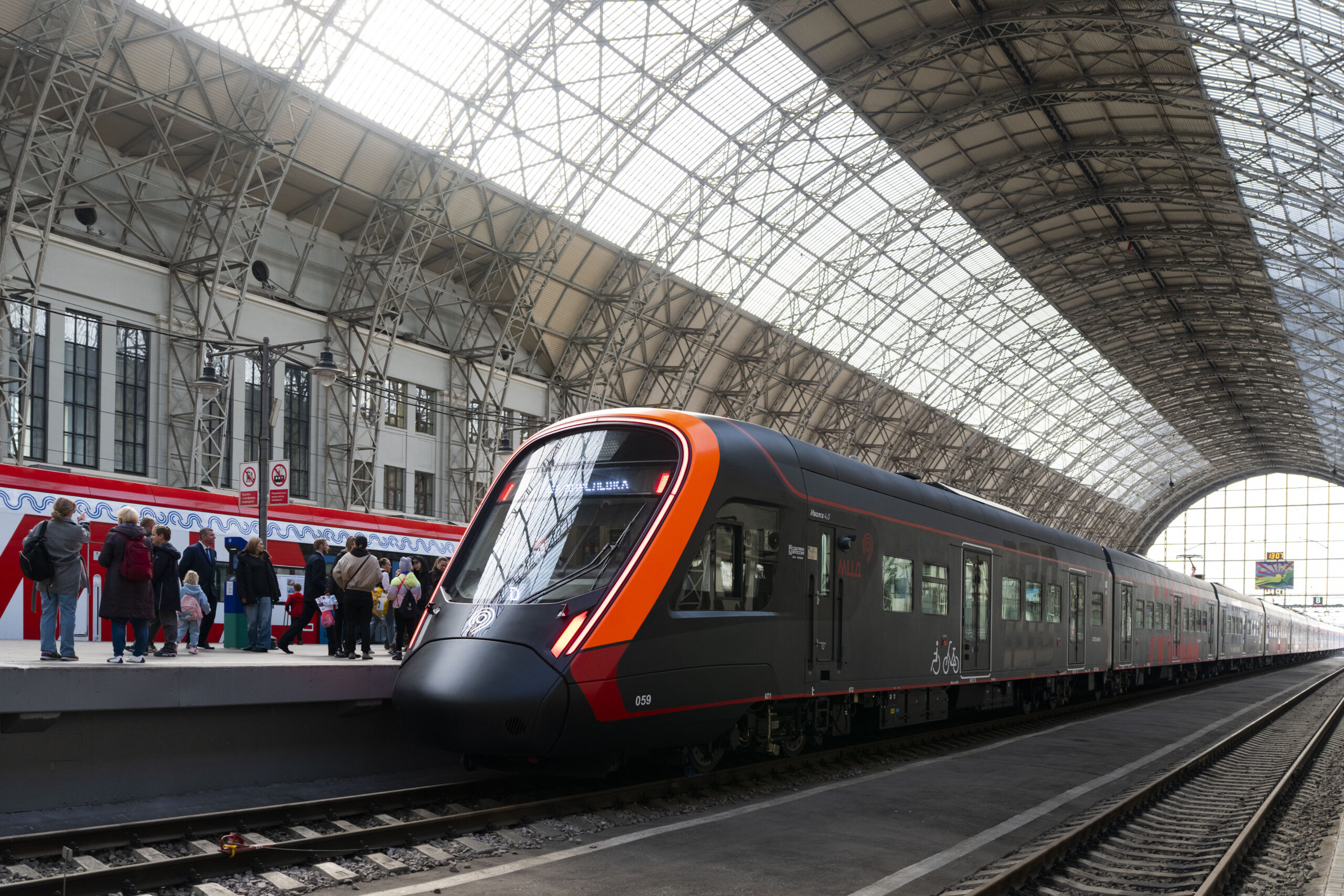
In accordance with the Moscow Transport Complex Development Program, the rolling stock upgrade on the Moscow Central Diameters (MCD) has been completed. 4.5 thousand modern carriages were purchased, including the Ivolga and EP2D models. The noise level in the trains has decreased by 35%, and the average age of the rolling stock has decreased by 5 times — from 23 to 4.5 years. Thus, the MCD has the youngest fleet of suburban trains in Europe. The results of the upgrade were not long in coming — residents of Moscow and the region more often choose the diameters for intracity trips. Currently, about 1.6 million trips are made on them per day.

The delivery of new trains for the Central Transport Hub played a key role in the development and modernization of domestic transport engineering.

The next step will be the renewal of the rolling stock on the Yaroslavl and Paveletsky railway lines. In June 2025, deliveries of new trains began on the Yaroslavl line, where passengers are transported by four Ivolga 4.0. A total of 92 trains will be renewed by 2030, which will increase the number of passenger seats and comfort on the most congested line.

Moreover, by 2035, it is planned to purchase about 100 trains for railway routes connecting Moscow with Vladimir, Ivanovo, Kaluga, Tula and other nearby regions. In this way, new standards of passenger transportation comfort will be established throughout the Central Transport Hub, which is almost 75% of all suburban transportation in Russia.

"MCD is one of the favorite and most popular modes of transport among passengers. Muscovites and residents of the region choose them for their comfort, speed and convenient transfers to other modes of transport. On the instructions of Moscow Mayor Sergei Sobyanin, we have completed the renewal of the rolling stock on the MCD. The outdated trains have been replaced by modern trains equipped with climate control, an air disinfection system, clear information, media screens, ergonomic seats and modern chargers for gadgets," added Maxim Liksutov.

On September 6, the anniversary Parade of Retro Transport took place in Moscow.

Translation. Region: Russian Federal

On September 6, the traditional Retro Transport Parade took place in the capital, attracting more than 160 thousand spectators.

A festive column of retro trams and cars of different generations traveled from the Novokuznetskaya metro station to Chistoprudny Boulevard, where a large-scale exhibition of historical equipment was held for Muscovites and city guests.

Visitors were able to view 15 retro trams and dozens of unique cars, many of which have become true symbols of their time.

An extensive cultural and entertainment program was prepared for the event's guests:

a field kitchen and free treats, including 20 thousand servings of ice cream; special photo zones; concerts by artists from the Music in the Metro project, the Moscow Metro Academic Choir and a special guest, Denis Maidanov.

"The parade of historical trams and cars took place for the 20th time. We once again saw a huge interest in retro transport among residents and guests of the capital. On the instructions of Moscow Mayor Sergei Sobyanin, we carefully preserve the history of the capital's tram and are actively working on the development of Muscovites' favorite transport," said Deputy Moscow Mayor for Transport Maxim Liksutov.

2 metro lines: all turnstiles of the Zamoskvoretskaya and Lyublinsko-Dmitrovskaya lines have been connected to biometric payment!

Translation. Region: Russian Federal

Maxim Liksutov reported that the most convenient payment service has been launched at 729 more turnstiles. Previously, biometric payment worked at 2-3 turnstiles at each station.

How does payment for travel using biometrics work?

🔹 You need to register once in the system in the Moscow Metro application, take a photo and link a bank card

🔹 The neural network transforms the photo into a unique biometric key – a set of encrypted symbols. The original image cannot be restored

🔹 Go to the turnstile with the black sticker and look into the camera. It will “find” your face in the frame and generate a biometric key

🔹 Then the neural network will compare it with the key from the database in 1 second. If there is a match, the doors will open

🔹 The cost of the trip will be debited from the linked bank card account. It is only 63 rubles.

"Moscow Mayor Sergei Sobyanin has ordered that all metro turnstiles be connected to biometric payment by the end of 2025. The service is already working on all payment equipment for passage on 13 lines. And the total number of turnstiles where payment by facial recognition is available in the metro has exceeded 3 thousand. In 2026, we will connect the turnstiles of all MCD stations to the system so that paying for travel remains just as convenient and safe," said Maxim Liksutov.

Today is a special day in the history of Moscow transport – the first completely driverless tram in Russia has been launched.

Translation. Region: Russian Federal

It will transport passengers in the northwest of the city on route No. 10 “Metro Shchukinskaya – Ulitsa Kulakova” and will operate on the established schedule.

This is a very significant technological milestone. Now unmanned technologies are starting to be implemented in the capital's transport.

The software for the driverless tram was created by the Moscow Metro employees without involving third-party companies. The smart technology developed by the city is unique. It works more accurately and reliably than foreign analogues. It has already been recognized with prestigious international awards.

The unmanned tram traveled more than 8 thousand km in test mode without violating traffic rules even once.

It is equipped with a sensor system, a high-precision route map and systems for localization, computer vision, motion planning, and wheel slip prevention.

As a result, the tram stops where necessary, opens and closes its doors, follows traffic lights, lets pedestrians pass, independently determines how to cross an intersection, switches switches, and adheres to the schedule.

The tram control officer is currently in the cabin or passenger compartment as required by federal law only for observation, and he does not interfere with the process.

Future plans:

By the end of the year, three more trams will be equipped with driverless technology. By 2030, there will be more than 300, which is about 2/3 of the capital's fleet. It is expected that by 2035, about 90% of Moscow trams will operate using driverless technology.

In December, the first stage of pilot operation of the first unmanned metro train in Russia on the BCL will begin. The control system will be tested on a modern train of the “Moscow” series at night without passengers.

A new exhibition in the Moscow metro was opened to mark the 155th anniversary of Alexander Kuprin.

Translation. Region: Russian Federal

On each model of the exhibition, passengers can find lists of Kuprin’s books – more than 30 works recommended for reading.

The exhibition can be seen until September 16 in the passage between the Savelovskaya station of the Serpukhovsko-Timiryazevskaya line and the Big Circle Line.

The exhibition was already shown on June 4 at the XI Book Festival "Red Square". In September, it will open its doors in Balaklava as part of the Kuprin Readings. Then the exhibition will go to Paris to the book salon "Russian Literature".

"Since the beginning of the year, 39 thematic exhibitions have already been held in the metro and on the Moscow Central Circle. Passengers can visit them and learn something new without going outside. At the request of Moscow Mayor Sergei Sobyanin, we make trips on public transport not only comfortable and safe, but also interesting," said Maxim Liksutov.

The IV International Transport Summit has concluded in Moscow.

Translation. Region: Russian Federal

19 agreements on cooperation in the field of transport between Moscow and foreign megacities, 17 new cities participating in the analytical platform UrbanTransportData – these are the main results of the IV International Transport Summit. The forum was attended by experts from 43 major cities of 36 countries.

An international portal for analyzing the transport infrastructure of megacities has been launched URBANTRANSPORTDATA, currently 32 cities of the world with a population of about 152.5 million people are its participants. These are million-plus cities and actively developing centers of Asia, Africa, Latin America, the CIS and Eastern Europe. Among them are Beijing, Sao Paulo, Hanoi, Bangkok, Minsk, Nairobi, Kampala and others. The platform contains about 600 indicators that have been processed and unified according to uniform standards. The project is unique in that it allows comparing transport systems of different countries taking into account their geographical and economic characteristics. This allows for a deeper understanding of global trends in the development of transport systems, studying the experience of cities in applying innovations and analyzing the current state of affairs using 50 indicators.

"The International Transport Summit was held in the capital for the fourth time with the support of Moscow Mayor Sergei Sobyanin. During the event, we concluded 19 agreements on cooperation in the field of transport with foreign megacities, and in addition, another 17 cities joined the analytical platform UrbanTransportData. We showed our foreign colleagues our achievements in the development of urban transport and industry, and they shared their practices and the latest solutions in these areas. We thank the guests for visiting Moscow," said Deputy Mayor of Moscow for Transport and Industry Maxim Liksutov.

More than 40 foreign speakers presented their developments during round tables. Delegates from Brazil, Cuba, Ghana and Turkey spoke about the development of infrastructure and integration of water transport. The results of a study on the optimization of urban space design elements were demonstrated by Wang Xiaolei, Deputy Director of the Engineering Design Department of the Beijing Municipal Transport Commission.

Mauritius Minister of Land Transport, Mahomed Osman Kassam Mahomed, expressed hope for deepening bilateral cooperation: “Mauritius is currently modernizing land transport. At the summit, I saw many presentations on the use of technology to improve this area. I think this is very much in line with what we are doing in our country and I hope for deepening cooperation.”

Much attention was paid to the coordinated development of industrial and transport systems of megacities. During the round table on this topic, representatives of Algeria, Beijing, Cebu, Santa Rosa and Accra shared their experiences.

Delegates from Chengdu, Harbin, Yerevan, Vientiane, Lome, Addis Ababa and Nis discussed issues of developing environmentally sustainable transport systems. In addition, the summit participants discussed digital passenger services and ticketing systems, and unmanned technologies.

The mayor of Senegal's second-largest city, Thiès, Babacar Diop, shared what impressed him about Moscow's transport: "I really like how ambitiously Moscow approaches solving problems. We looked at how urban transport is developing in your capital, and I was especially impressed by the tram network. I think it would be great to develop a tram network in our city. I believe that we need to build a strong partnership between Thiès and Moscow, which will help strengthen relations between our countries."

Technical visits were also organized to modern transport infrastructure facilities in Moscow: the unified dispatch center of the Moscow Metro, the Big Circle Line, the Moscow Central Diameters, the electric bus fleet, electric charging stations, river electric transport, the TsODD situation center, the Center for Research and Development of Unmanned Transport, as well as to the sites of the Technopolis Moscow SEZ – the center for the development of the city's high-tech industry.

As part of the summit’s cultural programme, participants visited the exhibition “High Underground”, VDNKh, the interactive exhibition “That Same Moscow” in the Manezh Central Exhibition Hall and the Northern River Terminal.

Press service of the Moscow Transport Complex

Phone: 7 (495) 957-94-90

E-mail: Pressdt@mos.ru

HTTPS: //t. TA/DTRAD

HTTPS: // Transport.mo.ru

Moscow Metro – Professional skaters performed in the metro on August 20

Translation. Region: Russian Federal

Source: Moscow Metro

The Vorobyovy Gory metro station became one of the venues for the international Grand Skate Tour 2025 festival for several hours. Famous athletes arrived from all over the world to show off their skills.


Moscow Metro – On August 20, professional skateboarders performed in the metro.

During the competition: 1) there was no movement of trains or passengers at the station; 2) various obstacles and sliding elements were installed specifically for the competition. For example, steps and railings; 3) 25 world-famous skateboarding athletes from Mexico, Argentina, Madagascar and other countries performed complex tricks for a while; 4) The spectators were passengers who won tickets on our social networks.

It should be noted that all elements were performed by professionals on a specially equipped site in the presence of medical workers, and riding skateboards and other transport and sports vehicles outside of competitions in the Moscow metro is prohibited and dangerous.