
NSU students and staff presented their developments in the field of prosthetics at the national forum "Hope for Technology"

Translation. Region: Russian Federal

Source: Novosibirsk State University –

An important disclaimer is at the bottom of this article.

The 10th National Forum of the Rehabilitation Industry and Universal Design "Hope for Technology", dedicated to demonstrating comprehensive solutions for creating an accessible environment, modern technologies for people with disabilities, was held in Moscow on July 10-11. The large-scale exhibition display of Russian manufacturers presented more than 450 domestic solutions in 9 areas: prostheses, orthoses and functional units, rehabilitation equipment and exercise machines. The biomechanics and medical engineering group of the Novosibirsk State University, which consists of students from several faculties, presented its developments to the professional community. This scientific group was created on the basis of Mathematical center in Akademgorodok

The exhibition of assistive technologies was attended by the head of the group, candidate of physical and mathematical sciences Vladimir Serdyukov, 4th year students Faculty of Mechanics and Mathematics of NSU Daria Korostovskaya and Alexander Niukkanen, 3rd year student Faculty of Mechanics and Mathematics of NSU Tatyana Shashkina, 5th year student Institute of Medicine and Medical Technologies NSU Sofia Eksharova, 2nd year master's student Faculty of Mechanics and Mathematics of NSU Andrey Karavan, Master's degree graduate Faculty of Geology and Geophysics of NSU Innokenty Serdyuk and postgraduate student of the Institute of Thermal Physics SB RAS Konstantin Lebeda. Young researchers got acquainted with developments in the field of assistive technologies, learned a lot of interesting things, showed the results of their projects, received feedback and acquired valuable contacts for further cooperation.

At their stand, the young researchers presented a motion capture system for studying the kinematics of patients’ walking, as well as an adaptive prosthetic socket for a hand prosthesis using 3D printing technology.

The group also presented its latest developments: a 3D-printed prosthetic foot for activity levels 1–2 and insoles for gait biomechanics diagnostics for amputees, which will complement and improve the motion capture system.

— The most feedback was received by one of our new developments, which was tested for the first time at the forum — a foot prosthesis printed on a 3D printer. Working on this project, we set ourselves the following goal: to make a foot prosthesis that would have a low cost, be easy to manufacture, have the ability to be personalized and manufactured in a short time using simple equipment, which would increase its availability, but at the same time maintain the general biomechanics of walking. An important point is that our prosthesis belongs to activity levels 1-2 and is intended only for walking, but is not suitable for running or sports. To develop the geometry, a digital stand was used that imitates human loads when walking. This way, we were able to create a prosthesis geometry that meets the goal, — said Andrey Karavan.

For the precise design of the prosthesis, 3D modeling and load analysis technologies in Ansys were used. Manufacturing using FDM printing technology took about 12 hours. The weight of the finished product was about 700 grams. This project received financial support from the Ministry of Science and Innovation Policy of the Novosibirsk Region.

The first time a patient tested a printed prosthesis was at the forum. The guys offered to test and evaluate it to the head of the prosthetic center "Instep" (St. Petersburg), who is an amputee himself.

— He liked that the sole is non-slip – even on wet floor tiles, which allows the user to take a shower without the risk of falling. However, he pointed out the shortcomings and shortcomings regarding the geometry of the product and made constructive suggestions for its improvement. His opinion is very important to us, and taking this feedback into account, we will adjust the prosthesis model and organize re-testing on other amputees. It will not be difficult to make adjustments due to the simplicity of the technology, — explained Daria Korostovskaya.

Another new development of the NSU biomechanics and medical engineering group attracted great interest from the forum participants — a pressure insole that will accurately determine the step phases and gait asymmetry. This “smart” insole was previously tested together with a motion capture system for analyzing gait kinematics. The invention will allow specialists in prosthetic centers to analyze the distribution of the load between healthy and amputated limbs, evaluate the distribution of pressure on the foot or prosthesis, and the dynamics of rehabilitation outside the clinic. This project received support from the FSI Foundation as part of the Student Startup competition.

— The video we recorded while testing this insole shows the distribution of the load on the foot when walking. It is important that it allows us to divide the gait cycles into support and transfer phases. We have the opportunity to analyze their ratio and draw conclusions about the gait asymmetry indicator of amputees, which is important for monitoring rehabilitation and correct placement of the prosthesis. When diagnosing the biomechanics of amputees' gait, such insoles are placed in shoes under both the patient's healthy foot and the prosthesis. To transmit and read data from the insole, we developed software for processing and visualizing the data, — said Tatyana Shashkina.

Young researchers plan to combine the motion capture system with a "smart" insole. During early research, the guys came to the conclusion that combining these technical solutions will allow for a more complete gait analysis. The motion capture system records the kinematics of the gait, and the insole records the pressure of the foot and prosthesis on the surface. By combining these data, it is possible to track the biomechanical indicators and symmetry of the patient's gait, which is of great importance for assessing the progress of rehabilitation and adjusting the prosthesis settings.

This development has attracted great interest from representatives of prosthetic centers, some of whom have expressed interest in testing it in their institutions and working together. Among them are the Alorto prosthetic and orthopedic center (Barnaul) and the Ortho-Innovation prosthetic center (Moscow).

— We will be glad to cooperate with these and other prosthetic centers, including because during joint testing we will be able to replenish the database of gait kinematics of patients with lower limb amputations, which we are currently forming in the course of joint work with the Novosibirsk branch of the Moscow Prosthetic and Orthopedic Enterprise. In addition, at the forum we received a request to develop an adaptive prosthetic socket for a leg using 3D printing technology, similar to our existing development of a prosthetic socket for an arm. This is exactly what we intend to do in the near future, — Vladimir Serdyukov summed up.

Material prepared by: Elena Panfilo, NSU press service

Please note: This information is raw content obtained directly from the source of the information. It is an accurate report of what the source claims and does not necessarily reflect the position of MIL-OSI or its clients.

.
The AI Revolution in Education: Are Chinese Algorithms Teaching You?

Translation. Region: Russian Federal

Source: People's Republic of China in Russian – People's Republic of China in Russian –

An important disclaimer is at the bottom of this article.

Source: People's Republic of China – State Council News

BEIJING, July 22 (Xinhua) — China has released guidelines to accelerate digital education this year. Based on three years of experience summarizing the national digital education strategy, Chinese authorities have put forward comprehensive work plans to further advance national digital education.

How far has digital education progressed in China now and how will it develop in the future?

A BREAKTHROUGH IN DIGITAL EDUCATION

In 2022, the state public service platform for intellectual education was opened, marking the official launch of the national digital education strategy.

After three years of development, this platform integrates 5 sub-platforms and has access to 32 provincial-level platforms. It has registered more than 163 million users and the number of visits and views on the platform has exceeded 60.8 billion times.

At the same time, the platform has launched more than 110 thousand educational resources for primary and secondary schools, more than 11 thousand high-quality online courses for vocational education and 31 thousand courses for higher education.

"Over the past three years, breakthroughs have been made in implementing the national digital education strategy and the world's largest platform for public learning resources and services and a lifelong public learning platform have been established," said Zhou Dawan, head of the Department of Science, Technology and Information Technology of the Ministry of Education of the People's Republic of China.

At present, digital education in China is being comprehensively promoted with faster speed and efficiency. All schools at different levels in China are connected to the Internet, and more than 75% of schools have wireless network coverage. In addition, new infrastructure has been built in many places to build provincial-level intelligent education platforms.

“In the future, it is necessary to work hard to build a diversified system of platforms, catalog systems, resources, data and application systems, and improve the platform’s intelligence level to create a digital base with high intelligence and strong interaction,” said Yang Zongkai, head of the advisory committee of experts on digital education at the Ministry of Education of the People’s Republic of China.

AI IN EDUCATION REFORM

Nowadays, the application of artificial intelligence is becoming a hot topic in the field of education. From cities to rural areas, many educational institutions have begun to study specific areas of application of artificial intelligence.

In March this year, China released the intelligent version of the national intelligent education platform 2.0 and launched an “artificial intelligence testing ground” to promote innovation in human-computer interaction.

Zhou Dawan noted that in the future, the "AI testing ground" will be improved, focusing on four main aspects – student learning, teacher teaching, educational management and scientific research, and the innovative forces of high-level universities and enterprises will be combined to develop promising practical AI tools.

It should be recalled that the guidelines on accelerating digital education state that it is necessary to promote the digital transformation of academic disciplines, teaching materials and teaching models, and to improve the digital literacy and skills of the entire population, especially teachers and students.

In addition, the document also proposes to establish an “AI education” security assurance system and explore the possibility of establishing an algorithm security assessment system to effectively avoid problems such as cyber attacks, information cocoons, algorithm hegemony and Internet addiction.

PROMOTING DIGITAL EDUCATION AS AN INTERNATIONAL BRAND

The above document points out that the internationalization of digital education should be actively promoted and international cooperation in the joint creation and utilization of resources, joint training of personnel, etc. should be deepened so as to form an international brand of Chinese digital education.

After more than 10 years of development, China ranks first in the world in the number and scale of application of massive open online courses (MOOCs), creating an international brand in higher education worldwide.

In January 2024, the international version of the government's public service platform in the field of intelligent education was launched, which will provide all-weather support for the education of students around the world.

In addition, according to the data, the state intellectual education platform in the field of higher education has been visited by more than 106 million people, and its users cover 183 countries and regions of the world.

The document also said that it is necessary to deepen the application of the international version of the national public service platform in the field of intelligent education, so that digital education can benefit students all over the world and China's digital education can become a benchmark for the world.

"Digital education is an inevitable trend of modern development," Zhou Dawan said, adding that it is not only a technological revolution in education, but also a profound reform of the concept, model and management of education.

Please note: This information is raw content obtained directly from the source of the information. It is an accurate report of what the source claims and does not necessarily reflect the position of MIL-OSI or its clients.

.

The International Philanthropist Award for outstanding achievements of people with disabilities in the field of culture and art accepts applications until 31.08.2025

Translation. Region: Russian Federal

Source: Solid Bank – Solid Bank –

An important disclaimer is at the bottom of this article.

The partner of the financial house "Solid" the Foundation for the support of the disabled "Philanthropist" announces the start of collecting applications for participation in the XIII International Award "Philanthropist" for outstanding achievements of the disabled in the field of culture and art. The prize fund of each Laureate will be 200,000 rubles. Applications for the competition are accepted until August 31, 2025.

Organizers

Government of the Russian Federation Chamber of Commerce and Industry of the Russian Federation Government of Moscow Russian Academy of Arts All-Russian Society of Disabled People Philanthropist Foundation

Nominations

Performing Arts Fine Arts Literary Arts

Awarded once every two years

The bonus fund is formed from extra-budgetary sources.

Each nomination has several sub-nominations.

Special prizes

"For the preservation of folk art traditions" "For novelty and originality in creativity" "Overcoming. Beyond the Possible" "To Growing Hopes" "To a statesman and public figure for providing effective assistance to disabled people and their public organizations" "Defender of the Fatherland" (The prize is awarded solely on the recommendation of the jury members from the nominations presented above to a disabled person who is a participant in local military conflicts or combat operations. Has a monetary equivalent). "For providing effective assistance to disabled people and their public organizations" – awarded to a statesman and/or public figure (has no monetary value); "To a philanthropist and patron of the arts" – awarded to business representatives for providing charitable and sponsorship assistance to disabled people and their public organizations (has no monetary value).

The XIII Ceremony of the “International Philanthropist Award for Outstanding Achievements of Disabled People in Culture and Art” will be held on December 2, 2025 in Moscow. Executive Directorate of the Award – Philanthropist Foundation for the Support of Disabled People 101000, Moscow, Moroseyka St., Building 3/13, Building 1.

Detailed information is available on the Foundation's websiteGDV.filanthrop.ruTel.: 7 917 557-69-90

Share the news on social networks

Please note: This information is raw content obtained directly from the source of the information. It is an accurate report of what the source claims and does not necessarily reflect the position of MIL-OSI or its clients.

.

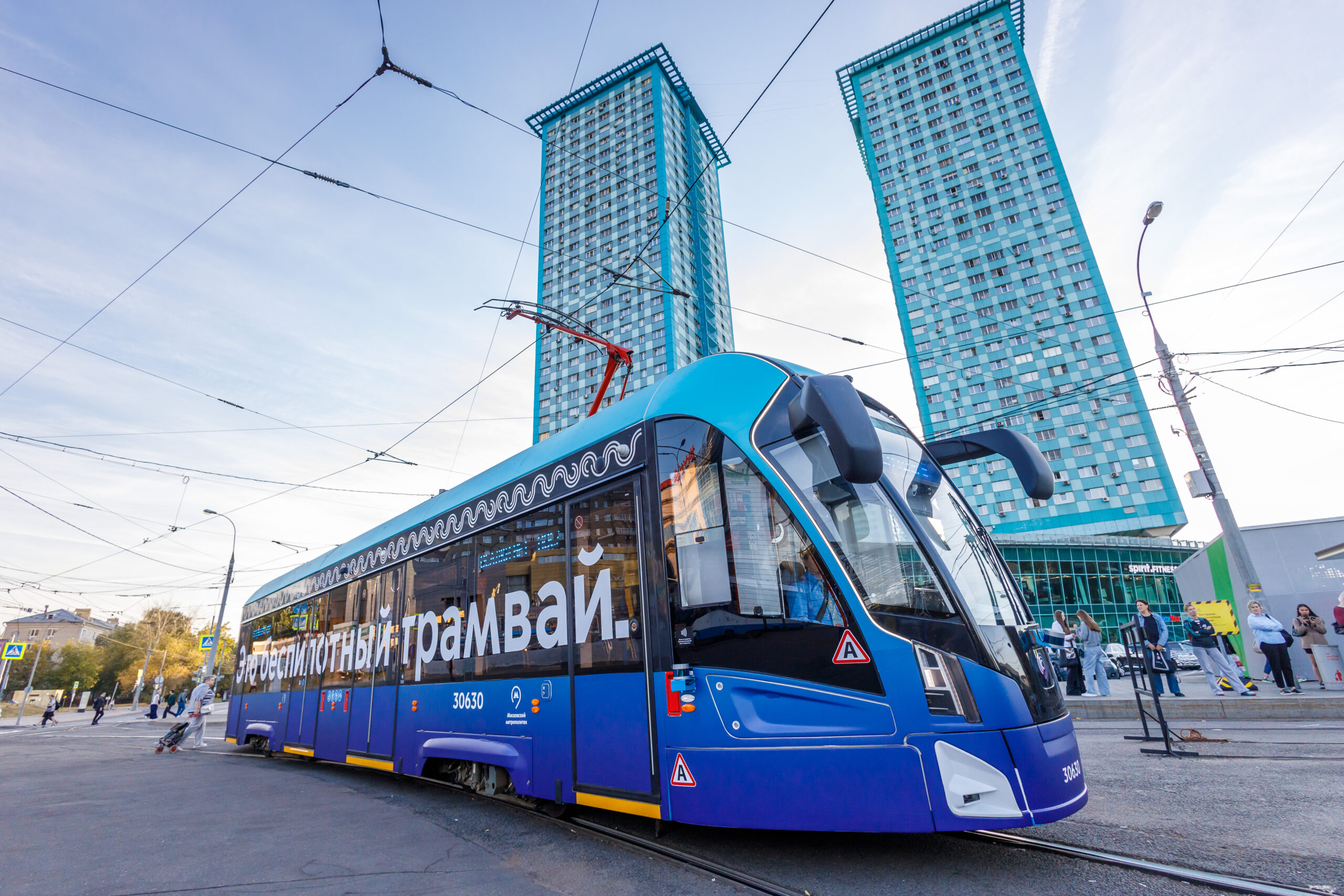
Moscow Metro – Russia made its first payment in digital rubles under a smart contract for insuring the capital’s driverless tram

Translation. Region: Russian Federal

Source: Moscow Metro – Russia has made its first payment in digital rubles under a smart contract for insuring the capital’s driverless tram


Moscow Metro – Russia has made its first payment in digital rubles as part of a smart contract for insuring the capital’s driverless tram.

As Maxim Liksutov explained, the transaction was successfully completed in pilot mode between the insurance group "SOGAZ" and the metro with the support of VTB. The payment is not related to the occurrence of an insured event.

The main advantages of digital rubles:

🔹 Reliability. It is a digital form of national currency along with cash and non-cash funds

🔹 Speed. Payments are processed automatically within 1 day within the smart contract

🔹 Security. Complete transparency of transfers, payment for goods and services

In early 2025, on the instructions of Moscow Mayor Sergei Sobyanin, the Moscow Government concluded a smart contract to insure the first unmanned tram in Russia. The test payment proved the safety, transparency and high speed of fulfilling obligations using digital rubles. Online calculation of simulated damage and payment of compensation occurred within 1 day. In the future, digital rubles will become one of the ways to pay for travel and other transport services in the capital, said Maxim Liksutov.

Dmitry Grigorenko: The goal of digitalization of public administration is the comfort of citizens

Translation. Region: Russian Federal

Source: Government of the Russian Federation – Government of the Russian Federation –

An important disclaimer is at the bottom of this article.

As part of a working visit to the Novosibirsk Region, Deputy Prime Minister – Chief of the Government Staff Dmitry Grigorenko familiarized himself with digital solutions for public administration that have already been implemented in the region.

Novosibirsk Oblast is one of the top ten regions in the digital transformation rating and is actively implementing technologies in various areas. The region is connected to the digital system "governor's dashboard". This is one of the technological solutions of the Russian Government, designed for public administration based on data. The dashboard reflects the key areas of the region's work and performance indicators, the status of the execution of instructions, federal and regional budgets, construction plans and other tasks. Such systems have already been implemented at the federal level. They have proven their effectiveness and are now being extended to the regions (43 regions are currently connected to the "governor's dashboard").

"The ultimate goal of digitalization of public administration is always the comfort of citizens. Thanks to digital platforms and services, citizens receive government services faster and can promptly, without unnecessary paperwork, leave feedback. In addition, "digital" helps officials work more efficiently. For example, to respond faster to citizens' requests, analyze what worries people most, and make informed decisions based on objective data," said Dmitry Grigorenko.

The region is also developing digital services for citizens and implementing a customer-centric approach. The region has a system called the Novosibirsk Region Resident Card, which is a digital citizen identifier for receiving various goods or services, such as discounted travel on public transport or baby food. The system proactively notifies citizens about available benefits and services. A linked Mir bank card or a QR code in a personal account can serve as confirmation of benefits in various institutions or transport. The Resident Card can also be presented to receive discounted medicines, purchase discounted tickets to cultural institutions, and the card can serve as a library card or a pass to educational institutions. Currently, the system has 18 different services, and almost 40 thousand residents of the region are registered.

The region has also implemented a digital project that has no analogues in other regions – signing contracts with kindergartens in electronic form through the Gosklyuch application. The service was implemented within the framework of the regional life situation "Preschooler". Within its framework, the process of registering a child in a kindergarten was digitized: from filing an application (now 91% of applications for joining the queue are submitted through the state services portal) to signing an agreement with the kindergarten remotely. Since the launch, more than 4 thousand contracts have already been successfully signed electronically.

Please note: This information is raw content obtained directly from the source of the information. It is an accurate report of what the source claims and does not necessarily reflect the position of MIL-OSI or its clients.

.

Dmitry Grigorenko: Novosibirsk AI developments have potential for federal replication

Translation. Region: Russian Federal

Source: Government of the Russian Federation – Government of the Russian Federation –

An important disclaimer is at the bottom of this article.

During his working visit, Deputy Prime Minister – Chief of the Government Staff Dmitry Grigorenko got acquainted with the results of the implementation of artificial intelligence in various sectors of the economy, social life and public administration in the Novosibirsk Region. As the Deputy Prime Minister noted, local developments using artificial intelligence have a high potential for replication across the country.

Dmitry Grigorenko visited the Research Center for Artificial Intelligence of the Novosibirsk National Research State University, as well as the technopark of the Novosibirsk Akademgorodok, where IT companies are working on the creation and implementation of promising AI solutions. The Deputy Prime Minister – Head of the Government Staff noted that Novosibirsk is one of the centers for the development of information technology and artificial intelligence.

"Our goal is to develop high-quality AI solutions and implement them on a large scale. This is only possible if AI development brings tangible results and real benefits. Novosibirsk has created decent conditions for the development of artificial intelligence. It has a strong scientific base and a progressive startup community. Thanks to this, the development of artificial intelligence here is parallel to the implementation, and not in isolation from it. It is important that the region itself is interested in using its AI developments and implements them in local educational institutions, enterprises and even in the work of government agencies," said Dmitry Grigorenko.

One of the most important areas of implementation of artificial intelligence is public administration. In the Novosibirsk region, AI assistants are being implemented, which allow optimizing the work of civil servants. Thus, an AI expert in customer centricity helps process citizens' requests and prepare the most understandable and clear answers, an AI assistant in the electronic document management system – quickly find the necessary information, and an AI stenographer – generate meeting minutes. Services have already begun to be implemented in the work of regional and municipal authorities.

In addition, the region has implemented the Safe City video analytics system, which helps monitor public order and search for offenders. More than 2.6 thousand criminals were detained with the help of the system. Novosibirsk specialists also created and implemented an AI service for searching for missing children using city video cameras. In less than two months of the service's operation, six children were found with its help.

Since 2025, the Novosibirsk Region has been actively introducing AI technologies into healthcare: AI is used to interpret X-ray and CT scan data. Since the beginning of the year, the system has processed over 361 thousand images. AI is used as an assistant for analyzing medical data, but the final diagnosis remains with the specialist. In addition, Novosibirsk doctors use voice input technology based on a neural network. It reduces the likelihood of errors in medical documentation. Today, the technology has been implemented in 71 medical institutions in the region.

"The use of artificial intelligence is justified for specific tasks. We try to monitor all developments, but when we approach the stage of large-scale implementation, we look at the expected result – improved quality of services, fundamentally new services for our citizens or a reduction in our labor costs. If we see successful developments, we try to quickly repeat them, but at the same time we can develop our own solutions. As examples, I can cite the analysis of X-ray and computed tomography data, the Safe City video analytics system. In the field of voice analytics and speech generation, this is the well-known robot Nikolai, a voice keyboard for doctors, intelligent assistants for civil servants. All these solutions both improve the quality of services for citizens and seriously reduce labor costs for our colleagues," said Andrey Travnikov, Governor of the Novosibirsk Region.

Please note: This information is raw content obtained directly from the source of the information. It is an accurate report of what the source claims and does not necessarily reflect the position of MIL-OSI or its clients.

.

Financial news: Final XBRL taxonomy of the Bank of Russia (version 7.1 for NSO)

Translation. Region: Russian Federal

Source: Central Bank of Russia –

An important disclaimer is at the bottom of this article.

The final XBRL taxonomy of the Bank of Russia (version 7.0), in comparison with the preliminary XBRL taxonomy of the Bank of Russia (version 7.0), contains architectural amendments to the supervisory and statistical reporting module, as well as control ratios of indicators of supervisory and statistical reporting of non-credit financial institutions, entities providing professional services in the financial market, and self-regulatory organizations in the financial market (hereinafter referred to as financial market participants).

The final XBRL taxonomy of the Bank of Russia (version 7.0) contains a finalized set of requirements for reporting data in terms of supervisory and statistical reporting for the following segments:

1) insurance organizations, mutual insurance societies, foreign insurance organizations (subject to the entry into force of the draft Bank of Russia instruction1);

2) non-state pension funds (subject to the entry into force of the draft Bank of Russia instruction2);

3) professional participants in the securities market, trade organizers, clearing organizations (subject to the entry into force of the draft Bank of Russia instruction3);

4) joint-stock investment funds, investment fund management companies, mutual investment funds, non-state pension funds (subject to the entry into force of the draft Bank of Russia instruction4);

5) specialized depositories (subject to the entry into force of the draft Bank of Russia instruction5);

6) credit rating agencies (subject to the entry into force of the draft Bank of Russia instruction6);

7) insurance brokers (subject to the entry into force of the draft Bank of Russia instruction7);

8) credit history bureau (subject to the entry into force of the draft Bank of Russia instruction8);

9) operators of investment platforms, operators of financial platforms, operators of information systems in which digital financial assets are issued, operators of digital financial asset exchange (subject to the entry into force of the draft Bank of Russia instruction9);

10) payment acceptance operators (subject to the entry into force of the draft Bank of Russia instruction10);

11) self-regulatory organizations in the financial market (submission in accordance with the current Bank of Russia Instruction dated 10.06.2024 No. 6744-U11).

The final XBRL taxonomy of the Bank of Russia (version 7.0) also contains a finalized set of requirements for reporting data on cash transactions (OKUD 0420011) (presentation in accordance with the current Bank of Russia Instruction dated 28.06.2024 No. 6789-U12) and requirements for reporting data of annual consolidated financial statements (presentation in accordance with the current Bank of Russia Instruction dated 20.07.2020 No. 5510-U13).

The specified version of the XBRL taxonomy of the Bank of Russia is intended for familiarization purposes.

In the future, it is planned to publish a corrective version of the final XBRL taxonomy of the Bank of Russia (version 7.1), which will include corrected control ratios and other targeted improvements, with a planned entry into force date of 01.01.2026.

Information about the pilot collection of test reporting will be provided additionally.

Please note that the final XBRL taxonomy of the Bank of Russia (version 7.0) does not contain requirements for the accounting (financial) reporting of non-credit financial institutions and persons providing professional services in the financial market.

1 The project of instructions of the Bank of Russia “On the Forms, Dates and Procedure of the Compilation and Presentation of the Reporting of Insurers to the Bank of Russia.” The project of the Bank of Russia “On Amending the Bank of Russia dated June 28, 2024 No. 6796-U”. and clearing organizations, as well as other information. ”4 Project of the Bank of Russia instructions“ On Amending the Bank of Russia dated October 5, 2022 No. 6292-U. ”Design of indicating the Bank of Russia“ On Amending the Bank of Russia dated September 27, 2022 No. 6270-U. ”The draft of the Bank of Russia instruction“ On the content of the reporting of the credit rating agency, the subject, form, form and form of terms and procedure, form, form and manner. its compilation and submission to the Bank of Russia. ”The project of instructions of the Bank of Russia“ On Amendments to the Bank of Russia dated June 28, 2024 No. 6795 ”.8 The draft Bank of Russia instructions“ On Amending the Bank of Russia dated September 27, 2022 No. 6267-U. ”9 Draft of the Bank of Russia instructions “On the procedure and the terms for the procedure and submission to the Bank of the reports of investment operators platforms, reporting of financial platforms operators, information systems operators in which digital financial assets are issued, digital financial assets exchange operators, reports of investment platform operators and the composition of the information included in them, financial platform operators, as well as the procedure for reporters of investment platforms, financial platform operators, and information operators. systems in which digital financial assets are issued, information exchange operators to the Bank of Russia information about persons who are entrusted with identification, simplified identification, updating information about customers, customer representatives, beneficiaries and beneficial owners .10 Project of the Bank of Russia “On the form, Preject of drawing up, terms and procedure for submitting to the Bank of Russia Bank reports of operators for receiving payments, on the procedure for the report of the Bank of Russia, information about persons who are entering the receipt of identification, updating information about clients, customer representatives, beneficiaries and beneficial owners .11 Bank of Russia indication dated 10.06.2024 No. 6744-U “On the content, forms, procedure and terms for compiling and submission to the Bank of Russia in the Bank of Russia Reporting of a self-regulatory organization in the field of the financial market. ”12 Bank of Russia indication dated 06.28.2024 No. 6789-U “On the forms, terms and procedure for drawing up and submission to the Bank of Russia reports on transactions with cash funds of individual non-credit financial organizations. ”13 Bank of Russia indication dated 20.07.2020 No. 5510-U“ On the Procedure and Dates for submission to the Russian Banking Bank Consolidated financial statements by organizations specified in paragraphs 2-5 of part 1 of Article 2 of the Federal Law of July 27, 2010 No. 208-ФЗ “On Consolidated Financial Reporting”.

Please note: This information is raw content obtained directly from the source of the information. It is an accurate report of what the source claims and does not necessarily reflect the position of MIL-OSI or its clients.

.

Alexander Novak: Russia and Abkhazia continue to strengthen strategic partnership

Translation. Region: Russian Federal

Source: Government of the Russian Federation – Government of the Russian Federation –

An important disclaimer is at the bottom of this article.

Previous news Next news

Alexander Novak met with the President of the Republic of Abkhazia Badra Gunba

As part of an official visit to the Republic of Abkhazia, Deputy Prime Minister of Russia Alexander Novak met with the President of the Republic of Abkhazia Badra Gunba. During the talks, the parties discussed key areas of bilateral cooperation, including issues of socio-economic development, strengthening infrastructure and expanding humanitarian ties.

"Over the past four years, the program for the socio-economic development of the Republic of Abkhazia has been successfully implemented. The volume of trade between our countries has grown by 60%. According to the results of several months of 2025, the growth in trade turnover was about 30%. Russia provides support for the socio-economic development of the republic. We see enormous potential for the development of agriculture and tourism in the republic. For us, Abkhazia is a reliable and friendly partner. We have common ideas and initiatives, the same view of the situation in the world, which should become multipolar," said Alexander Novak.

The President of the Republic of Abkhazia Badra Gunba noted that the difficulties the republic faces are not easy, but with the support of the Russian Federation, they can be overcome. "It is very important for us to implement all the programs that we have outlined. Based on the results of 2022-2025, we see positive results: trade turnover has grown significantly, GDP has increased by 187%. These are serious indicators. I am confident that the implementation of the current program will give a special impetus to the development of the economy of our republic," the head of Abkhazia noted.

During the visit, the 20th meeting of the Russian-Abkhaz Intergovernmental Commission was also held, at which the parties discussed key areas of cooperation and outlined further steps for the socio-economic development of the republic.

The delegation visited a number of significant sites, including the site of the future Children's Republican Hospital, the Sukhum International Airport named after V.G. Ardzinba. "Despite the existing challenges, our work remains systematic, and cooperation remains practical. Russia and Abkhazia continue to consistently strengthen their strategic partnership. Today, we are jointly building a common space of security and sustainability, implementing large-scale programs for the development of key industries," noted Alexander Novak.

During the meeting, the parties agreed on a number of important decisions. Among them are the continuation of the implementation of the State Program for the Socio-Economic Development of the Republic of Abkhazia for 2022–2025, the extension of the basic agreement on socio-economic cooperation until 2030, which will create the basis for a new five-year program for 2026–2030. The agreement should come into force by the end of the year.

“I am confident that the results of our joint work will create the basis for sustainable movement forward, will strengthen our strategic partnership and will bring tangible benefits to the citizens of Russia and Abkhazia,” Alexander Novak summed up.

Please note: This information is raw content obtained directly from the source of the information. It is an accurate report of what the source claims and does not necessarily reflect the position of MIL-OSI or its clients.

.

Yuri Trutnev: Buryatia on "Far East Street" will tell about the sacred lake

Translation. Region: Russian Federal

Source: Government of the Russian Federation – Government of the Russian Federation –

An important disclaimer is at the bottom of this article.

The Republic of Buryatia will traditionally take part in the exhibition "Far East Street", which will be held from September 3 to 9 as part of the tenth, anniversary Eastern Economic Forum in Vladivostok. This year, the region's exposition is called "Baikal. Buryatia. Code of the Future". The organizer of the exhibition is the Roscongress Foundation with the support of the office of the Plenipotentiary Representative of the President of Russia in the Far Eastern Federal District.

"Baikal is a unique place of power, it is not for nothing that it is called the sacred sea. It is a calling card not only of Buryatia, but of our entire country. It is a national and world treasure. But it is not only the natural beauty that attracts people to Buryatia. Those who come to the republic know the unique culture and traditions of the region. Thanks to the program of renovation of Far Eastern cities, the appearance of Ulan-Ude and Severobaikalsk is changing, the quality of life of people is improving. New enterprises are opening in the republic, highly qualified jobs are being created. Participants and guests of the Eastern Economic Forum will be able to learn about what Buryatia is famous for," said Deputy Prime Minister – Plenipotentiary Representative of the President in the Far Eastern Federal District, Chairman of the Organizing Committee of the Eastern Economic Forum Yuri Trutnev.

The goal of the Buryatia pavilion is to show the potential for the development of environmentally sustainable tourism, digitalization and the introduction of advanced technologies in the region. The space will feature virtual tours, master classes and other events.

The republic's exposition will be presented by two pavilions. There will also be an outdoor exhibition area and a site for master classes. A new space will appear – a spiritual cleansing zone. A Buryat yurt will be installed, inside which a center of oriental medicine will be located – traditional methods of treatment will be presented. In addition, visitors to the exhibition will be able to compete in national sports and take part in the games of the peoples of Buryatia. A separate space will be opened demonstrating the region's contribution to the Victory in the Great Patriotic War and support for a special military operation.

"Between the main pavilion, where the republic's tourism and investment activities will be presented, and the yurt, there will be an installation imitating a corridor with tied hii morin, and a khurde drum will also be installed. A new cultural program has also been developed, it will be called "My Buryatia" and will introduce the guests of the EEF to the multifaceted culture of our amazing republic. Two of our famous groups will present their colorful numbers – the Buryat National Song and Dance Theater "Baikal" and the Municipal Theater of Folk Music and Dance "Zabava", – noted the head of the Republic of Buryatia Alexey Tsydenov.

In the Tourism zone of the main pavilion, visitors will be able to view virtual tours, take part in interactive games, and complete the Feel Buryatia quest. The site will emphasize the importance of preserving the unique ecosystem of Lake Baikal and demonstrate initiatives in ecotourism and biodiversity conservation. The space will feature travel companies and guides from Buryatia, who will introduce visitors to the stand to the region's tourism opportunities.

In the "Live in the Far East! – Live on Baikal!" zone, visitors to the exhibition will be able to obtain information about the "Far Eastern hectare" and other initiatives. Multimedia screens will present investment projects of the region, including ongoing and promising proposals in the field of tourism, subsoil use and public-private partnership. Key initiatives and opportunities for cooperation within the framework of master plans and integrated development of territories will also be shown.

Innovative technologies and digital solutions will be presented in the "Code of the Future" zone. The space will demonstrate the integration of modern technologies into the development of the region. The exhibition will include innovative projects in the field of biotechnology, processing of medicinal herbs and digital solutions for the management of natural resources and tourism infrastructure.

In addition, the second pavilion of the regional exposition will house a gallery of artisans with a variety of folk art and crafts, as well as factories and plants producing ethnic-style products with the theme of Lake Baikal from natural materials. The tasting area will introduce guests to the variety of flavors of locally produced products. A presentation of goods made by local manufacturers and presented on popular marketplaces is also expected.

The exhibition "Made in Buryatia" will be significantly expanded. And on the second floor of the regional pavilion there will be an art gallery organized by the National Museum of the Republic of Buryatia.

In the outdoor part of the exhibition, the flagship of the republic's industry, the Ulan-Ude Aviation Plant, will present a model of the Ka-226T helicopter. Also planned on the site are performances by artists of the Baikal Song and Dance Theatre, the musical project "That's How Buryatia Sounds" and the ethno group "Daida". In addition, the national orchestra will introduce guests of the pavilion to the music of nomads and the endless picturesque Buryat steppes, and artists of the Zabava Theatre will introduce them to the traditions of the Transbaikal Cossacks.

The 10th Eastern Economic Forum will be held on September 3–6 at the campus of the Far Eastern Federal University in Vladivostok. During these days, the exhibition will be available to forum participants, and on September 7, 8, and 9, it will be open to everyone. The EEF is organized by the Roscongress Foundation.

Please note: This information is raw content obtained directly from the source of the information. It is an accurate report of what the source claims and does not necessarily reflect the position of MIL-OSI or its clients.

.

Russia and Abkhazia have approved plans for joint development until 2030

Translation. Region: Russian Federal

Source: Ministry of Economic Development (Russia) – Ministry of Economic Development (Russia) –

An important disclaimer is at the bottom of this article.

During the official visit to Abkhazia, the Russian delegation headed by Deputy Prime Minister Alexander Novak discussed key areas of bilateral cooperation with representatives of the republic's Ministry of Economy. Particular attention was paid to the implementation of joint projects within the framework of existing intergovernmental agreements.

"Over the past 4 years, the Program for the Socioeconomic Development of the Republic of Abkhazia has been successfully implemented. The volume of trade between our countries has grown by 60%. According to the results of several months of 2025, the growth in trade turnover was about 30%. Russia provides support for the socioeconomic development of the Republic. We see enormous potential for the development of agriculture and tourism in the Republic. Abkhazia is a reliable and friendly partner for us. We have common ideas and initiatives, the same view of the situation in the world, which should become multipolar," said Alexander Novak.

One of the significant results of the meeting was the extension of the basic agreement on socio-economic cooperation until 2030. This will create the basis for a new five-year program for 2026–2030, which should come into force by the end of 2025.

"The difficulties that the republic faces are not easy, but with the support of the Russian Federation, we can overcome them. It is very important for us to implement all the programs that we have outlined. Based on the results of 2022-2025, we see positive results: trade turnover has grown significantly, GDP has increased by 187%. These are serious indicators. I am confident that the implementation of the current program will give a special impetus to the development of the economy of our Republic," said Badra Gunba, President of the Republic of Abkhazia.

During the visit, the 20th meeting of the Russian-Abkhaz Intergovernmental Commission was held, where the parties agreed on further steps for the development of the republic. In particular, the following will be continued: the implementation of the State Program for the Socio-Economic Development of Abkhazia for 2022-2025, the extension of the basic agreement on socio-economic cooperation until 2030.

In the coming years, it is planned to develop and implement sectoral development work maps in the areas of energy, tourism, transport, healthcare and education, social protection of the population, investment climate, real estate cadastre, customs and tax administration, and public utilities. "The main objective of these maps is to further develop the economy of Abkhazia in conjunction with the formation of a common social and economic space between our countries, and to create a favorable investment climate," commented Sergey Nazarov, Deputy Minister of Economic Development of Russia. "As well as eliminating infrastructure restrictions for economic development, attracting investment and tourists to the republic, expanding social protection measures for the population, improving the quality and accessibility of services provided to citizens of the republic in the social sphere, and the standard of living of the population of the republic as a whole."

The delegation also visited the site of the future Children's Republican Hospital, the Sukhum International Airport named after V.G. Ardzinba, to assess the progress of joint projects. The extension of the agreement until 2030 cements the long-term partnership between the two countries.

Please note: This information is raw content obtained directly from the source of the information. It is an accurate report of what the source claims and does not necessarily reflect the position of MIL-OSI or its clients.

.